What these Trees have Seen: Slavery, Post-Slavery, and Anti-Blackness in the South River (Welaunee) Forest Zone

Mark Auslander and Avis E. Williams
23 April 2022

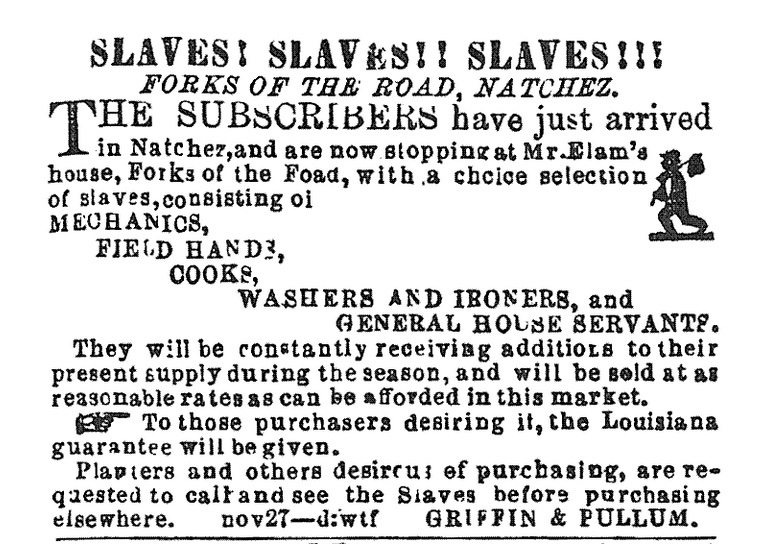
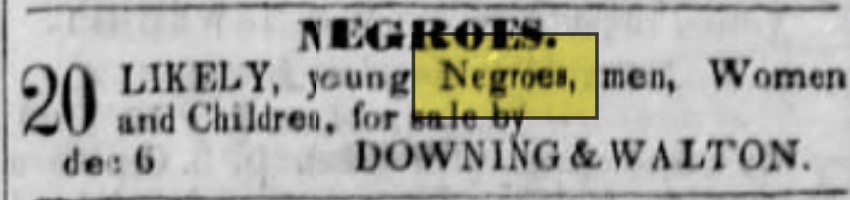
The proposed South River (Welaunee) Forest zone spans approximately 3,500 acres in southeastern Fulton County and southeastern unincorporated DeKalb County, Georgia. The land is in the watershed of the South River, evidently referenced as the Welaunee or Weelaunee by indigenous Muscogee Creek inhabitants. This land has a complex indigenous history, incorporating some of the Soapstone Ridge that was the site of numerous indigenous quarries during the late Archaic and early Woodland periods. During the 18th century these lands were well within the territory of Muscogee Creek, gradually being pressed by expanding white trading and settler interests from Florida, South Carolina, and coastal Georgia. From at least the 1790s onward there appear to have been scattered white farms, often based in the enslaved labor of persons of African and indigenous descent, intermixed with Muscogee Creek settlements as well as hunting and gathering zones on these lands. The development of the cotton gin and the increasing industrialization of cotton processing vastly accelerated white demand for agricultural land, to be worked by an enslaved people of African descent.

By 1821, the white expropriation or theft of Muscogee land in this region of Georgia culminated in the fourth Georgia land lottery, in which these lands were divided into 202.5 acre plots, distributed to white men who qualified for the drawing. This essay briefly considers the experiences of enslavement with this 3,500 acre zone, and on continued structures of labor discipline that continued on these lands during the post slavery Reconstruction and Redemption eras.

The Transitional Era: Muscogee Creek, White Penetration, and Early Enslavement

We begin with the transitional era from c. 1750 to about 1820 when enslaved people of African descent, owned by Muscogee Creek. may have resided in these lands or close by them. From 1751 slavery was legal in Georgia. As noted, there were scattered white owned farms through Creek controlled areas between the Chattahoochee and Flint rivers from the 1780s onward. Increasing numbers of African-descent people were also held by Muscogee Creek in involuntary servitude.

Over much of the 18th century, there are accounts of escaped black slaves from the Carolinas and coastal Georgia finding their way into Creek territory, and being, in essence, adopted into local communities. Some African-descent people lived in forms of slavery which Gary Zellar (2007) maintains was not as coercive as the slavery system that had been established in British North America. However, after the invention of the cotton gin, cotton cultivation became increasingly profitable and more and more Muscogee Creek turned to a labor system modeled on the enslavement of African-descended people.

It is unclear if Estelvste (African Creeks), free or enslaved, resided with what is now termed the South River Forest zone, which was located within the Lower Creek region of the Creek Confederacy. As noted, there were certainly enslaved people owned by Creek within the general vicinity (Saunt 2005, Zellar 2007).

The most famous Muscogee Creek slave-based plantations in the region were Chief William McIntosh’s complexes at “Lochau Talofau” on Acorn Bluff on the Chattahoochee River in Carroll County and at Indian Springs, Butts County, respectively about 35 miles southwest and 50 miles southeast of the South River Forest zone. McIntosh owned over 100 enslaved people, and his children owned a number of other people of African or Afro-indigenous descent as well. Many of these enslaved individuals’ names are recoverable from documents associated with claims made against the Upper Creek, after William McIntosh was assassinated (or executed) in 1825 at Acorn Bluff for signing the Treaty of Indian Springs. (Littlefield 1979; May 1996).


Among the individuals owned by the McIntosh family, was Sarah Davis (1799-1886), who was as at one point owned by the daughter of William McIntosh, Rebecca McIntosh Hawkins, who in 1831 married Benjamin Hawkins, an educated, “mixed-blood” Creek and sometime business partner of Sam Houston. After Chief McIntosh was executed by Creek warriors in 1825, Sarah was part of the forced emigration party led by Ben Hawkins and John Sells to Arkansas Indian Territory in 1830.

When Rebeca Hawkins left Indian Territory for Texas, she sold Sarah to her brother Daniel Newnan D.N.) McIntosh. who later served as a colonel in the Confederate States Army. Sarah worked as a house slave/servant for him.

By 1853, Sarah Davis purchased her freedom and became a free African Creek merchant who lived in the Creek Agency settlement, west of present day Muskogee before (and after) the Civil War. She ran an inn that served meals and was a major force in the community. Her grandson was Joseph Davison, an important Creek Freedman leader, His descendants continue to reside in Oklahoma, along with thousands of others descended from enslaved Afro-native peoples owned by the McIntosh faction and other members of the Muscogee Creek elite.

Sarah Davis and many other members of her family are buried in the Old Creek Agency cemetery near Muscogee OK, in which an estimated 1,000 African Creek individuals are interred. The cemetery, on private land, is currently unavailable to visits by loved ones and descendants. As we honor this endangered forest, a site of so much tragedy, let us also think of that distant forested cemetery which remains a site of great injustice, compounded by the fact that most Creek Freedmen descendants were in 1979 stripped of tribal citizenship and remain legally outside of the tribe.

The 1821 Land Lottery

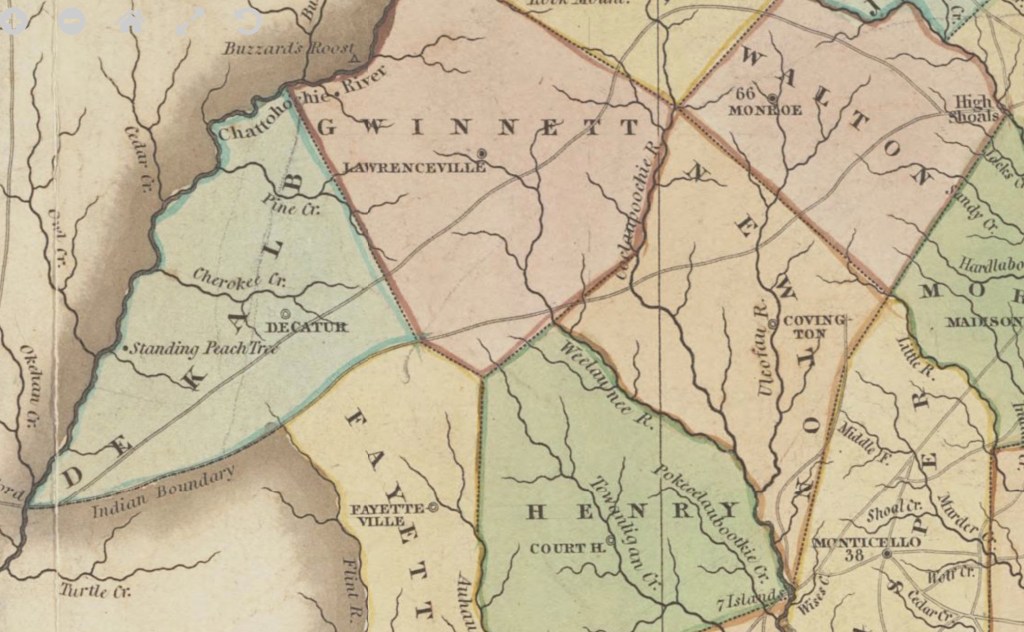
The white settler theft of Muscogee (Creek) lands in this region of Georgia, between the Ocmulgee and Flint rivers, was finalized in the 1821 land lottery, in which eligible white men drew for 202 and a half acre plots, including the land that now constitutes the 3500 acres of the proposed South River or Welaunee Forest. What is now DeKalb county was then part of Henry County. Districts 1-18 of Henry were distributed through the lottery, including District 15, in which the proposed forest zone is located.

Naming Names: The Enslaving and the Enslaved

  1. Slaves of Lochlin Johnson

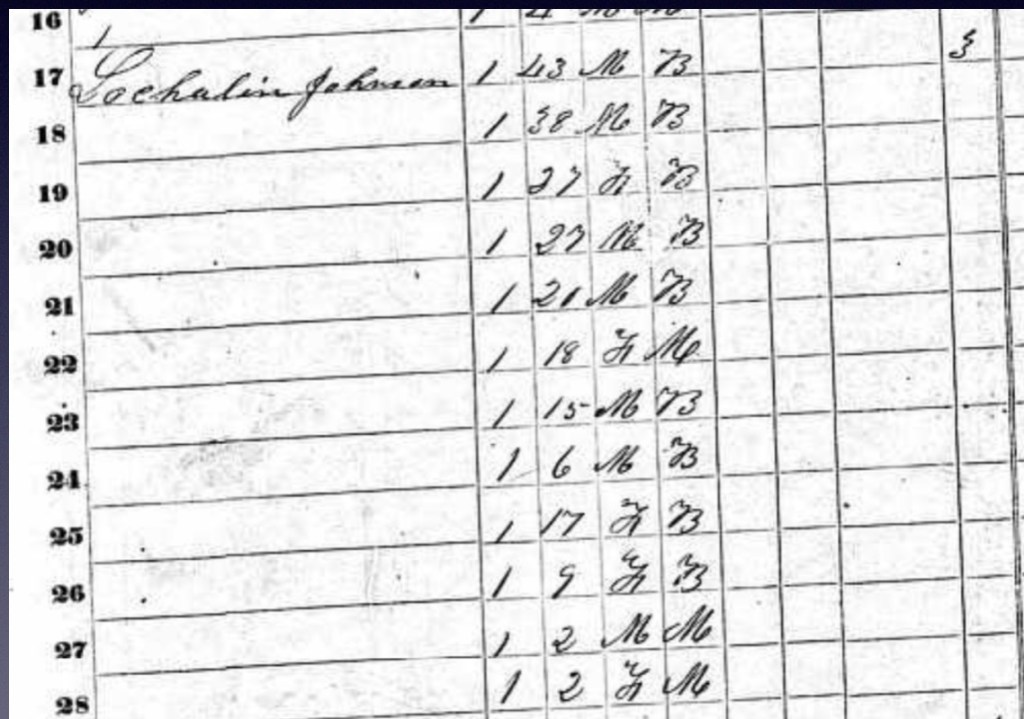
Among the first white winners of the lottery was Locklin Johnson (18 Feb 1787-17 July 1861) who then resided in Cooper District, Putnam County, where he appears to have already owned four slaves. He drew lot 73, at the confluence of the South River and Blue Creek, two miles southeast of where we stand, and in time acquired lots 72,73 56, and 67. The historian Franklin Garret reckoned Johnson’s plantation “the finest in the county,” by which he meant the most productive.Johnson at various points represented the county in the State Senate, served as as county sheriff, postmaster and road commissioner, and was an Inferior Court judge, as well as land speculator in what later become Atlanta. By the time he died in 1861, Locklin Johnson owned eleven people who toiled on these lands, and he may have rented many others.

Through DeKalb County probate records, we are able to identify by name most of these enslaved people, who resided, according to the 1860 slave schedule, in three dwellings. In his will, Johnson Lochlin Johnson bequeathed his his slave Aley valued $300, “and her issue” to his daughter Margaret M.P Lichtenstadt (wife of Maurice Ludwig Lichtenstadt). To his daughter Nancy P. Farrar (wife of Jesse Farrar, a real estate agent) the “negro girl” Harriet and her issue, worth $500. To his daughter his daughter Jane E.L. Robinson (wife of James Robinson) the “negro girl” Emily ($500) and her issue. All of this was consistent with the frequent practice of slaveowner planted to bequeath their daughters with younger women slave who might serve as their enslaved maids and personal attendants (this is precisely how young Sally Hemmings came into the household of Thomas Jefferson as a gift to Jefferson’s wife from her father).

Other enslaved people were sold at an estate auction on New Year’s Day, 1862, on the front steps of the DeKalb County courthouse in nearby Decatur:

Laura and her children Emma and Herman, were sold to David Kiddoo (of Cuthbert, GA)
Wyatt, sold to James Robinson (Jane’s husband) then in Atlanta
Ben, sold to Jesse Farrar (husband of Nancy), then in Atlanta Ward 4
Anthony, sold to Mary K. Richie, via her guardian.
Jake, sold to M.L. Lichenstandt (Margaret’s husband: Maurice Ludwig Lichenstadt)

We are not sure yet of what become of Tobe (also known as Cornelius W) and the “boy” John, who are listed in the estate’s inventory and appraisement records, but not the auction records.

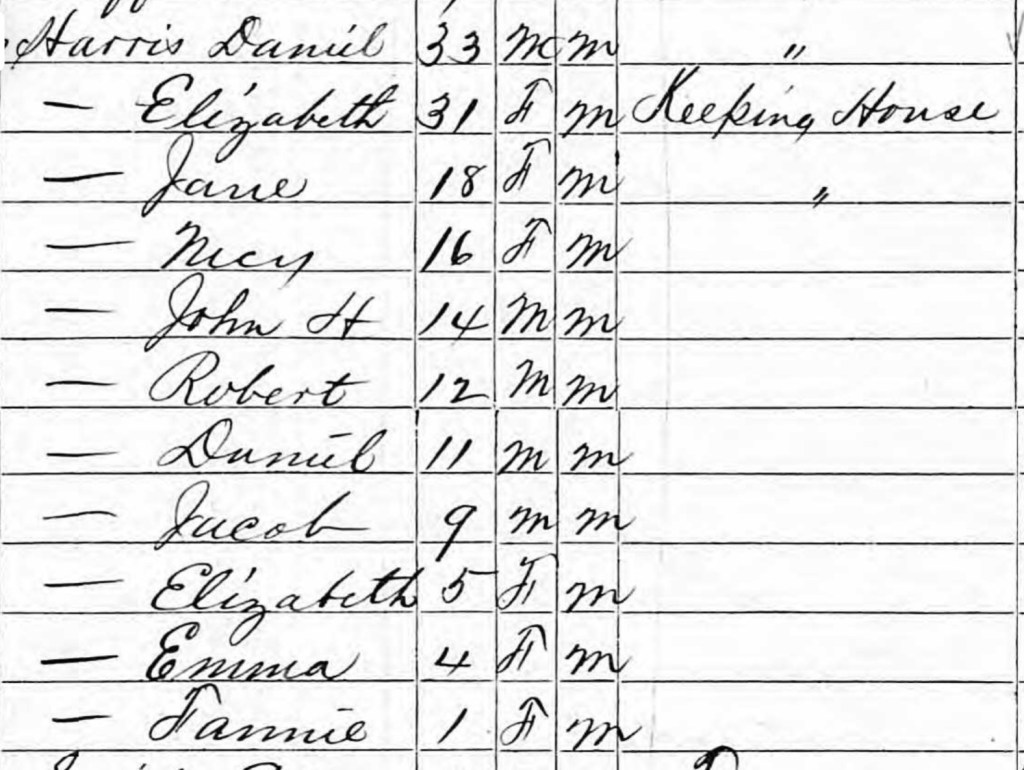
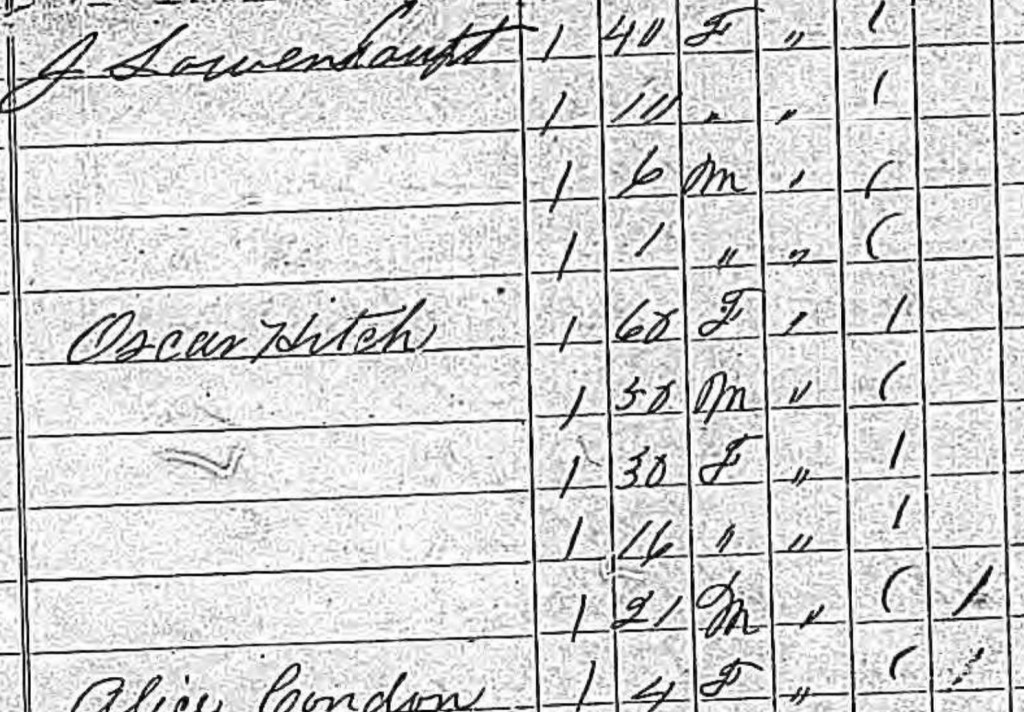
We see likely traces of some of these individuals in the first Freedmen’s Census, of 1870, nine years later.

A. Wyatt Johnson appears as a day laborer living in Atlanta’s Ward 4, living in the household of the black blacksmith Sidney Perkins.

A “Benjamin Johnson” is working as a sharecropper in Panthersville, evidently on same land he and his family had been held on during slavery. Among his daughters are 12 year old Harriet and one year old Emma, who might have been named for the Harriet bequeathed in 1861 to Lochlin Johnson’s daughter Nancy, and for the Emma, who was the daughter of Laura, sold to David Kiddoo of Cuthbert County. (All this suggests that various kind was sold or distributed apart from one another during 1861-62. Ben Johnson ten years later is listed as working on a farm in the same neighborhood.

Aley and Jake, as we have seen, were acquired by Dr. Maurice Ludwig Lichtenstadt, a prominent physician whose patients during the Civil War included Alexander Stephens, the Vice President of the Confederacy. Aley may have become Ally Johnson, born 1837, who appears in the 1870 census, living in Atlanta Ward 1, with her husband Green Johnson, a blacksmith

The same year “Jack Lemons,” born 1812 , and his wife Harriet, born 1810, are living together in Atlanta’s West End. Perhaps this is the formerly enslaved Jake, and he and Harriet, separated by the 1862 auction, reunited following Emancipation.

  1. Slaves of Nathan Turner

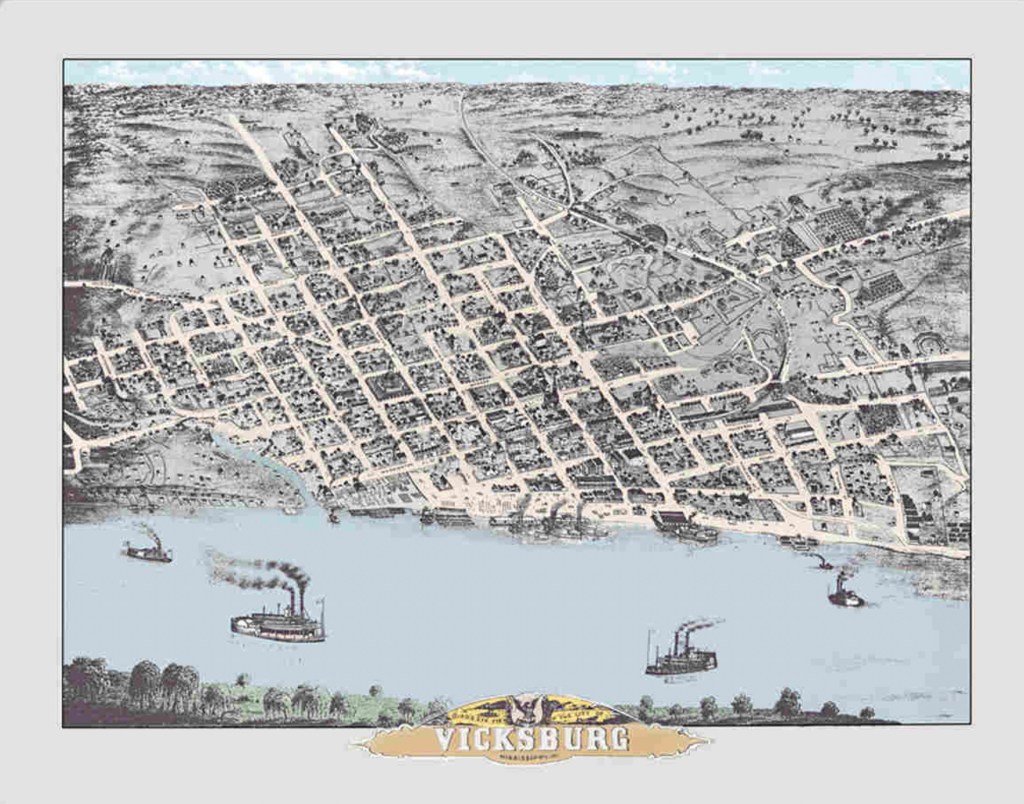
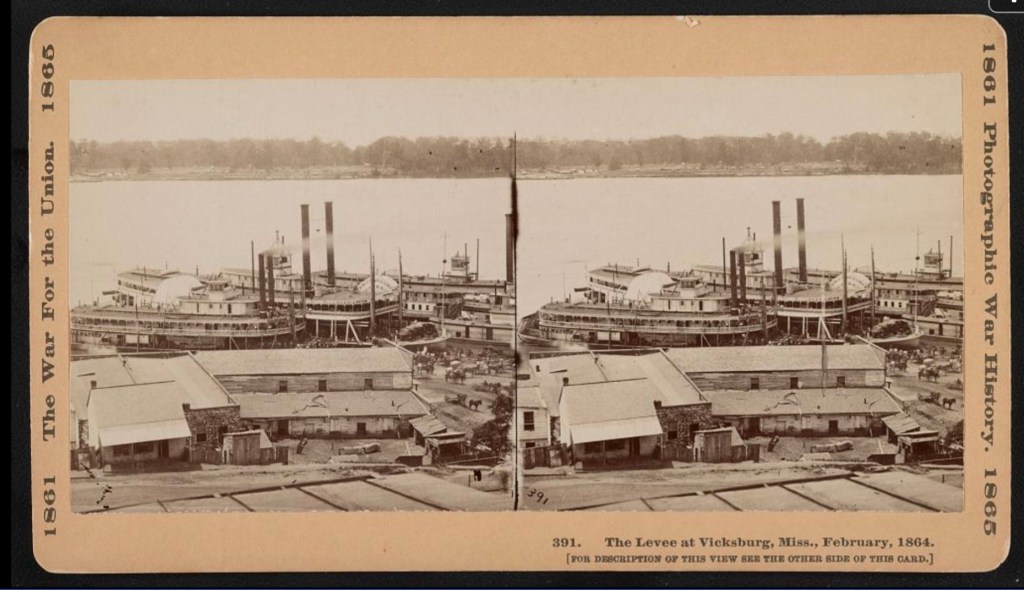
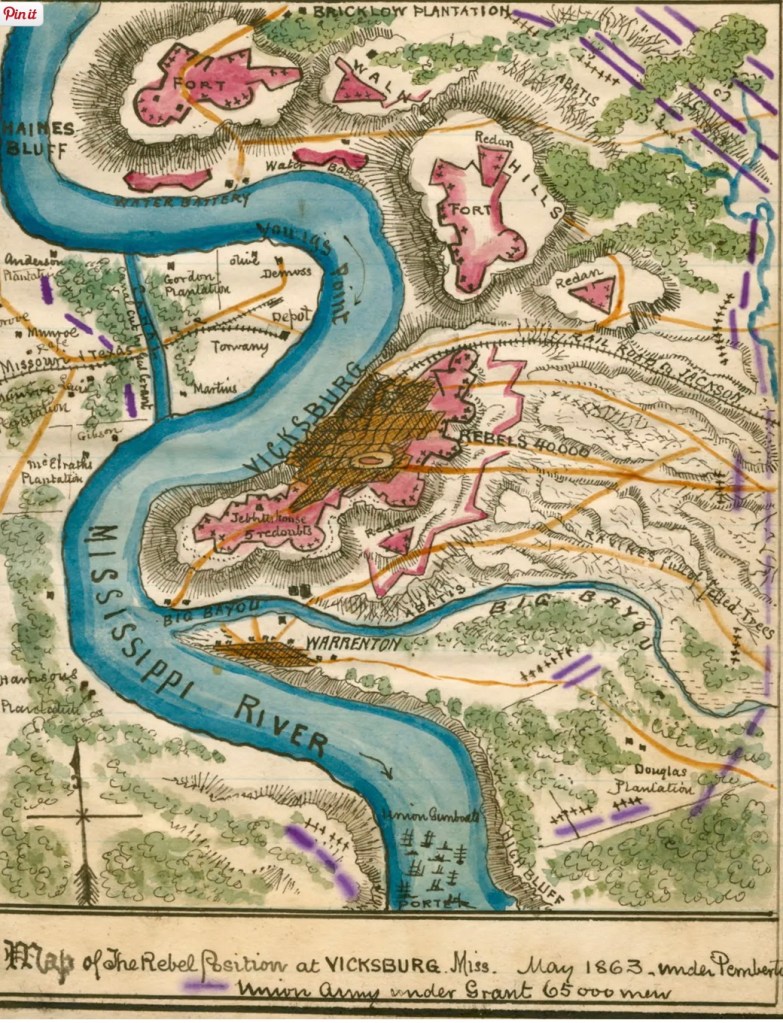
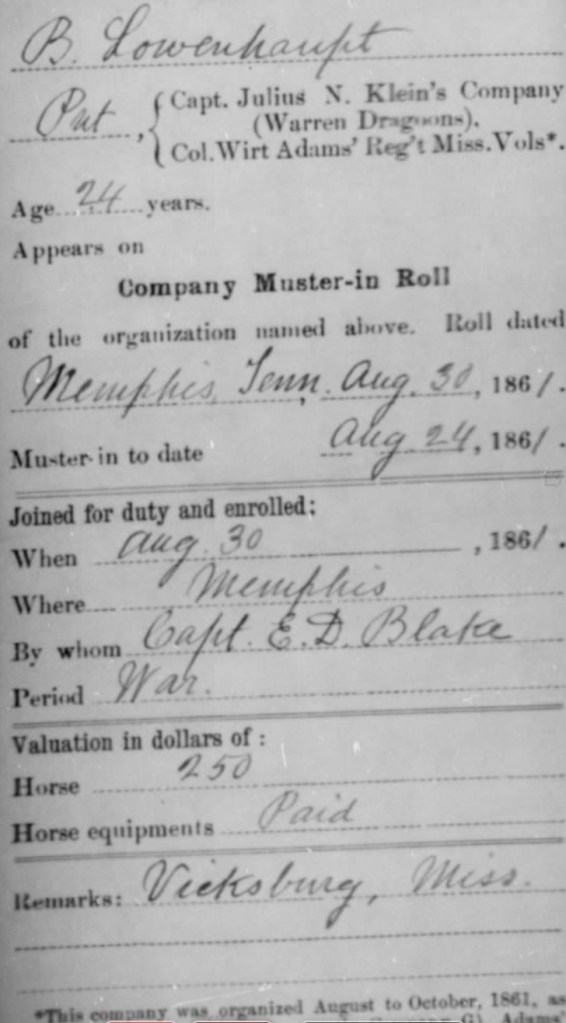
The plantation of slaveowner Nathan Turner was located in lot 71, just to the east of Lochlin Johnson’s plantation. He enlisted in the Confederate Army as 1st Sergeant March 4, 1862. He was Elected Jr. 2nd Lieutenant September 8, 1862. and Died of disease at Vicksburg, Miss, January 28, 1863. His estate inventory that he owned the following enslaved persons:

—Eady, woman 36 years, and child, also Solomon, a boy, 4 years, valued at $1300
—Margaret, girl, 15, $1500
—King, boy, 15, $1500
—Clinton, a boy, 13, $1500
—Minty, a girl, 12, $1200
—Allick a Boy, 5 years, $1000

His will bequeaths the 14 year old slave girl Margaret to his daughter Frances Ann Turner, and his 12 year old slave “Minta” to his daughter Sarah Eliza.

Most of these individuals remained in Panthersville into the era of freedom. In the 1870 census, twenty one year old Minty (now known as Aminda) is married to a Nathan Turner, in household #11, the is now in the proposed forest zone.

In another part of Panthersville, “Edy” Razenback, 40 ( previously Eady) is married to Edmund Razenback, 40 (who was not in the Turner inventory) with her sons Alexander Razenback, 15 (must be “Allick”) and Solomon Razenback, 10 who were both in the Turner estate inventory).

  1. Slaves of Rev. Elijah Clark

Another prominent slaveowner in the forest zone was the Methodist Minister Rev. Elijah Henry Clark, 3 Dec 1835-12 Jun 1898, who represented DeKalb County in the Georgia House of Representatives and who became a Captain in the Georgie Infantry 42, company D. His father William Henry Clark owned 39 slaves in a different part of the county. Rev Clark himself occupied lot 78 and owned 14 slaves, who resided in three slave dwellings, in 1860.

We can surmise the identities of some of these individuals from the 1870 “Freedmen’s census” which shows the following four free black families living next door to Rev. Clark, five years after Emancipation:

Dempsey Clark, 70, b. 1800
Harriet Clark, 45
Louisa Clark, 20
Ousley Clark, 10

Dempsey Clark, 36
Cordelia Clark, 35 , b. 1835

Bill Clark 25. b 1845
Sally Clark, 24
Amanda Clark, 11
Cordelia Clark, 10 months

Thomas Clark 40
Catharine Clark 34
Marena Clark 10
Ella Clark 7
Hannah Clark 3
Jacob Clark 3 months

(All of these individuals over the age of five were presumably owned by Rev. Clark or his family prior to 1865, when freedom finally came to Georgia.

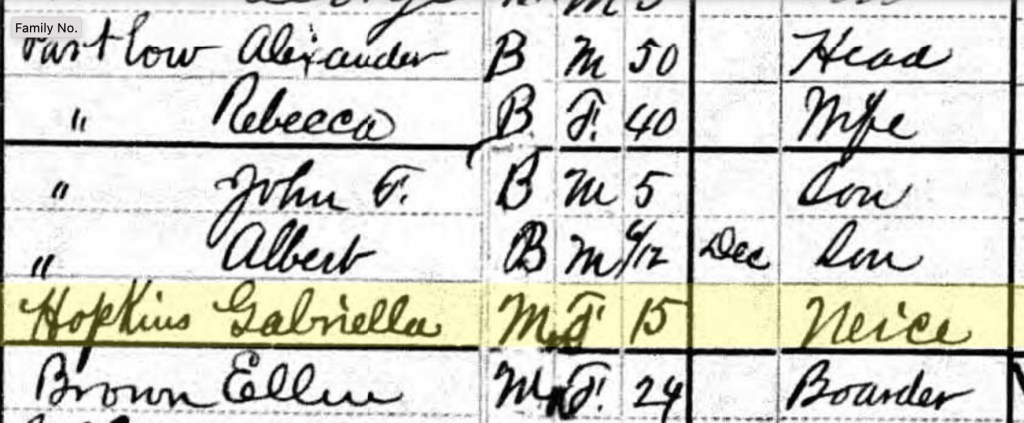
These black Clark families are still listed in the 1880 census, continuing as sharecroppers farming in Panthersville.

  1. The slaves of George P. Key

The slaveowner George P. Key occupied lots 82 and 83, the site of the Intrenchment Creek Trailhead (where protest and ceremonial events in support of the Forest were held in 2021 and 2022) as well as the southern section of the later Atlanta Prison farm. (Key Road is named for this family.) Key owned 19 slaves in 1860. George Key’s father Chiles Keys (Jan 30 1784-Mar 4 1846) died intestate in 1846. He owned 21 slaves in 1840 The section of his probate inventory listing enslaved people unfortunately is missing. Other enslaved only two individualsReuben and Lively, are mentioned in probate records).
,
It is not precisely clear which individuals were owned by George Key, but five years after Emancipation, the following black families of sharecroppers were living next door to George Key: Henry and Kizziah Thrasher Phillip and Fanny Mitchel. George Middlebrooks, Annise and Mary Middlebrooks, and Alonzo and Eliza Walker. We surmise some or all of these individuals were owned by the white Key family.

  1. Slaves of James Moore and William Cobb

The slaveowner James Moore (born Cork, Ireland, 6/28/1798; d. 5/14/1856) is recorded as owning six slaves in 1850, on lots 110 and 111, on lands that would later become the northern sections of the Atlanta Prison Farm. After his death in 1856, only two enslaved people are listed in probate records; Fanny and Mary, who were both sold at auction to Moore’s neighbor, William T. Cobb. The 1860 slave schedule indicates they were born 1837 and 1841.
William Cobb, a miller, achieved a degree of fame during the Battle of Atlanta, when on the night of 22 July 1864, he guided Gen. Patrick Cleburne of Gen. Hardee’s Corps ( Confederate) through the forest, in a failed assault on f Union General McPherson’s Army of the Tennessee

One wonders what Fanny and Mary thought as they watched these fateful proceedings.

W speculate that Fanny appears six years later in the 1870 census, as “Fanny Stanners” in Panthersville, born c 1834, in household #t328, married to Bailey Stanners

  1. Slaves of Robert Cobb

William Cobb’s apparent brother Robert Cobb, resided on Lot 84 (between Georgie Key and Augustus Pitts). He died in 1865 and his probate records for 6 April 1865 (three days before Lee’s surrender at Appomattox Court House ) indicate the following slaves in his estate:

Dare, a negro man, valued at $3000
Lee, a negro man, 3500
Sy, a boy, 19 years, 4000
Jane, negro woman and 4 children, 6500
Pegg and 3 children, 5000
Alissa (? ) and a child, 50
Eliza, a girl, 3000

Turner appears five years later in the 1870 census living in Panthersville as sharecropper Turner Cobb, heading a substantial family:

Turner Cobb 58 (b. 1812)
Matilda Cobb 35
Juliann Cobb 18
Mary C Cobb 12
Lucy Cobb 10
George Cobb 8
Polly Cobb 6
William Cobb 3
Andrew J Cobb 3 month
Allen Cobb, 20
Offelia Cobb, 1

Since none of these individuals are listed in the Robert Cobb inventory, it seems likely that most were owned by someone else in the area; and that the family was reunited after Emancipation.

  1. Slaves of Justice Augustus Pitts

Justice Augustus Pitts held property on lots 51 and 76. He owned 6 enslaved people in 1860.

In1870, five years after Emancipation, two doors from Judge Pitts in Panthersville, lived a free black family comprised of:

Holland Pitts 25
Margaret Pitts 25
James Pitts 10
Eliza Pitts 8

Next door to Holland Pitts, lived the free black family

Ephraim Pitts, 25 (b.1845)
Elvira Pitts, 21
Sally Pitts, 4
Margaret Pitts
Irena Clark, 60
Rachel Clark, 10

Ten years later, Ephraim Pitt’s family remained in Panthersville, near Judge Pitts’ home:

Ephaim Pitts 35 Self (Head)
Elvira Pitts, 25 Wife
Sarah Pitts, 14 Daughter
Margaret Pitts, 13 Daughter
William Pitts, 9 Son
Ephriam Pitts, 8 Son
Isaiah Pitts, 6 Son
Caroline Pitts, 3 Daughter
Infant Pitts, 5/12 Son

  1. Slaves of James F. Stubbs

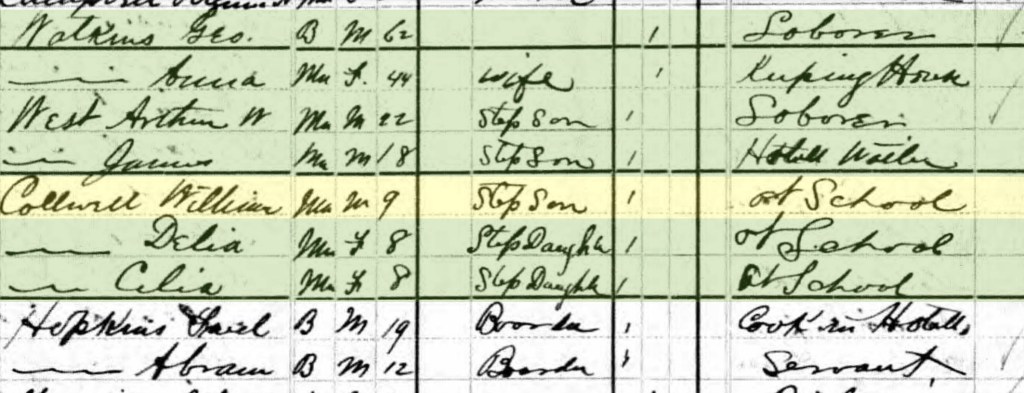
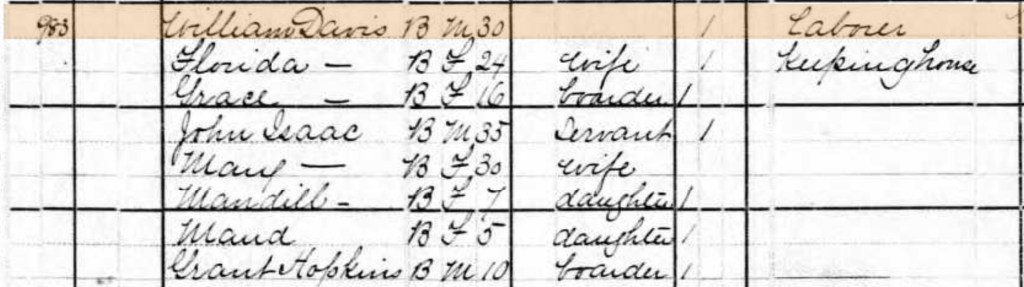
In 1860, James F. Stubbs owned 14 slaves. Ten years later, the census lists several free persons of color likely to have come off of the old Stubbs place, including Henry Stubbs, a 13 year old farm laborer in the household (#42) of former slaveowner James Stubbs

Also in 1870 in Panthersville. Dilsey Stubbs, born 1820, headed a household twelve households away from Judge Augustus Pitts.

Dilsey Stubbs 50
Charles Stubbs 17
Alexander Stubbs 10
Lucy Stubbs 7

Future research, based on Probate records, Indian Agency files, church documents, land records, and other materials may be able to help us compile a more complete picture of the enslaved people who labored and resided on the lands of the proposed South River Forest, during the successive periods of Muscogee Creek and white control, and to tell more fully the story of free people of color who worked this land during the post-Emancipation era.


Appendix I. Known Names of the Enslaved in the South River Forest zone (list in progress of formation)

Aley (owned by Lochlin Johnson, then Margaret Lichtenstandt )
Harriet (owned by Lochlin Johnson, then Nancy Farrar )
Emily (owned by Lochlin Johnson, then Jane E.L Robinson
Wyatt (owned by Lochlin Johnson, then James Robinson)
Ann. owned by Lochlin Johnson
Ben , owned by Lochlin Johnson, then Jesse Farrar)
Anthony (owned by Lochlin Johnson, then Mary K. Richie via guardian)
Jake owned by Lochlin Johnson, the, then M.L. Lichtenstadt)
Laura and her children Emma and Herman ( owned by Lochlin Johnson, then David Kiddoo)
John, a boy, owned by Lochlin Johnson
Tobe (alias Cornelius W) owned by Lochlin Johnson,
Fanny (owned by James Moore, then William Cobb)
Mary (owned by James Moore, then William Cobb)
Turner Cobb (owned by Robert W. Cobb)
Dare (owned by Robert W. Cobb)
Lee, (owned by Robert W. Cobb)
Sy, (owned by Robert W. Cobb)
Jane (Perkerson?), and 4 children (owned by Robert W. Cobb)
Pegg and 3 children, (owned by Robert W. Cobb)
Alissa ? (Hollingsworth?) and a child (owned by Robert W. Cobb)
Eliza, a girl, (owned by Robert W. Cobb)
Holland Pitts (owned by Augustus Pitts)
Ephraim Pitts (owned by Augustus Pitts)
Henry Stubbs (owned by James Stubbs)
Benjamin McWilliams
Eady, (owned by Nathan Turner)
Solomon (owned by Nathan Turner)
Margaret, (owned by Nathan Turner)
King, (owned by Nathan Turner)
Clinton (owned by Nathan Turner)
Minty or Aminda (owned by Nathan Turner)
Allick, or Alexander (owned by Nathan Turner)

Acknowledgements: Research on this project has been conducted in the Archives of the DeKalb History Center, the Kenan Research Center of the Atlanta History Center, the Georgia Archives, and the Probate and Real Estate offices of the DeKalb County Courthouse (Decatur, Georgia). We are grateful for the guidance of Creek Freedmen leaders and community historians Rhonda Grayson, Sharon Lenzy, and Akua Maat in deepening our understanding of early Muscogee Creek enslaved history in Georgia and environs. Many thanks to Margaret Spalding, Jaqueline Echols, Joe Peery, Craig Womack, Gerardo “Abundia” Tristan, Guillermo Zapata, and Johnna Gadomski for sharing their perspectives on the complex struggle to interpret, protect and remediate the South River watershed and forest zone.

References

Lifflefield, Daniel F, .Jr, 1979. Africans and Creeks: From the Colonial Period to the Civil War. Greenwood Press.

May, Katja. 1996. African Americans and Native Americans in the Creek and Cherokee Nations, 1830s to the 1920s. Collision and Collusion. Garland Publishing.

Saunt, Claudio. 2003. Atlanta, White and Indian: Race and the Unmaking of an American Family. Oxford University Press.

Zellar, Gary. 2007 African Creeks; Estelste and the Creek Nation. University of Oklahoma Press.

Songs of the Forest: A “Re-matriation” Gathering in Weelaunee (South River) Forest

My collaborator Rev. Avis Williams and I were delighted to be asked to participate in the recent April 22-23 gathering/conference/songfest/happening/summit called, “Singing ourselves back together: Community in Weelaunee.” The event brought together a range of organizations and movements, united by shared, urgent concern over the fate of the “South River Forest zone” around the headwaters of the South River watershed, in south Atlanta and unincorporated southwestern DeKalb County, Georgia. The gathering centered on the hopes of Mvskoke (Muscogee Creek) to engage in a “re-matriation” process, reconnecting to the ancestral homelands of the Muscogee peoples, including this wooded and greenspace terrain.

The “South River Forest” is in many respects an aspirational concept, anchored in an earlier Atlanta city vision plan for contiguous greenspace, including wooded acreage, of about 3,500 acres spanning southwestern DeKalb county and southeastern Fulton county. This zone, which has a long history of landfill, waste disposal, and prison labor sites, could become a beautiful emerald necklace of wooded land, recreation areas, and open fields. Recently, activists and Muscogee Creek ceremonialists have termed this greenspace zone the “Weelaunee” (Ouelvnv), in light of an early history of this indigenous term for the South river, which I reviewed in a previous post.

The threats to the forest and associated greenspace are both long-term and immediate. As emphasized by the South River Watershed Alliance, extensive sewage and toxic run-off impacts the health of Intrenchment Creek and other tributaries of the South River, sometimes reckoned the country’s fourth most endangered river. A core section of the wooded zone has been slated for demolition by the Atlanta Police Foundation, which intends to construct a large training facility for multiple police forces, specializing, opponents have charged in urban paramilitary operations. Dubbed “Cop City” by activists, the proposed training facility is opposed by a coalition of community organizers who seek to pressure the city of Atlanta to suspend or cancel the project.

The South River Watershed Alliance also seeks to prevent a proposed land swap by the private developer Blackhall studios, the largest film production site in the Southeast, which would lead to the deforestation and flattening of Intrenchment Creek Park. They also oppose the construction by Blackhall of more soundstage facilities downstream along the South River. More broadly, the Alliance and its allies are demanding serious investment by DeKalb County and the business community in environmental justice for the entire South River watershed region.

Ceremonial Returns

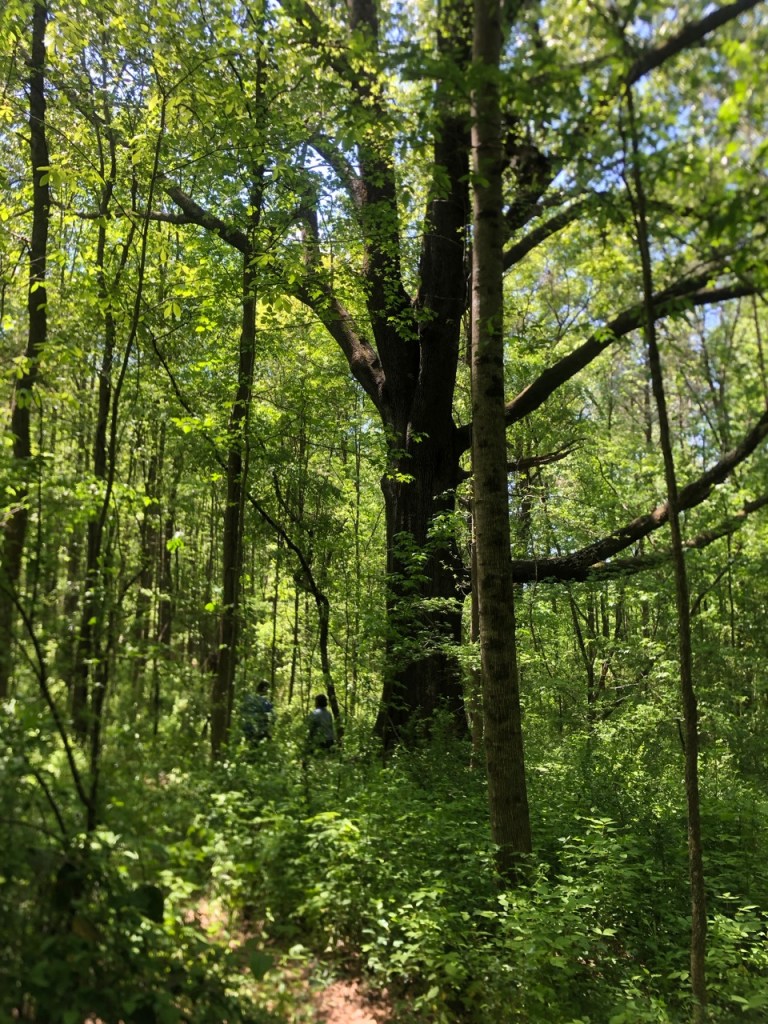
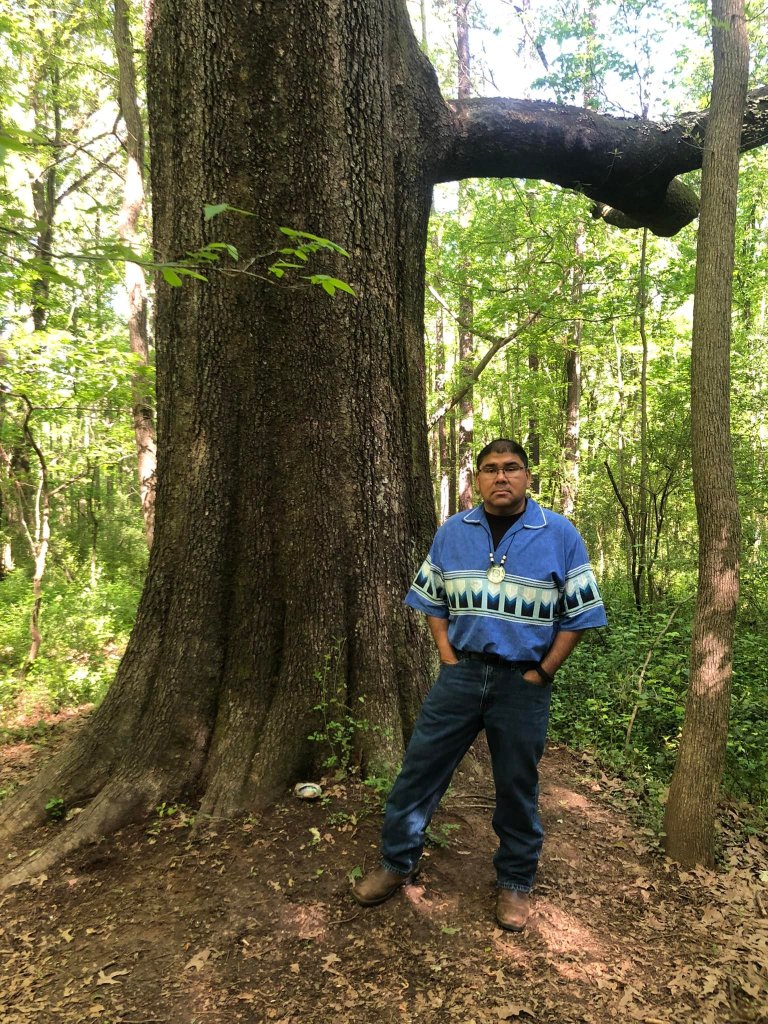
Creek ceremonialists in November 2021 gathered in this same space, the Intrenchment Creek Trailhead, around a sacred fire, to perform a stomp dance that reproduced rhythms heard and sensed in these forest land centuries ago. Now, Creek and allied scholars and community organizers joined with the forest defenders to consider what a better world might look like, in the forest and beyond, and to re-establish bonds with this sacred space. Guided by friends in the Watershed Alliance and the forest defenders, we took many walks through the forest, including to an old venerable oak, a possible ceremonial gathering site in days of old, which the Muscogee Creek participants named “Puse” (Grandmother).

The Grandmother (Puse) Tree

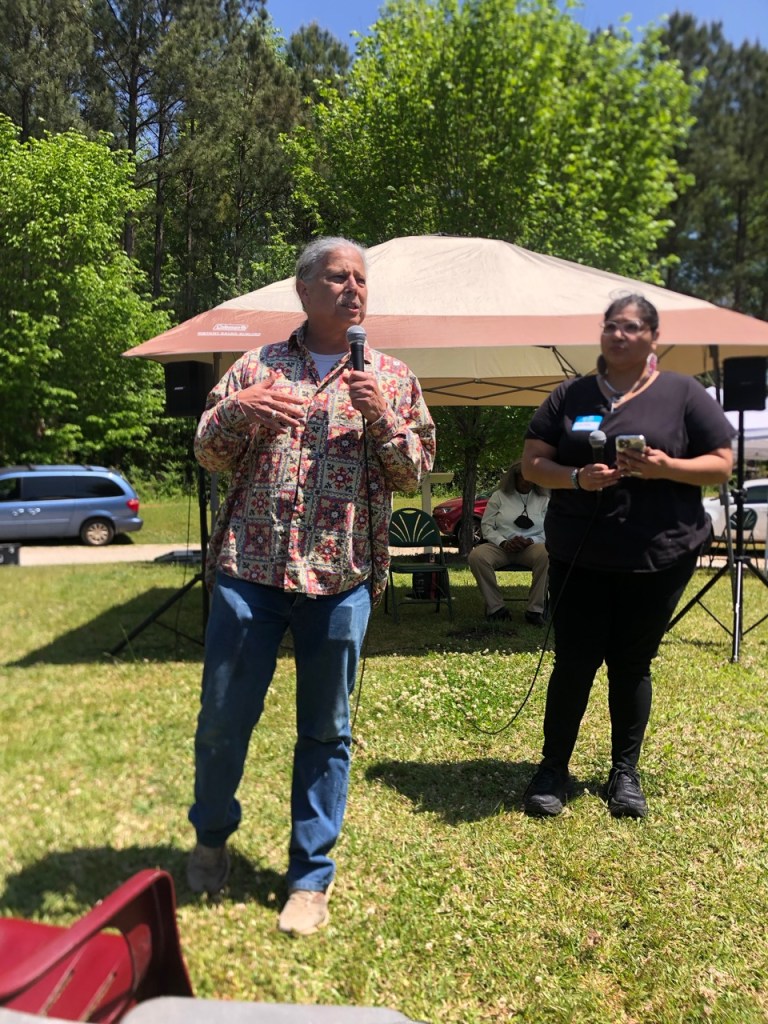
Tresa Gouge (of the Redbird Smith Ceremonial Grounds in Sequoyah County, Oklahoma) taught those in attendance how to make cedar-based medicine bundles. Dr. Craig Womack, emeritus professor of English and Native American Studies at nearby Emory University, who is Muscogee Creek and a gifted musician, sang Muscogee songs, including laments performed during the Trail of Tears. The first evening, Creek attendees performed stomp dances in the same circle they had gathered in, back in November, reconnecting with the earth and with ancestral presences.

Indigenous Scholarship

The two day event moved back and forth across many modalities, part academic-ish conference, part political rally, part ceremonial performance. We pondered the meanings of “#LandBack” and “re-matriation.” Mekko (traditional chief and spiritual leader ) Chebon Kernell, associated with the Helvpe Ceremonial Grounds, reflected upon the vital necessity of an environmental Indigenous ethic that resists racism, extractive colonial economies and paramilitary law enforcement. Noted Indigenous feminist scholar and community planner Laura Harjo (University of Oklahoma), author of Spiral to the Stars: Mvskoke Tools of Futurity,” facilitated a workshop in which she invited us to dream collectively and individually about our deepest wishes for the future of the forest, as a place of learning, healing, and revived collective care. Drawing and writing on large pieces of paper brought us together in community as we seriously and playfully considered new models for the Intrenchment Creek trailhead and the forested land that is threatened by the planned police training facility. Rev. Dr. Avis Wiliams, who grew up in the African American community of Covington, about 35 miles from the forest, reflected on the ways in which African Americans–during the two centuries following Native removal–have stewarded the lands left behind by Muskogee Creek, with whom Black folks in Georgia continue to sense deep kinship. Preschoolers from Atlanta’s Highlander School, led by the remarkable Rukia Rogers, created lovely pictures about the forest and the dangers it faces, presented as gifts to participants.

Craig Womack and Laura Harjo introduce the planning workshop

Dr. Daniel Wildcat (Yuchi, Muscogee) of Haskell Indian Nations University (HINU) in Lawrence, Kansas, whose book “Red Alert! Saving the Planet with Indigenous Knowledge ” my Boston University students and I recently read, took us on a fascinating journey through foundational principles in Indigenous environmental philosophy. Certain formative precepts, he emphasized, are embodied and enacted through everyday practice: respect yourself, honor yourselves, embody the very change you wish to see in the world, live not in fear but with sensed respect for the power of place and the dynamic reciprocal relations between humans and and our more-than-human relatives, including plants and animals. How, he asked, do we move beyond a “fear-based” ontology, beyond commodified capitalist and alienated relationships with nature and other people, towards an orientation towards the world that is based on gifts, gratitude, and generosity towards all beings? How do we learn not to see the world as made up of resources that are to be extracted and consumed, but as constituted as a living matrix of dynamic relationships among life-giving forces and diverse forms consciousness and energy, that mutually enrich one another? How do we honor the forest as our elder teacher, and reciprocally express our responsibilities to care for the gifts of the forest and life-giving waters, here and everywhere?

Mekko Chebon Kernell at the Grandmother tree (Puce)

Up in the Canopy

Some of the most memorable encounters during our time in Weelaunee were with the forest defenders, many of whom are occupying forested spaces that are threatened with bulldozers and clear-cutting plans by the Atlanta Police Foundation, as a prelude to constructing the planned police training facility. These activists, living communally in the forest, enact the principles articulated by Daniel Wildcat, embodying, in ways large and small, the changes they wish to see in the world. Some reside for days at a time up in the canopy, in small treehouses lashed to the tree crowns, like latter-day pirates in crows’ nests keeping an eagle eye open for danger, even as they revel in intimate proximity to squirrels, birds, and other citizens of the forest. The defenders are painfully aware of the irony that “Cop City” is slated to be built on the grounds of one of south Atlanta’s notorious prison farms, where so many convicts suffered unjust imprisonment, brutal physical punishment, and solitary confinement from the 1920s into the 1960s and beyond.

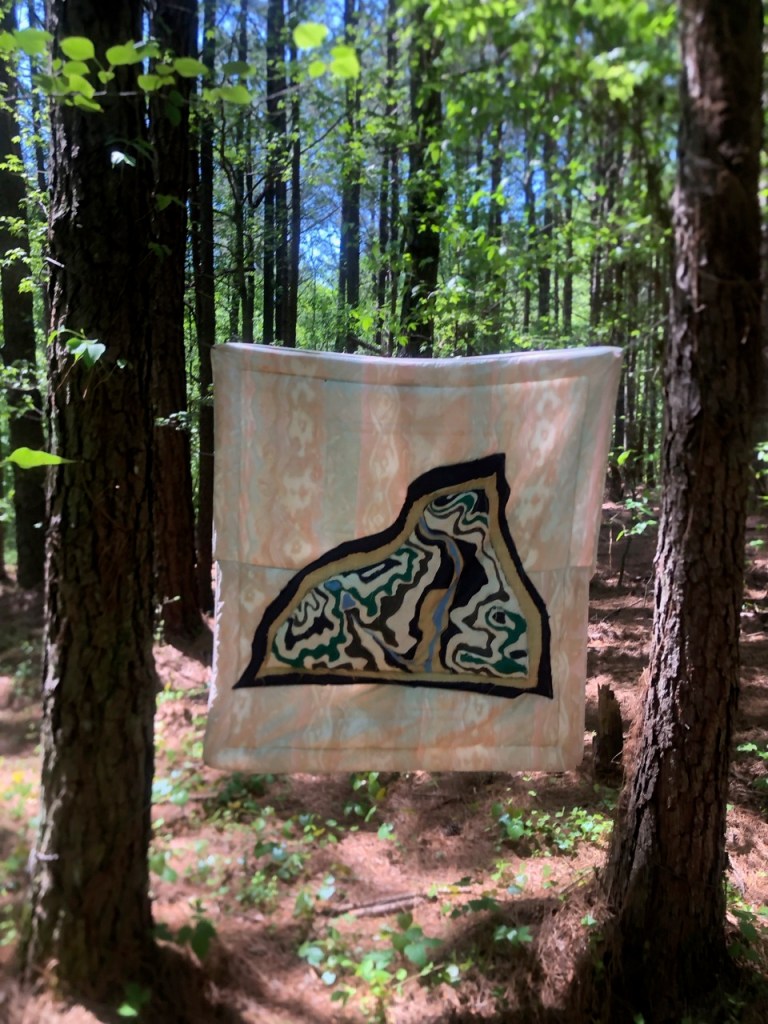
Map of the proposed South River Forest, suspended between two trees

A former activist encampment, just up the hill from the Grandmother Oak, sports a beautiful contour drawing of the South River Forest, suspended between two trees. An enigmatic memorial sculpture consists of poles arranged in a pyramid, that might recall an indigenous home or the sacred mounds of Mississippian civilization. Playful assemblages abound. I was especially struck by a stone fragment on which is inscribed the word “Virgil,” evidently from the disposed facade of the old Carnegie Atlanta Public Library, positioned along a significant forest path. This is I took to be a clever allusion to the opening sequence of Dante’s Divine Comedy, as the narrator wanders lost in the forest, until he encounters Virgil, ready to serve as guide on his first journey towards knowledge of the cosmos. (To be sure, these forest defenders don’t share the classical European understanding of forests as sites of moral confusion: rather, for them, the forest is itself a generative site of wisdom and enlightenment.)

Enslavement Histories

These forest trees are also witness to older tragedies. Muscogee Creek people were expelled from millions of acres in the US Southeast in the early decades of the 19th century. As Rev. Avis and I noted in our remarks Saturday morning, the lands of the proposed South River Forest were stolen from Muscogee people and distributed to white settlers in the Fourth Georgia land lottery of 1821, which made available land lots of 202.5 acres. Many of these white settlers established slave-based plantations on which cotton and other crops were produced through slave labor. Through archival research, we have been able to identify by name, as of this writing, at least 35 enslaved persons held on these lands, across about 12 plantations, from the 1840s until 1865. In a moving ceremony on Saturday morning, a group of us were able to read these names aloud, and pay witness to the lives of these individuals, whose stories have for far too long been relegated to the shadows.

1860 Slave Schedule. The year before his death, Lochlin Johnson owned 11 slaves residing in 3 dwellings (near South River/Conley Creek confluence)

We are less certain of the specific histories on these lands of enslaved African and African-descended peoples, held as human property by Lower Creek slaveowners, during the period from the mid-18th century until the 1820s, when Creek were forced off of these ancestral homelands. The most famous, or infamous, Creek-owned slave-based plantation in Georgia was Chief William McIntosh’s plantation Acorn Bluff [Lockchau Talofau] in present day Carroll county, Georgia ( a site now known as the McIntosh Reserve park). This is the site where McIntosh was executed in 1825 by a Creek warrior squad for having signed the Treaty of Indian Springs, at another property of his, in Butts County). Numerous enslaved people owned by Chief McIntosh and his associates were confiscated by the attacking forces, and then later distributed, under terms of the Treaty of Washington, to McIntosh’s heirs. These enslaved persons were moved west after 1827, to Fort Gibson and then deeper into the Arkansas Valley’s Indian Territory, later known as Oklahoma.

Rev. Avis and I touched on the fascinating story of Sarah Davis (1799-1886), as reconstructed by Gary Zellar in his book African Creeks: Estelvste and the Creek Nation. She was as at one point owned by the daughter of William McIntosh, Rebecca McIntosh, who in 1831 married Benjamin Hawkins, an educated, “mixed-blood” Creek and associate of Sam Houston. After Chief McIntosh was executed by Creek warriors in 1825, the enslaved Sarah was part of the forced emigration party led by Ben Hawkins and John Sells to Arkansas Indian Territory in 1830.

When Rebeca Hawkins left Indian Territory for Texas, she sold Sarah to her brother Daniel Newnan (D.N.) McIntosh, who later served as a colonel in the Confederate States Army. Sarah worked as an enslaved domestic servant for him, and around 1853 purchased her freedom and became a free African Creek merchant who lived in the Creek Agency settlement, west of present day Muskogee before (and after) the Civil War. She ran an inn that served meals and was a major force in the community. Her grandson was Joseph Davison, an important Creek African Freedman political leader. Many of their descendants continue to reside in the Muscogee area and elsewhere in Oklahoma.

Sarah Davis and many other members of her family are buried in the Old Creek Agency cemetery near Muscogee OK, in which an estimated 1,000 African Creek individuals are interred. The cemetery, on private land, is currently unavailable to visits by loved ones and descendants. We noted that as we honor the endangered South River forest, a site of so much tragedy, we should also reflect upon that distant forested cemetery in Oklahoma, which remains a site of great injustice, compounded by the fact that most Freedmen descendants were in the 1970s stripped of tribal citizenship and remain legally outside of the Muscogee Creek Nation (MCN).

Tragedy and Hope

The South River (Weelaunee) Forest and the associated South River watershed has seen multiple injustices across the generations, including decades of enslavement and post-slavery sharecropping, as well as a convict lease system that Douglas A. Blackmon has aptly termed “slavery by another name.” We are well aware that the forest zone almost certainly contains unmarked graves of those who died on plantations during slavery times and on multiple prison labor farms in the region across the 20th century. A little further downstream, the Flat Rock African American community emerged after the Civil War as a remarkable site of black economic opportunity, religious faith, and cultural expressiveness. (I urge everyone to see a first rate exhibition on this community at the DeKalb History Center in downtown Decatur). Yet, as we were reminded by Dr. Jacqueline Echols, President of the Board of the South River Watershed Alliance, the predominantly black and brown households of south DeKalb County, who reside within the South River watershed, remain particularly at risk from toxic sewage contamination of the river system, due primarily to storm water run off. A flawed Consent Decree between the EPA, the Department of Justice and DeKalb County has failed to achieve the goals set for in the Clean Water Act, and is currently subject to litigation by the Alliance.

Yet, for all these important sober reminders, the dominant tenor of the two day gathering in Weelaunee was exultation and optimism. It was delightful to meet so many of the Forest Defenders, who each day and night are putting their bodies on the line to safeguard this beautiful, fragile ecosystem. Volunteers (coordinated in part by Christine Ristaino of Emory) organized and served delicious, healthy food throughout the two days. The Mvskoke songs and dances, honoring the power of places from which Indigenous peoples had been excluded for two centuries, brought tears of joy to many eyes.

For me and Rev. Avis, the most memorable moment of the gathering came during the final panel, when Craig Womack reflected on the profound injustices committed against the Mvskoke Estelvste, the African Creek Freedmen who are descended, in many instances, from persons of African descent who had been enslaved by the Creek slave-owning elites in Alabama, Georgia, and Indian Territory. African Creek Freedmen and their descendants were guaranteed perpetual citizenship in the Creek nation under the terms of the 1866 Treaty through which the Muscogee Creek Nation, which had been allied to the Confederacy during the Civil War, was re-admitted into the United States. Yet, the Freedmen (descendants of those identified as Creek “Freedmen” in the early 20th century Dawes roll census) were deprived for tribal citizenship in the late 1970s. Craig spoke of this de-citizenship process as the lowest point in all of Creek history, a tragic and foolish decision that has caused immeasurable human suffering during the past four decades. Among other things, as he noted, de-citizenship has deprived African Creek Freedmen of access to tribal-funded medical care and higher education. Members of the Muscogee Creek Indian Freedmen Band, listening to the proceedings digitally from a great distance, were profoundly moved by Craig’s unconditional and compassionate statement of solidarity.

Perhaps, at a future gathering in this beautiful and imperiled forest, representatives of the Muscogee Creek Freedmen will join with their Mvskoke brothers and sisters, the forest defenders, and their many allies, in shared celebration and remembrance, reflecting on all that these trees have seen and all that might emerge here in the future. Attuned to the healing currents of wind and water, the gentle swaying of the trees, the musicality of the birds, we might raise our voices together. And in that way, we just might be able, at long last, to sing ourselves back together.

Note: Some of the April 22-23 presentations are audible on a loop through WRFG Atlanta 89.3 FM: https://streams.radio.co/sddb60f534/listen

_____________

For Further Reading

Mark Auslander and Avis Williams. Along the Ulcofauhatche: Of Sorrow Songs and “Dried Indian Creek” Southern Spaces, 18 February 2022.

Laura Harjo. “Spiral to the Stars: Mvskoke Tools of Futurity,” University of Arizon Press. 2019

Daniel Wildcat. “Red Alert! Saving the Planet with Indigenous Knowledge ” Fulcrum Publishing, 2009.

Craig Womack. Aestheticizing a Political Debate: Can the Creek Confederacy Be Sung Back Together? Southern Spaces. 2007.

Gary Zellar, African Creeks: Estelvste and the Creek Nation. University of Oklahoma Press 2007 (2021)

In Search of the “Welaunee” (South River, Georgia)

Rev. Avis Williams and I recently published an essay an contested Afro-indigenous and white historical narratives of the watercourse known as “Dried Indian Creek,” which runs through Newton County, Georgia. In local African American memory, this disturbing term was derived from the early lynching of a Native American leader by white settlers in the late 18th or early 19th centuries (See:
“Along the Ulcofauhatche: Of Sorrow Songs and ‘Dried Indian Creek.’“ Southern Spaces. February 18, 2022. (Mark Auslander and Avis Wiliams)
In recent months, we have become increasingly fascinated by the Afro-Indigenous histories of the South River Forest, a zone of about 3.500 acres in South Atlanta (within unceded Muscogee homelands) that has the potential to become the nation’s largest urban forested conservation area. The forest is being re-visited by Muscogee community members in April 2022, who are committed to helping safeguard and remediate the river system and the lands, plants, and animals it nurtures. (See a fundraising drive for these visits of return and reconnection.)

This imperiled ecosystem has a history that spans thousands of years of indigenous presence, up until the 1821 Creek cession, after which Muscogee (Creek) were forced westwards into Alabama and then into Indian Territory (subsequently known as Oklahoma). Following the 1821 Georgia Land Lottery, these confiscated indigenous lands were divided into lots of 202.5 acres each and acquired by white settlers, in what was then Dooly, Fayette, Henry, Houston, and Monroe counties. (DeKalb County, created out of part of Henry County, was established the next year, in 1822.) Many of these settlers established farms worked by enslaved people, whom Rev. Avis and I are working to identify and whose descendants we hope in time to trace.


We have been curious about the earlier, indigenous term or terms used for the South River, from which the South River Forest takes its name. Originating out of underground springs in the heart of what is now Atlanta, the river’s initial stretch is confined nowadays to piping and culverts. The watercourse emerges above ground at Norman Berry Drive, in East Point, north of Hartsfield-Jackson Airport and flows about sixty miles southeast to its confluence with the Alcovy and Yellow rivers (now inundated under Jackson Lake), forming the Ocmulgee River, the major western tributary of the Altamaha River, which empties into the Atlantic Ocean.

The authoritative Georgia Place Names, by Kenneth K. Krakow (3rd Edition, 1999) asserts that, “In early days [the river] was known as South Branch, Ocmulgee River, before the name was shortened to “South River.” Krakow does not list an indigenous term for the watercourse, yet several sources identify the South River as having born the name, “Welaunee” or “Weelaunee.” According to Martin and Mauldin, A Dictionary of Creek/Muskogee, “welawnee” means “green/brown/yellow” water.” RaeLynn Butler, Manager of the Historic and Cultural Preservation Department of the the Muscogee (Creek) Nation, explains (personal communication) that the term “Lane’ (law-nee) is Mvskoke for the color green, brown, or yellow, She also notes that the Mvskoke term, ‘Ue’ meaning water. is rendered n English as ‘we’

The U.S. Indian agent Benjamin Hawkins (1754-1816), who lived and worked extensively among the Muscogee Creek in the late 18th and early 19th centuries, identifies the indigenous settlement of Big Sawokli as being on the “Welaaunee Creek,” in what is now eastern Alabama (see Hawkins, Benjamin, A Sketch of the Creek Country in the Years 1798 and 1799. [The Reprint Company, Spartanburg, S.C 1982; Originally published in 1848 as vol. 3, part 1 of the Collections of the Georgia Historical Society, Savannah.] Several sites in eastern Alabama and northern Florida bear the name. Wylaunee Creek in far eastern Barbour County, Alabama flows into Lake Eufala. A northern Florida slave-based cotton plantation, known as “Welaunee,” was established in 1826 by the Gamble family in Jefferson County, Florida; a modern quail hunting establishment, Welaunee Plantation, is located in Leon County, Florida.

Principal Sources on the Weelaunee in Georgia

According to Vivian Price (1997). The History of DeKalb County, Georgia 1822-1900. Wolfe Publishing Company. (p. 36) the term “Weelaunee” was the indigenous term used for Georgia’s South River.

Detail showing “Weelaunee” River in Henry County, Henry Shenck Tanner, Map of Georgia and Alabama, 1823.

Price’s assertion is supported by several sources. Henry Schenk Tanner’s 1823 “Map of Georgia and Alabama” (from his New American Atlas project, often considered the pinnacle of antebellum American cartography) depicts the eastern extension of what is now the South River, forming the boundary between Newton County and Henry County, as the “Weelaunee R.” Tanner’s map does not depict the headwaters or western course of the river, within DeKalb County or what was then Gwinnett County (before the establishment of Rockdale County); these sections had presumably not been charted at the time of the map’s publication. The map does depict in detail indigenous communities then under the governance of Muscogee (Creek), Choctaw, Cherokee, and Chickasaw nations, primarily to the west of the Flint and Chatahoochee rivers. (At the time of the map’s publication, DeKalb County, bordered to the west by the Chataahoochee, was the westernmost extension of the white-governed state of Georgia.)

This same map is perhaps referenced in an 1884 entry in the Covington Enterprise [Newton County, GA): “The Georgia Railroad, desiring to name some palace cars after the, Indian names of our three rivers, asked Judge T. M. Meriwether to get them up. After diligent search the Judge found an old map and the following names were given: Yellow river—Coo-lau-poo-chee; South river— We-lau-nee; Alcova river— Ulco-fau hatchee.” (Reprinted in the Savannah morning news. (Savannah, Ga.), March 22, 1884, p. 1, column 3.)

Fifteen years later, in 1899, several Georgia newspapers published an elegiac commentary on the South River by Lynda (or Linda) Lee, entitled “Welaunee; Indian Legend of the South River, on whose banks several notable Georgians were born. ” She writes, “South River, the pale face called it, but the red man, with poetic tongue, gave to it the melody of music, the beauty of legend, when he whispered lovingly, “Welaunee.” (see The Sunny South. (Atlanta, Ga.) 1875-1907, April 22, 1899, p.3, column 1; also see The Macon Telegraph (Macon, Georgia). 26 Mar 1899, Page 5, column 4.)

“Welaunee” was also adopted around 1920 as the name of a mill in Porterdale, Newton County, Georgia, along the south bank of the Yellow River, replacing the older Phillips Mill.

The only current Georgia location I know of that bears the name is “Weelaunee Road” in Ellenwood, Georgia (south DeKalb County) which extends south from the South River about a half mile, due south of the Snapfinger Creek Wastewater Treatment Plant.

We are eager to learn if any Muscogee (Creek) documentary sources from the late 18th or early 19th centuries reference the rivercourse now known as the South River as the Welauneee or Weelaunee. We appreciate that in indigenous usage waterways may not have been known by a singular, fixed term and that the concept of “yellow, green or brown water” may have applied, at various times, to multiple rivers and riparian landscapes. Perhaps future collaborative inquires will cast more light on saliet toponymic practices in the region.

Acknowledgments: We are grateful to Hendry Miller, Georgia State Archives. for guidance on early uses of the term “Welaunee” in Georgia.

Czernowitz Art in Peril: The Mosaic Mural of Joseph Lang

The noted curator and art historian Tetyana Dugaeva has been attempting to call global attention to the unthinkable threats posed to the artistic treasures, cultural heritage, and peoples of her beloved city of Czernowitz (Chernivtsi) in southwestern Ukraine, in the face of the unfolding Russian invasion. She recently updated her Facebook home page image to display a striking art work designed by the Art Nouveau artist Joseph Adolph Lang (1873-1936), displayed as a ceramic glazed “majolika panel” on the outer wall of the imperiled Chernivtsi Art Museum.

Joseph Adolf Lang, Detail, Mural of the provinces. Chernivisiti Art Museum.

I find myself speculating why Tetyana has chosen this particular image, of all the wonderful works of art in Czernowitz, to represent the city and the Bukovina region at this moment of supreme danger. (It is difficult to be in touch at the moment with all our Czernowitz friends and colleagues; I would of course welcome corrections and further interpretations from those who are able to reach out at this terrible time.)

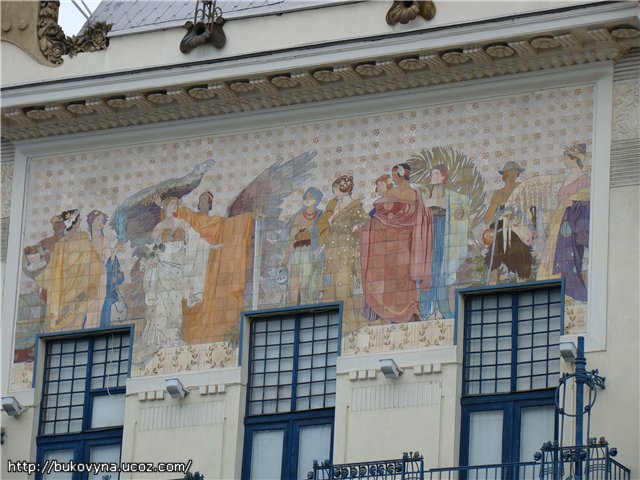
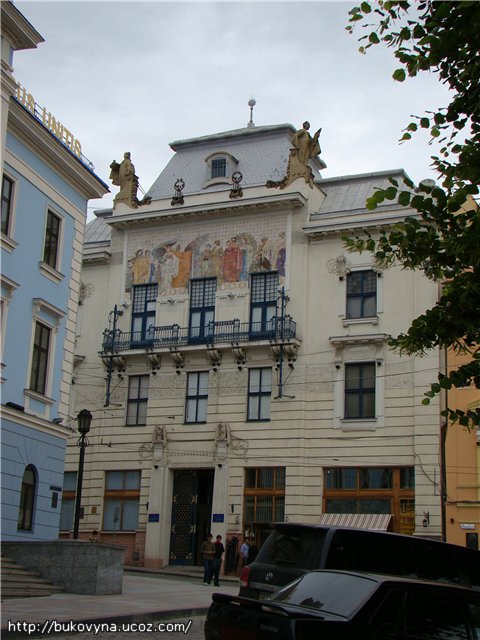
The image is drawn from the large ceramic Majolika glazed mural on the outer facade of the former Bukowiner Sparkasse, the head office of the Bukovina Savings Bank, now the city’s beloved art museum. The building, constructed 1900-1901, is considered a masterpiece of Austro-Hungarian architecture, and is closely associated with the Vienna Secession movement. Tetyana’s persistent “detective work” some years ago identified Lang as the artist of this famous composition. The majolica panel itself was produced, she notes, at the Zsolnay Ceramic factory in Hungary. (See: http://versii.cv.ua/kultura/mystetskyj-detektyv-chernivetska-majolika-hto-jiji-tvorets/6846.html). The title of the panel, installed above the third floor windows of the building, is “Allegory of honoring Bukovina on the occasion of the anniversary of the adoption of the constitution and receiving the coat of arms of the region.”

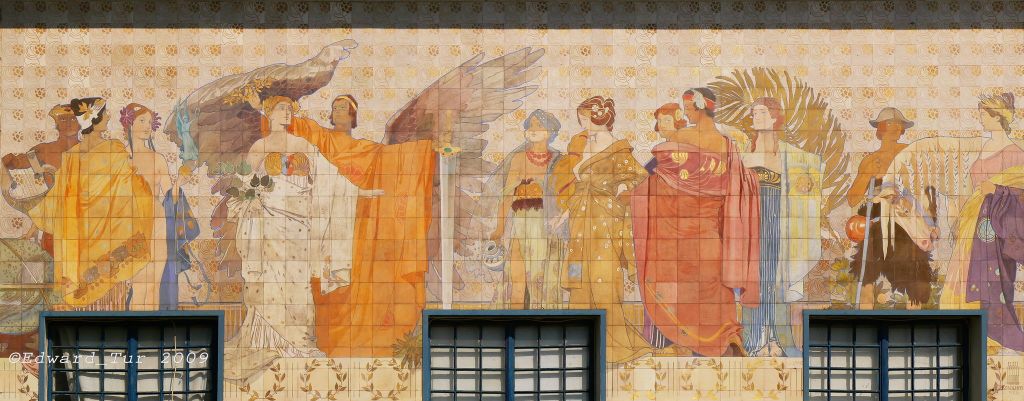
A dozen classical gods, depicted in the Art Nouveau/Secession style, allegorically evoke the twelve provinces of the Austro-Hungarian Empire (at times referenced at the Dual Monarchy).

Joseph Lang allegoral panell Edward Tur photo, 2009. Source: https://art.nouveau.world/josef-adolf-lang

The female figure, fourth from the left, in white and bearing green branches, signifies the province of Bukovina, for which Czernowitz served as capital. (The southern section of Bukovina now fall within Romania.) Appropriately, she wears at her breast Bukovina’s Coat of Arms. She is partially sheltered by the left wing of a great angel in an orange robe, who, Iosif Vaisman explain, allegorically represents the Hapsburg monarchy. The angel grasps a gleaming metal broadsword, referencing the monarchy’s maintenance of order throughout the Empire.

Joseph Lang Mural. Facade of former Bukowiner Skaprkasse Bank, Chernivisti Art Museum

The appropriateness of the front facade of the art museum for symbolizing the art and cultural heritage of the entire city is clear. The Secession movement, especially in hindsight, evokes the genius of fin de siecle Vienna, and by extension the cultural sophistication of Czernowitz, which was closely linked to Vienna in the final decades of the Austro-Hungarian Empire. Joseph Lang, who practiced as an artist in Germany and Austria, exemplifies Czernowitz’s cosmopolitanism in history and memory.

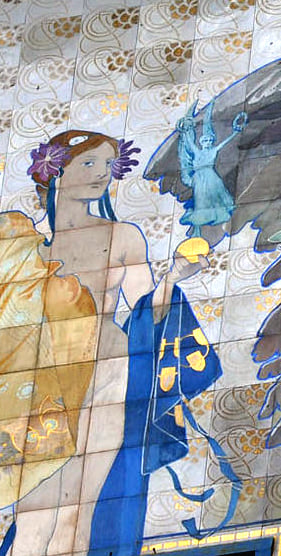
It is noteworthy that the detail selected by Tetyana depicts a nymph-like nude female figure, who has draped over her arm a blue cloth with interlinked yellow heraldic shields, and holds in her hand a golden ball, on which is balanced a blue statuette of a winged Nike, under the sheltering expanse of the angel’s great wing. Although these motifs presumably meant something very different at the dawn of Twentieth Century, at the current moment of crisis it is hard not to think of Ukraine herself, symbolized by the colors of blue and gold, uplifted by the visage of Nike, goddess of victory. At this time of mortal peril for the peoples of Ukraine, as missiles and massed artillery fire rain down mercilessly upon the nation’s civilians, who among us cannot pray for the sheltering protection of an angel’s wing?

Chernivisit Art museum facade. Joseph Lang mural above third floor windows.

As I write this, Joseph Lang’s outdoor lyrical mosaic mural is unbearably vulnerable, easy prey for a single tank round or strafing run from the air. Its twelve beautiful figures, redolent of a lost golden age, are emblematic of this venerable, endangered city, of its stunning art treasures, and of millions of Ukrainians now at risk. As impossible as it now seems, may this striking image, now glimpsed on line around the world, help awaken humanity’s better angels, and urgently call forth the forces of compassion and rescue.

___________________________________________

Many thanks to Iosif Vaisman and Tetyana Dugaeva for helpful comments on an earlier draft of this post. A higher resolution of the mural panel is visible at: https://art.nouveau.world/sites/default/files/ArtefactPictures/Ukraine/Chernivtsi/Panno.jpg

For those who read Ukranian, Tetyana Dugaeva’s detailed articles on Joseph Lang’s work and career are accessible via: https://sites.google.com/view/tdugaeva/articles?authuser=0&fbclid=IwAR3__-dthUMaAmbgUQg5-AMknAPo3CEoCXsR2EhAMXQAZy4qzkfz7xtffgc

For more on the arts of Czernowitz, see the Czernowitz art album by Tetyana Dugaeva and Sergij Osatschuk: http://ehpes.com/blog1/?p=10364

Setting a Dream in Motion: Reflections on The 2021 “Red Road” National Story Pole Journey

Carving is the result of dream, a vision, or a spiritual message”
-Pauline Hillaire, Lummi historian and story-teller

In July 2021 the “Red Road to DC” project traveled across the country to present the Biden Administration with a twenty-four foot carved story pole created by members of House of Tears carvers of the Lummi Nation. Visiting sacred Native sites and environmentally endangered locales, from Bears Ears National Monument to the point where the Dakota Access Pipeline crosses the Missouri River, the pole was greeted and touched by hundreds of Native and non-Native supporters. Their combined energies, charging and recharging this object, helped, we hope, to remind the administration of its sacred obligations to honor treaty rights with tribal nations, to safeguard biodiversity and environmental sustainability here and abroad, and to uphold human rights.

(A brief video on the Red Road journey is visible at: https://www.youtube.com/watch?v=EVjYHq6tqQc&t=6s

Of the many extraordinary things about this pole, I am most fascinated by a dream that it carried within it.

For the Native peoples of the Pacific Northwest, carving has long been bound up with dreams and revelatory visions. Animals and spiritual beings carved in masks and story poles (sometimes known as “totem poles”) are often inspired by dream-visions given to the carver, a gift from the ancestors or other spiritual beings. Through the carved object, the dream is allowed to flourish and enter into the minds and souls of other persons, near and far, through masked performances, through towering story poles, and through gifts presented in potlatch or other ceremonial events. Perhaps a dream-gift most fully realizes its potential when it is shared and made accessible to many other people, binding them to one another, to nature’s beings, and to the mysterious forces of the invisible world. Dream images thus may inspire and generate further dream visions, which are given form through more acts of creation, imagination, and reciprocal exchange. Carving, in effect, helps set dreams in motion and in so doing helps transform people’s minds and hearts as it builds community between living people, the ancestors, and the spiritual energies coursing through the natural world.

Many visionary dreams were evoked in the Red Road pole, which journeyed from the Lummi lands in northwestern Washington state to the Smithsonian National Museum of the American Indian in Washington DC. At its is base we behold the waters that sustain life for all things, the very waters that are imperiled by extractive fossil fuel industries and associated petrochemical complexes, The figure of Peyote Woman reminds us of the visionary quests enabled by the sacred plant of peyote, which can help heal wounded psyches and communities. Peyote Woman is flanked by seven carved tears that bear testimony to the seven generations during which Native peoples have suffered under the depredations of settler colonialism. We glimpse some of the current nightmares that emerge from this long, painful history, including traces of Missing and Murdered Indigenous Women and the predicament of detained children, many of Mesoamerican indigenous heritage, held in immigration cells. We also see important animal spirits that are at times glimpsed in dream vision, including a climbing bear and the great head of a diving eagle. At the pole’s apex is a spherical rendition of the full moon, within which is seen a crouching Native American man in front of a sacred fire, perhaps embarking on a vision quest that will yield further dream images.

One dream associated with the pole is particularly rich and moving. In his artist’s statement, master carver Jewell Praying Wolf James’s describes a dream he experienced late in the production process of this remarkable object:

I was with my maternal-side cousin, we were traveling in his truck, and making a short stop. I was sitting in the passenger seat, looking out the window and could see it was windy. As dreams are, I could see the waves of the wind. At that moment, a single Eagle Feather came traveling, upright, in the wind, like it was dancing. My cousin said, take it. It danced right to my window and I was getting ready to take it from the wind, as my cousin said, “Open your window and take it!” I replied, “I am trying to get the window down now.” I woke up. I call this dream, “Wind Dancing Eagle Feather.” At this time, all the totem pole figures were completely added to the Sacred Sites Totem Pole. But, there was one small, mid-section site on the pole (right side), that was sanded but not carved (not even gouged like the same spot on the opposite side) in any fashion. This “feather with the visible wind waves” was carved in that spot. To me, this will always be the “Wind Dancing Eagle Feather” Totem Pole.”

The dream in the truck would seem to be anticipatory, a kind of dress rehearsal for the great cross-continental journey the pole was about to embark upon. The Lummi are people of the sea, deeply attuned to the waves, winds, and currents of the Salish Sea, in which reside the orcas, their “relatives under the waters.” Thus, it seems appropriate that the dreamer apprehends within the wind the pulsating energies of waves. From this wind, as he prepares to set forth with his great gift of the pole, the dreamer himself receives a gift, a single dancing feather. Not coincidentally, this is the feather of an eagle, which bears great significance in Native American spirituality. The Eagle, of course, also appears on the Great Seal of the United States, and is thus an appropriate emissary in a mission that moves from Native America to the U.S. Government.

It seems all the more fitting that a space was left empty for the carved feather mid- way along the pole, on the right side. Like all significant gifts, the pole contains within itself the relationship between giver and receiver, in this instance between Native peoples and the Federal Government. What better mediator, halfway between the pole’s base and apex, than the feather of a bird that is sacred to both donor and recipient, carved into the right side, a side associated for Lummi peoples with life and enduring vitality?

The wind and wave energies that power the light feather, gifted in the dream, perhaps helped launch the large pole on its journey from one coast to another, as the carved object prepared to take wing across the continent, traversing a multitude of sacred places and encountering many Native and non-Native supporters, who would bless the pole by touching it. High-flying eagles, gifted with extraordinary vision, perceive no borders on the land below them; perhaps the single, solitary feather, imbued with the forces of wind and eagle, will help convey to its intended recipient the gift of seeing a borderless world, a vast web of life in all its infinite interconnections.

I can’t help but speculate about the fact that the truck was being driven by the carver’s maternal cousin. Traditionally, men of the Lummi and other indigenous peoples of the northwest coast at times marry women who come from their mother’s side of the family.. Might the feather dancing down from the wind towards the maternal cousin’s truck thus be a kind of “spirit-wife” for the dreamer, the very essence of gifting itself, coming from the invisible world into the visible world? What better thing, as an ephemeral bond between the spirit world and the mortal world, and between Mother Earth to her children? What better gift to enliven the story pole in the very final moments of its creation, as it becomes a shining beacon, destined to blaze the path, the Red Road, from sea to shining sea?

Opening the Window

A final thought. We are often strangely paralyzed in dreams, knowing we ought to do something but incapable of fulfilling that imperative. So I suspect we all recognize the dreamer’s frustrating predicament, being told by his cousin to open the truck window to receive the gift, but not quite being able to roll the window down. Like the truck, the dream too is stopped in place, and he simply can’t grasp the offered feather, which is tantalizingly close.

It isn’t easy to receive a gift, especially one of spiritual and artistic inspiration. Perhaps that is the point: the dreamer can’t at this moment seize the feather, because it isn’t yet his to take. He can only come to grasp it later, after he has awakened and carved it on the pole, completing the sacred object. Until that moment, there is something standing between him and the alluring image of the feather dancing in the wind waves. The window can only be opened, and the feather can only be properly held, once the dreamer awakes, and undertakes the inspired act of artistic creation, finally bringing out a shape whose energies may have been incipient in the western cedar log all along.

There’s another thing about vehicle windows, in our strange era. For nearly two years, air, which ought to be experienced as the unequivocal gift of breath and life, has become a source of persistent anxiety for all of us. How many times since March 2020, have we wondered about whether or not to roll down a car window when people are standing or walking nearby: do we risk breathing in the virus, or panicking them that they might catch something from us? We have all been prisoners in one way or another, condemned for an indefinite sentence to view the world through windows, longing to embrace fully the great world beyond, as we mourn the many thousands gone. (As the Red Road to DC was being planned in spring 2021, we all anticipated a grand opening up of the world; after successive waves and variants, this initial optimism has of course been tempered.)

The Red Road was, to be sure, an emergency mission, a journey to help save Mother Earth at what might be the moment of her greatest peril. It is serious business, and as the seven tears carved in the pole remind us, there is a long history of dispossession and injustice being witnessed here. Yet the Red Road was also an occasion of extraordinary exhilaration, opening up all of us to re-connection with other people, other places, the glories of nature’s beings and landscape, and the rich spiritual traditions of Native America. The pole carried with it, as well, the promise of a new administration and the delight and pride in knowing that Debra Haalland had been confirmed as the first Native American Secretary of the Interior. Like all great gifts, the pole traversing the Red Road blazed a path to a new future. Many dreams may finally be brought to life. After a long period of confinement, of only knowing the world through TV screens, computer screens, smart phone windows, windows, and windshields, the activists sought to travel out and through the world, to grasp and breath in physical substance, to experience once more the authentic and the unexpected. We finally get to roll down the windows, and race down the highway, waves of wind blowing over us, our faces streaked with tears—tears that just might, be in this long-dreamt of moment, our shared tears of joy.

Race and Gender in de Benabarre’s Saint Michael Angel (c. 1470)

Recently my Decolonizing Museums seminar (Boston University) had a fascinating visit with the interpretive staff at the Isabella Stewart Gardner Museum. The team shared their innovative approach to engaging visitors with Pedro García de Benabarre’s magnificent painting Saint Michael Archangel (c. 1470), which hangs over a large fireplace in the second floor Tapestry Room. I must admit that I had never really looked closely at this startling and compelling work.

Pedro García de Benabarre (active Catalonia, 1455 – 1480)
Saint Michael Archangel, about 1470

In their excellent website text and online audio guide, the Gardner’s interpretive team offers a layered approach to the painting, starting with a conventional art historical appreciation, explaining the various elements of the image: Archangel Michael seated on a throne in Heaven weighs souls (two white clothed small beings on scales) and subdues with his lance two-faced Lucifer, who lays prostrate on the tiled floor. (The catalogue notes, “This painting was originally a side panel of a large altarpiece dedicated to John the Baptist, installed in the church of Sant Joan del Mercat in Lleida, Catalonia.:)

The visitor next accesses a thoughtful extended audio commentary by multimedia artist Elisa Hamilton, part of her 2019 recorded artist’s walk through the Palace galleries. Hamilton begins by noting that she has long been drawn to the painting; towards the end she notes that as she came to learn more about the work, she was troubled, especially as a person of color, by the work’s “ugly historical trope,” associating evil with black skin

Following our class discussion of the image, I have been pondering the imagery of Lucifer as multi-faced and black-skinned. Dante’s The Inferno, although written around 1320, was first published in 1472, so it is possible that de Benabarre was influenced by Dante’s vision of the Devil as possessing three mouths of sharp teeth devoted to chewing on sinners. The association of the demonic with blackness or darkness can be traced back to antiquity. In the New Testament, 2 Corinthians 6:14-15 contrasts the lightness of Christ with the darkness of the demon Belial (at times taken as a synonym for Satan). Fra Angelico’s painting The Last Judgement, created in 1431, four decades before the de Benabarre image, depicts the Devil as black skinned, with white horns, munching on his victims in a boiling cauldron.

Africa Connections?

Having said that, it seems likely that the specific figuration of Satan by de Benabarre is related to the Iberian peninsula’s complex relationship with African-descent populations across the centuries. John Thornton notes that under the Almoravids, West Africans from the polities of Tarkur and Ghana (corresponding, roughly speaking, to the area of modern Senegal) were incorporated into Muslim armies in Iberia. Israel Burshatin (1985) in his exploration of the often subtle and complex depictions of Moors in Medieval Iberian letters, references the overt equation of Moorishness, blackness, and the Devil in the 13th century Castillian epic poem, Poema de Fernan Gonfalez (written c, 1250-1266), which recounts the Count of Castille Fernán González’s campaign against Moorish adversaries, described as: “Uglier than Satan and his conventicle [coven] combined / When he comes out of hell, dirty sooty”” (Footnote 1)

By 1462, Portuguese slave traders were established in Seville, and by the 1470s, when de Benabarre created the work, African slaves were increasingly common throughout Christian Spanish realms. In 1460, Portuguese had landed on the shores of what is now Sierra Leone. By 1471, the Portuguese had a presence between the mouths of the Ankobra and Volta rivers, a region they termed A Mina (“the mine”), today’s Elmina, in the area that would be known as the Gold Coast, now Ghana; the next year, Fernão do Pó landed on the island that would bear his name, now known as Bioko in the vicinity of modern day Cameroon. It seems likely that de Benabarre had heard or read reports of extremely dark skinned African people, even if he had not met any directly. Satan’s upward thrusting fangs, perhaps modeled on the tusks of a wild boar, his webbed feet, tiny tail, and sharp talons presumably signal the imputed animality of Africans in Christian Iberian imagination of the period.

It would appear that de Benabarre has chosen to depict Lucifer in a rather sexually ambiguous manner, with curving, alluring hips, perhaps all the better to seduced wayward souls. In contrast, Michael’s elongated phallic lance plunges from between his legs towards Satan’s midsection, in a way that might signal both domination over and disambiguation of an inter-sexed being. All of this would be consistent with emerging 15th century Christian conceptions of reimposing gendered dichotomies on the ostensibly sexually ambiguous bodies of non Christians, on the eve of the completion of the Reconquista and the expulsion of Jews and Muslims from Spain.

I am equally fascinated by Satan’s second face, a large orange visage that stretches from the demon’s upper torso to his groin area. Speculatively, might the image have been inspired by a masked form of a West African masquerade, potentially encountered by Portuguese explorers in coastal regions? I am reminded a bit of Temne masks, from the region that is now northwestern Sierra Leone, where Portuguese sailors did in fact land during the 1470s. It is also possible that the principal inspiration is from grimacing Catalan and other Iberian festival masks (which may themselves have emerged out a long history of trans-Mediterranean cultural exchanges.)

In any event, I do wonder if the visual organization of the painting, with the triumphant white Archangel high above the prone dark Devil, might have geographic referents, evoking growing (or hoped for) Christian Iberian economic and military power over Muslim states and over African polities. It is possible that the curving shape of Lucifer’s body was inspired by the North African coastline, which was depicted in early maps of period, such Grazioso Benincasa’s 1482 chart (below). Alternately. Satan’s body might signal the West African coastline north of the equator, with which Christian Iberians in the 1470s were increasingly familiar. Perhaps the gold with which Michael’s breastplate is adorned signals the gold wealth of the Akan region, with which Portuguese and Spaniards of the 1470s were deeply fascinated. In that sense, this image of a resplendent white Christian saint directing a lance towards the dark figure below, may be said to anticipate the coming era of vast Iberian extraction of mineral and agricultural wealth as well as human capital, from West and Central Africa.

Grazioso Benincasa. Biblioteca Universitaria, Bolonia.1482.

Footnotes

1, Poema de Fernan Gonfalez, ed. C. Carroll Marden [Baltimore, 1904], p. 56, st. 11. 3-4., quoted in Burshatin 1985: fn26. Burshatin suggests that the the imagery in the Poema, unusual for Iberian writing of the period, echoes the racialist figurations of the French epic poem Chanson de Roland.

Resources

Israel Burshatin,1985, The Moor in the Text: Metaphor, Emblem, and Silence Critical Inquiry. Vol. 12, No. 1, “Race,” Writing, and Difference. (Autumn, 1985), pp. 98-118.
For an overview of emerging Medieval depictions of Satan, see Marina Montesano, Horns, Hooves, and Hell: Images of the Devil in Medieval Times. National Geographic, 2 November 2018.

Panegyric Imagery in Zanele Muholi’s “Somnyama Ngonyama”

Zanele Muholi’s photographic series of digitally altered self-portraits “Somnyama Ngonyama” (translated by the artist as “Hail, the Dark Lioness”) consists of carefully posed images taken in locations around the world, through which the artist-activist gives voice to a vast number of black South Africans, primarily LGBTQ, long relegated by dominant social institutions to the shadows and the depredations of violence.

The works, exhibited in numerous galleries and collected in a striking monograph, have received extensive critical and scholarly attention. I have been especially impressed by Nomusa Makhubu’s essay “Performing Blackface: Reflections on Zanele Muholi’s Somnyama Ngonyama,” (OnCurating v.49 ) which perceptively unpacks elements of parodic inversion and queer critique of colonial racialist minstrelsy imagery in these compelling, disturbing images.

In this post, I’d like to build on Makhuba’s discussion in light of my interest in ritual poetics among Nguni-speaking speaking peoples. I am particularly fascinated by the ways in which Muholi’s creatively plays on the symbolic repertoire of izibongo royal praise poetry in isiZulu and other Nguni languages.

As Makhuba notes, the title of the series, “Somnyama Ngonyama” could be literally translated from isiZulu as “Dark Lion.” Why does the artist insist on the English translation, “Hail, the Dark Lioness,” emphasizing praise and rendering the noun female? David Coplan notes that in contemporary Zulu networks, the term “hail” is at times used to signal gender and queer inclusivity. Beyond this, the term “hail” would appear to index the long tradition of royal praise poetry in Nguni-speaking societies, in which the sovereign is at times characterized as a lion, with the royal-coded term “Ngonyama” favored over the ordinary isiZulu term for lion, “ibhubesi. ” Hence, the izibongo praise poem of King Shaka: “UyiSilo! UyiNgwe! UyiNgonyama!” (You are a wild animal! A leopard! A lion!) (Cope 1968, 108-9, also quoted in Gunner 1984: 289). The term is also used in one of the most widely heard (if not universally understood) lyrics in the world, the first line of “The Circle of Life, “ the opening number of The Lion King, “ Nants ingonyama bagithi Baba”, to which the chorus responds, “Sithi uhm ingonyama”, a call-response sequence which may be translated as “Behold, a lion [king]’ is coming, father/Oh yes, it is a lion [king].”

During my fieldwork in Ngoni communities in eastern Zambia, royal praise singers (iizimbongi) with whom I consulted often emphasized that their work was “heavy” and ritually dangerous. The pangyerics that they perform in rapid, fierce, staccato rhythms metaphorically model the king as a lion or leopard, who pounces upon, tears apart and “stabs” at is victims. Explained one senior poet, “When I sing this way, I become like the king, but I can be a victim at any moment of his rage, and of the anger of all the kings who came before him.” Another explained, “When I speak, I feel every wound that pierced the king and his forefathers, but I am unbowed and so we rise to victory.” To call up the most potent aspects of the sovereign is to unleash violent energies, that condense and make visible the king’s multidimensional status, hated and stalked by his enemies, even as he rises as a predatory war leader who sheds his blood on behalf of his people, striking down external and internal adversaries, seen and unseen.

The Nguni sovereign traverses the ambiguous terrain between this world and the other world of the shades, in ways that are necessary for cosmological reproduction yet tinged with destructive potential. At the climactic moment of the Swazi incwala ceremony of first fruits, the monarch manifest himself as the monstrous creature of the bush, “Silo,” who bites (luma) and tosses a first fruit so as to expel the pollution of the previous year, paving the way for safe consumption of the new year’s produce by the entire polity. At an early moment of the ceremony, a bovine is ritually slaughtered on the sovereign’s behalf, allowing him to enter into a “dark” phase of existence, from which he and the kingdom may be triumphantly reborn anew. Praise singers, it is said, embody these dangerous transitions, moving across thresholds between life and death, between being predators and being themselves predated upon.

Speculatively, Zanele Muholi moves across a comparably ambiguous terrain in this series. The artist embraces deep blackness with defiant pride, with full knowledge of the enormous dangers posed to persons of color in general and queer persons of color in particular. Rather like a royal praise singer, Muholi fully embodies the position of the exalted being they seek to honor, in all of its rich contradictions, as a locus of danger and assertiveness, even while, as a witness to that glory, they assume positions of intense vulnerability.

The artist’s translation of Ngonyama as “Lioness” may also emerge, in part, out of the deep cosmological structure of Nguni kingship. There’s considerable evidence that precolonial Nguni sovereignty was “diarchic,” founded on complex co-rule between the (often secluded) Queen Mother and the more visible male king, with the female sovereign responsible for the periodic rebirth and growth of the land, and the male monarch especially associated with war, conquest, and blood-letting in sacrifice, hunting, and the upholding of legal principles. Among the best known queen mothers in Nguni history was Ntombasi of the Ndandwe kingdom, who appears to have been a predominant co-ruler with her son Zwide, before the kingdom was routed by the forces of Shaka Zulu, whose mother Nandi herself wielded considerable influence prior to her death.

It may be that in the Somnyama Ngonyama series, Zanele Muholi is similarly embodying a diarchic or multi-gendered continuum of sovereignty, which like the moon itself waxes and wanes over the course of the annual cycle. For a year, the photographer shot a self portrait each day, depicting the great range of dangers facing black South Africans and queer persons, across a range of gendered positions. (The series is ongoing.) “Phindile I” (Paris, 2014) shows their body arranged in the odalisque postion classically used to depict inmates of a royal seraglio. “ Somnyama I, (Paris, 2014),” seems to depict the figured associated with high ranking warrior status. In “Zamile (KwaThema, 2016O,” Muholi appears as a male novice undergoing initiation, wrapped in a blanket. In “Thulani II (Parktown, 2015)” they wear headgear reminiscent of a miner’s helmet, honoring the dozens of strikers killed in the 2012 Marikana massacre. In contrast, .“Thuleleni, (Amsterdam, 2018)” presents the artist in a ruff collar reminiscent of the wealthy Dutch merchants who oversaw the colonial project.


The net effect is to interpolate the “visual activist” Muholi into a dizzying range of embodied subject positions, taking themselves and their audience through an odyssey of pain, vulnerability, and loss, from which they emerge fierce, unbowed, and ultimately victorious. Such is the journey of the Nguni imbongi (royal praise singer), who takes on the suffering, the power, and the danger of the one who is praised, in order to channel creative flows of energy that summon up and reconstitute the sovereign social order. As Muholi hails this hybrid, multi-gendered dark lioness, that sovereign order is radically restructured, giving birth to a better world that fully encompasses and affirms those who were, for so long, consigned to the outer limits of the social.

References

Cope, T. Ed.),1968. Izibongo: Zulu Praise Poems. Oxford, Clarendon Press,

Gunner, Elizabeth Anne Wynne, 1984. Ukubonga Nezibongo : Zulu praising and praises., PhD Thesis, School of Oriental and African Studies University of London

Resources

Cooper Gallery (Harvard University) virtual tour
https://coopergallery.fas.harvard.edu/somnyama-ngonyama

Guardian Arts and Design

https://www.theguardian.com/artanddesign/gallery/2017/jul/14/zanele-muholimy-somnyama-ngonyama-hail-the-dark-lioness-in-pictures

Tate Retrospective

https://www.tate.org.uk/whats-on/tate-modern/exhibition/zanele-muholi

Reflections on Creek Freedmen and Legacies of Enslavement at Emory University

Recently, I gave an invited presentation at the symposium “In the Wake of Slavery and Dispossession: Emory, Racism, and the Journey Towards Restorative Justice” (September 29-October 1, 2021) at Emory University. The gathering sought to draw attention to two critical aspects of Emory’s early history, the enslavement of African Americans, whose coerced labor enabled the first three decades of Emory’s College existence, and the coerced alienation of indigenous lands, upon which Emory College and its environs were constructed from 1836 onwards, and upon which the Atlanta (Clifton Road) Emory campus was constructed from 1915 onwards.

The panels and presentations were fascinating and illuminating, highlighting the unresolved legacies of the removal of Muscogee (Creek) communities from the lands that later became Newton and DeKalb counties, where Emory’s Oxford and Atlanta campuses are now located, as well as the historical implications of enslavement, and the long-term disavowals of slavery, on the Emory campuses. The conference keynote address, “Universities as Instruments of Colonialism,” by Craig Steven Wilder (MIT) brilliantly articulated the fundamental bond between enslavement and indigenous land dispossession in the foundational histories of American universities prior to the Civil War.

My presentation, “Families Divided: The Human Costs of Enslavement at Emory”, developed themes in my 2011 book, The Accidental Slaveowner, and my more recent research on enslavement on the Atlanta Emory university grounds. I concentrated on the enslaved families associated with Emory who were torn apart through slave sales, estate distributions, gifts, and sexual violence. (See the presentation on YouTube at

(The whole symposium is accessible at

As part of my talk, i emphasized that the Oxford African American community, whose ancestors had been enslaved at and around Emory College, has remained deeply interested in the stories of their indigenous ancestors. Many trace their lineages in Oxford back to enslaved Native American individuals held by Emory’s leaders, including Cornelius Robinson, owned by Emory’s president Alexander Means, and Angeline Sims, owned by Richard Sims, a founding member of the Emory Board of Trustees. Elderly community members recall that Afro-indigenous communities, related to these enslaved indigenous persons, continued to reside in Newton County, along the Alcovy River and Turner Lake, into the early 20th century, until they were forced off their lands by the county’s white leadership.

I further noted that black elders in Newton County have long been deeply interested in the fate of the Creek Freedmen, descendants of persons of African descent who were enslaved by Muscogee (Creek) slaveowners, within Georgia and Alabama, and then later transported along the Trail of Tears in the 1830s to Indian Territory, later known as Oklahoma. As chronicled in Gary Zellar’s 2007 monograph, African Creeks, and many other studies, Muscogee Creek communities were deeply divided between Union and Confederate partisans during the Civil War, although the Creek Nation itself was formally allied with the Confederacy, as were the other “Civilized Nations.” Slavery in the Creek Nation only ended in 1866, with the arrival of the U.S. Army in the region. When the Creek Nation signed a treaty with the United States in 1866, those individuals of African descent who had been enslaved by Muscogee, known as the Creek Freedmen, were guaranteed citizenship within the Creek Nation. Then, in 1979, the Creek leadership effectively expelled or dis-enrolled nearly all of those persons of African or enslaved descent. The Creek Freedmen for the past four decades have been struggling for the treaty to be honored, and for their citizenship status within the Creek Nation to be restored.

This issue has again risen to national prominence, in the wake of the 2020 McGirt Decision, which is anchored in the 1866 Treaty. Many Freedmen note that many Creek leaders have strongly supported the decision, which among other things holds that tribal reservations in Oklahoma were never de-established, and that native sovereignty must be reasserted in multiple domains, yet these same leaders have argued that other parts of the treaty, establishing the tribal citizenship rights of Creek Freedmen, as tribal members of African descent, can be ignored. Partly in light of McGift, Deb Haaland, the Secretary of Interior, has publicly spoken on the profound racial injustice of denying tribal citizenship rights to the Freedmen. The House Financial Affairs committee, chaired by Maxine Waters (D-CA) is likely to specify in the reauthorized Native American Housing Assistance and Self Determination Act (NAHASDA), that tribes must guarantee full tribal citizenship rights to Freedmen before federal housing assistance can be disbursed.

I was thus perplexed that there was little discussion of the Creek Freedmen issue at the Emory symposium. Muscogee (Creek) representatives were invited to participate in the conference, offering blessings and sharing accounts of educational initiatives at the College of the Muscogee Nation. The African American Oxford descendants and I were deeply moved by the blessings offered by the Creek Mekko (ritual specialist and ordained elder ) Chebon Kernell during the conference. Yet sadly. no Creek Freedmen, however, were invited to participate. In their opening and closing framing remarks, the symposium’s organizers did not address the continued injustice of racial apartheid within the Creek Nation, or the painful legacies of enslavement within Muscogee (Creek) communities. As a prominent Creek Freedman activist later noted, the university leadership vigorously opposed apartheid in South Africa during the 1980s; why is the same university’s leadership not protesting, or even acknowledging, structures of racial injustice within the Creek Nation, as the university seeks to nurture long-term connections with tribal actors and institutions?

This silence is all the more surprising given that in March 2021 Emory’s Carlos Museum hosted a remarkably penetrating forum on Creek Freedmen rights, in the wake of the McGirt Decision: https://carlos.emory.edu/freedmen-claims-relation-mcgirt-vs-oklahoma The panel, organized by Craig Womack (then Emory Professor of English), included the prominent Five Nations Freedmen representative Marilyn Vann; Eli Grayson (an activist for Creek freedmen rights, who is descended from both non-African Creeks and Creek Freedmen) and attorney John Parris, who has diligently pursued Freedmen legal rights in the courts. The Emory community and symposium organizers have been well aware of the Freedmen’s struggles. Why were they, in effect, sidelined during the symposium?

I appreciate that all involved seek to honor native sovereignty and are mindful of the profound historical injustices of force indigenous removal and land alienation, which were key to the foundation of Emory, and virtually all other institutions of higher education in North America. It is vital that universities advocate for the upholding of treaty rights, which have so often been abrogated by the Federal government across the decades. Yet in this instance, the rights of the Freedmen are clearly guaranteed within the foundational 1866 treaty, so defense of the treaty (and, by extension, of McGirt) logically calls for honoring Freedmen’s tribal citizenship claims. The university, it strikes many of us, is well situated to help encourage productive dialogue between Creek leadership and Creek Freedmen, continuing in the spirit of Craig Womack’s visionary work. Craig and others have emphasized that this is a critical moment, in which the university can exercise profound ethical influence in dialogue with progressive voices within the Muscogee Creek Nation.

It is my hope that as Emory University continues to explore forms of restorative justice, in the shadow of historical crimes against enlaved and indigenous peoples, that the predicament of the Creek Freedmen is not sidelined, but is rather kept front and center as all involved seek to right historical wrongs and build, collaboratively, the beloved community.

For further reading

Text

Chaudhuri, Jean and Joyotpaul Chaudhuri. A Sacred Path: The Way of the Muscogee Creeks. Los Angeles: University of California, Los Angeles, 2001.

Womack, Craig S. Art as Performance, Story as Criticism: Reflections on Native Literary Aesthetics. Norman: Oklahoma University Press. 2009. (see especially his discussion of the cultural politics of the Creek Freedmen issue, pp. 95-114.)

Zellar, Gary. African Creeks: Estelvste and the Creek Nation. Norman: Oklahoma University Press. 2007.

Web Resources

Austa Somvichian-Clausen. The Creek Freedmen push for indigenous rights decades after being disenfranchised. The Hill. December 7, 2020 https://thehill.com/changing-america/respect/equality/529047-the-creek-freedmen-push-for-indigenous-tribal-rights

Freedmen Claims in Relation to McGirt vs. Oklahoma/ A panel discussion on the historic 2020 Supreme Court decision. Michael G. Carlos Museum, Emory University. (Craig Womack, Marilyn Vann, Eli Grayson, John Parris). 2021
https://carlos.emory.edu/freedmen-claims-relation-mcgirt-vs-oklahoma

Creek Freedmen
http://www.thecreekfreedmen.com\

Craig Womack. Aestheticizing a Political Debate: Can the Creek Confederacy Be Sung Back Together? November 20, 2007, Southern Spaces
https://southernspaces.org/2007/aestheticizing-political-debate-can-creek-confederacy-be-sung-back-together/

The Column in Between: Re-reading John Rogers’ “The Slave Auction” (1859)

John Rogers, The Slave Auction (1859)

Having written about reenacted slave auctions from the mid-19th century to the present (Auslander 2010; Auslander 2013; Auslander 2015), I am fascinated by John Roger’s 1859 plaster sculpture “The Slave Auction,” which the artist produced in copied format for sale during the Civil War period. Harold Holzer (2015) offers a reading of the piece in his volume The Civil War in 50 Objects. a review of works in the New York Historical Society collections. I’d like here to extend his thoughtful interpretation.

Five figures are depicted in this mass-reproduced sculptural group. Towering above the others, behind a podium, is the raised figure of the white auctioneer, his hair curled upwards, echoing the upward twist of his mustache, as if, Rogers noted, he possesses the devilish horns of “Old Nick”. To the left of the column is a striking enslaved African American man, his arms crossed defiantly, standing in classical contrapposto pose.

To the right is an enslaved woman, holding a baby to her breast, while another child clutches and hides behind her dress. The woman is depicted with notably white or European features, consistent with white abolitionists’ frequent emphasis on the near- white status of imperiled enslaved heroines. Her features also reference the theme of repeated sexual abuse inflicted on enslaved women by white slaveowners, a prominent motif in abolitionist discourse of the day. The podium bears a poster with the words; “Great Sale/of/Horses, Negroes & Other/Farm Stock/ This Day at/Public Auction.”

Iconographic and Textual Sources

By 1859, Rogers would have had innumerable textual and visual models to draw upon for this work, given that the mise en scene of the slave auction had been widely favored by northern abolitionist writers and artists for decades.

Hammat Billings, The Auction Sale, Uncle Tom’s Cabin, 1852: 174

He was surely familiar with abolitionist Hammat Billings illustration, “The Auction Sale” in the second edition (1852, p. 174) of Harriet Beecher Stowe’s Uncle Tom’s Cabin. In the accompanying text, the adolescent Albert pleads without success for his purchaser to also buy his mother, from whom he is separated. In the image, the smartly dressed auctioneer towers above the enslaved chattel, who crouch in shadows. A poster is visible to the left, advertising for runaway slaves, driving home the overall theme of danger, rather as a poster is used in the Rogers sculpture to emphasize the horror of bondage.

More broadly, Rogers’ composition was likely informed by the Biblical imagery running through Stowe’s novel. Chapter 30, for example, opens with a meditation on a New Orleans slave warehouse, as diverse enslaved people are readied for the auction block:

“Then you shall be courteously entreated to call and examine, and shall find an abundance of husbands, wives, brothers, sisters, fathers, mothers, and young children, to be “sold separately, or in lots to suit the convenience of the purchaser;” and that soul immortal, once bought with blood and anguish by the Son of God, when the earth shook, and the rocks rent, and the graves were opened, can be sold, leased, mortgaged, exchanged for groceries or dry goods, to suit the phases of trade, or the fancy of the purchaser.”

Rogers’ image similarly evokes the Gospels. Here we see a version of the Holy Family, now divided by the satanic auctioneer or slave dealer. The female figure with newborn evokes both Mary with the infant Jesus as well as the weeping Pieta. There may even be an echo of John: 19’s report that Pontius Pillate, after acquiescing to demands that Jesus be crucified, had a noticed prepared and affixed to the cross, reading, “Jesus of Nazareth, the King of the Jews.” Rogers’ central column, in turn, boasts the poster announcing the day’s auction, as if it too, were a cross of martyrdom.

As Holzer notes, the proximate inspiration of Rogers’ work may have been the vast slave sale of 436 enslaved people, March 2-3, 1859 conducted at the Ten Broek racecourse in Savannah, on behalf of planter Pierce Mease Butler to settle extensive debts (DeGraft-Hanson 2010). The sale was surreptitiously observed by northern journalist Mortimer Thomson, who published an expose of the auction in the New York Herald Tribune on March 9, under the pseudonym Q. K. Philander Doesticks. Doesticks described the poignant case of the young woman Daphne, who had given birth two weeks earlier. A blanket covered her and her baby, although the prospective buyers protested that they wished to judge her uncovered limbs. Rogers may also have been influenced by Doesticks’ account of the young man Jeffrey, who pleaded in vain for his new buyer to also purchase the young woman Dorcas, whom he was in love with.

In his influential account in the Tribune, the reporter contrast the “dapper” appearance of the slave dealer Joseph Bryan, with the heart-breaking visages of those being torn asunder from friends and kin:

‘The expression on the faces of all who stepped on the block was always the same, and told of more anguish than it is in the power of words to express. Blighted homes, crushed hopes and broken hearts was the sad story to be read in all the anxious faces. Some of them regarded the sale with perfect indifference, never making a motion save to turn from one side to the other at the word of the dapper Mr. Bryan, that all the crowd might have a fair view of their proportions, and then, when the sale was accomplished, stepped down from the block without caring to cast even a look at the buyer, who now held all their happiness in his hands.”

Rogers presumably read this widely reprinted piece, and his sculpture may well have been an effort to translate this text into sculptural form.

Rogers was perhaps also inspired by a widely-reported mock slave auction staged thirteen years earlier, by the brother of Harriet Beecher Stowe, Rev. Henry Ward Beecher. In 1846 at his church in Manhattan, Rev. Beecher raised funds to secure the freedom of the sisters Mary and Emily Edmundson, who had been recaptured after the failed mass escape attempt of The Pearl in Washington DC in April 1848. Much was made at the time of the young women’s relatively light skin, which rendered them particularly sympathetic to white audiences, and the threat of sexual abuse that hung over them should they be acquired by southern slave owners. Rev. Beecher, playing the part of the southern slave auctioneer, reportedly took great pride in driving up the price offered by the congregation to redeem the two young women, who were emanicipated in November 1848.

The Central Podium

To my mind, the most intriguing aspect of Rogers’ composition is the podium at the center of the assemblage. The column provides height to the elevated auctioneer, and simultaneously dramatizes the imminent division between the man on the left and the woman and her children to the right.

Viewed from behind, the auctioneer’s lower legs emerge out the column, rather as if he were a serpentine demonic presence, slithering out of the wood, perhaps redolent of the tree in the Garden of Eden that presaged the Fall. (The bunching of his rear waistcoat may recall a devil’s tail). In contrast. the black adults’ bare feet, like the feet of hiding child, are firmly planted on the base of the auction block.

John Rogers, The Slave Auction (Collection of Historic New England)

The central flat rectangular frontage of the podium, out of which the crouched auctioneer extends, could be read as a kind of phallic presence, redolent of the Law of the Father that is about to tear asunder this small family, as well as the implied likelihood that the enslaved woman, like her enslaved foremothers, will be subjected to white male sexual predation. The auctioneer is seen in the act of bringing his gavel down upon the podium, sealing the sale that will rend the family in two. In that sense, he and the gavel could be read as castrating forms, emasculating the heroic male black figure. The flatness of the podium front could thus be read as site of absence, a terrible void effacing the natural rights of paternity. The overall gendered imagery of the grouping, after all, prioritizes the mid-19th century ideal of the family, with the black husband solitary, tall and erect, and his wife with children, and bent over in grief, much lower than the male head of the family. This “natural” family formation is just about to be violated by demonic auctioneer rising from above the victims.

Appropriately, the shaft-like podium provides a surface for the poster announcing the sale, emphasizing, in effect, white control over the written word, implying that sinful white greed and lust seek to supplant the black man’s god-given prerogatives. It is intriguing in this regard, that the folds in the black man’s breeches, over the seat of his manhood, echo the folds in the adjacent poster. Perhaps the sculptor means to imply that right (in the sense of the male hero’s virtue) will ultimately prevail over the work of the Devil, who dares to sell off in Harriet Beecher Stowe’s words, ‘the soul immortal.”

This reading would lend further support to the sense that the central wooden column, severing the victims from one another, hints at the cross itself, under which Mary cradled her martyred son. It is striking that the enslaved woman, holding the infant to her breast, rests her head, and that of the baby, upon the podium. Perhaps, this vertical space, although at the present moment an instrument of a dreadful martyrdom, hints at a coming transformation and the promise of redemption under the cross, when the faithful will all once more be united.

The Sculpture’s Afterlife

Holzer remarks that the sculptural group did not sell anywhere near as well as Rogers had anticipated. New York City shops on the eve of the Civil War were reluctant to alienate southern customers and often refused to display the work. Rogers thus hit upon the strategy of having an African American worker hawk the mass-reproduced plasters from a push cart.

One of these was purchased by Rev. Henry Ward Beecher. The work may have influenced Rev. Beecher in undertaking several months later, on February 6th, 1860 his most famous mock slave auction, from the pulpit of Plymouth Congregational Church in Brooklyn. As I discuss in my 2013 paper, Touching the Past, through this auction a light-skinned nine-year-old enslaved girl known as Sally Maria Diggs, or “Pinky,” was redeemed for a $900 purchase price raised from the congregation. Following the precedent from his other mock auctions, Rev. Beecher intimated that were Pinky not saved from slavery, she faced a life of likely sexual servitude, and that in freeing her, the faithful were offered the opportunity to redeem themselves from sin.

Rev. Beecher famously gave to the girl an opal-studded gold ring offered by a congregation member, the writer Rose Terry, telling Pinky, “Now remember this is your freedom ring.” (In subsequent re-tellings, Rev. Beecher is said to have uttered the more dramatic phrase, “With this ring I wed thee to freedom.) Nearly six decades later, in 1927, the woman who had once been known as Pinky or Rose Terry, now known as Mrs. James Hunt, returned a ring (not, it appears, the same ring) to the Plymouth congregation, perhaps freeing herself, I have argued, from the complex and rather humiliating weight of her 1860 public redemption.

A copy of the work is in the collection of Historic New England, a gift of the founder of the organization’s forerunner, William Sumner Appleton (1874–1947), evidently in 1935. Perhaps Appleton, whose Boston family had abolitionist tendencies, had inherited the piece.

References

Auslander, Mark, 2011. “Holding on to Those Who Can’t be Held”: Reenacting a Lynching at Moore’s Ford, Georgia (Southern Spaces)

_____________2013 Touching the Past: Materializing Time in Traumatic Living History Reenactments, Signs and Society. 1 (1). pp.161-183

_____________2014. Give me back my Children: Traumatic Reeanactment and Tenuous Democratic Public Spheres. North American Dialogue (Society for the Anthropology of North America) 17:1, pp. 1-12.

_____________ 2015. Contesting the Roadways: The Moore’s Ford Lynching Reenactment and a Confederate Flag Rally. Southern Spaces. August 2015.

______________2019. Competing Roadways, Contesting Bloodlines: Registers of Biopower at a Lynching Reenactment and a Confederate Flag Rally. pp. 189-203. Varieties of Historical Experience. Stephen Palmie and Charles Stewart, eds. Routledge Kegan Paul.

Holzer, Harold (and the New York Historical Society). 2015. The Civil War in 50 Objects. Penguin Random House.

Dreams of a Living Landscape: Apay’uq’s painting “Anerneq”

This post continues our discussion of the work of the artist Apay’uq, who is based in the Bristol Bay region of south-eastern Alaska. (See the artist’s work on her website).

Aqay’u’s striking painting, “Anerneq (Spirit/Breath), 2020, bears the caption, “We are a part of the world, all as beings. We progress and evolve through each generation, but are expected by the spirits among us to carry on in the truest way of the human being. Respect all.

“Anerneq” (Spirit/Breath), 2020, Acrylic.

The painting is centered on an enormous, serene green figure of Mother Earth, who in this rendering is the sacred essence “Anerneq”. Anerneq is sometimes described for Yup’ik and related peoples of southwestern and western Alaska as the soul or breath of a person that may be transmitted from one generation to the next, especially through naming ceremonies.

The green being, an emanation of the living landscape itself, is surrounded by life-giving waters of a flowing river. She holds in her large green hands a dried plant of the wormwood family, used, the artist explains, as medicine or tea being, here being smudged. Blessing smoke from the smudging rises up around her, towards four unclothed children, who sit within the green banks of the river, filled with brilliant flowers redolent of the forces of new life. The artist writes that in her mind the children represent the past, present, and future of the Yup’ik people. Above the youth are distant blue mountain peaks, shaped with faces of ancestors, who gaze up a a bright orange sky that perhaps evokes sunrise and the coming of a new day. Apaqy’uq notes that in her mind the the sky kisses the faces of the ancestors.

Edward Curtis. Nunivak mask performer.

The artist further explains that the composition is inspired by the design of a traditional Yup’ik earthen or sod house, which was centered on a smoke hole. Here, the Mother Earth figure of Anerneq seems to be akin to a sheltering dwelling, from which blessing smoke rises up, as a prayer permeating all of creation.

Mask Imagery

To these observations, I will add some more speculative thoughts. It would appear that the young child at the upper right is holding a mask from the Yup’ik Winter ceremonial dance, which aids in the transition of animals and other living beings from generation to generation, allowing for hunting and fishing to continue in the coming year.  Perhaps we could even understand the whole painting as a transformation of the classic Winter Ceremonial mask motif, in which various sacred natural beings and forces—including the North Wind, Salmon, Moose, Eagle, Duck, and Seal (sometimes signaled by feathers or tail carvings)— radiate out from a central face, held in concentric lattice work. The children themselves seem to be positioned rather like the feathers that encircle many Yup’ik masks, calling forth new life in the seasons to come.

If I am reading the image correctly, the children are creating music, hitting traditional drums with drum sticks, as would be appropriate when a mask is activated in ritual activity that supports the regeneration of life. Like the ceremonial masked dance performances, the overall composition appears dedicated to maintaining balance between visible and invisible realms, and between persons and nature’s beings.

Historically, winter ceremonial masks would have been allowed over time to dissolve and disintegrate in the outdoors, gradually returning to the landscape from which their materials had been gathered. Apay’uq’s painting, in contrast, is a long-term permanent gift, helping to instruct all who see it in the core values of respect and spiritual connections across time.

It appears that the eyes of the central green maternal figure are closed, and that we are meant to behold her in a state of sleep, trance, or dream-vision. She may in that sense be akin to a shamanic figure, who historically, guided by spiritual visions, would have carved masks or instructed mask carvers in the shape and imagery of each mask. Perhaps we are being invited by the artist into a productive dreamscape, witnessing how the energies of land, water, and air are passed along in great cycles of renewal, in ways that transcend conventional understanding. Looking into this beautiful, meditative face we are invited to slow down our own breathing and to become attuned to the gradual rhythms of the natural world. The encircling waterway that flows from the ancestral mountains past the children and through the Earth Mother may remind us of the annual run of salmon through Bristol Bay–which brings ocean nutrients deep into the land’s interior and its highlands. The net effect of the work is to honor the unified matrix of persons, animals, foliage, land, and water that will continue to nurture future life, so long as we honor our responsibility to safeguard these precious gifts.

For Further Reading

Ann Fienup-Riordan. 2001. What’s in a Name: Becoming a Real Person in a Yup’ik Community. in Strangers to Relatives. The Adoption and Naming of Anthropologists in Native North America. Edited by Sergei Kan. Lincoln; University of Nebraska Press.

Ann Fienup-Riordan. 1986 The Real People: The Concept of Personhood Among the Yup’ik Eskimos of Western Alaska Études/Inuit/Studies Vol. 10, No. 1/2, À LA FRONTIÈRE DES SEXES / ON THE BORDER OF GENDERS (1986), pp. 261-270

Harold Napoleon. 1996 Yuuyaraq: The Way of the Human Being. Edited by Eric Madsen. Alaska Native Knowledge Network.

–Listen to an interview with Apay’uq Moore and filmmaker Mark Titus at:

https://savewhatyoulove.evaswild.com/episodes/1-apayuq-moore