Friday, March 27, 2026. 12:00 noon-3:00 pm Eastern USA
Webinar
https://american.zoom.us/j/96865201403
Meeting ID: 968 6520 1403
Conveners: Mark Auslander (American University)
and Abdi Osman (University at Buffalo, SUNY)
“There is no problem in this world that cannot be solved.”
― Flora Nwapa, Efuru (1966)
“I should constantly remind myself that the real leap consists in
introducing invention into existence.”
—Frantz Fanon, Black Skin, White Masks (1967)
This International remote roundtable considers the dynamics of creativity and crisis in making sense of LGBTQ+ art produced within Africa or Africa-adjacent contexts. Confronting waves of institutionalized homophobia and transphobia, perpetrated by state and non-state actors and networks, queer artists and activists have pursued aesthetic interventions characterized by edginess, verve, absurdity, humor, joy, camp, and parody, suffused at times with mourning, outrage, and pathos. The remarkable range of work presented in the new exhibition, “Here” Pride and Belonging in African Art,” (curated by Kevin Dumouchelle and Serubiri Moses) at the the National Museum of African Art, illustrates the dynamics of inventiveness in moments of personal and collective crisis. We consider as well the curatorial challenges of mounting such an exhibition at this moment of history, and the coordinated creative energies called forth by the “Here’ production team under unprecedented circumstances.
Our point of departure is the famous dictum in Flora Nwapa’s 1966 novel, Efuru: “There is no problem in this world that cannot be solved.” Our discussion is equally informed by Frantz Fanon’s call, in the face of historical crises of structural oppression, for unruly “leaps” into unscripted territories that “introduce invention” into everyday existence. Where, at the edge of new horizons of the possible introduced by the “Here” artists, might we now go traveling?
Co-sponsored by the Department of Anthropology and the Public Ethnography Lab, American University, Washington DC

For more information, please contact: Mark Auslander, markauslander@icloud.com
Run of Show
12:00 noon- 12:10. Welcome and acknowledgements from Mark Auslander and Abdi Osman
12:10-12:40. Curatorial Reflections : Serubiri Moses and Kevin Dumouchelle, moderated by Lwando Scott (with questions by Lwando)
12:40-1:40. Artists’ Panel, moderated by Musoke Nalwoga
Each artist speaks for five minutes
Artists: Tobi Onabolu, Jim Chuchu, Kudzanai Violet-Hwami, Ṣọlá Olúlòde, Leilah Babirye, Paul Emmanuel,
then resposes to questions by Musoke, and from the other artists
1:40-2:00, Expanded discussion: Additional scholarly reflections and questions (5 minutes each)
Alvaro Luis Alima and Mark Auslander
2:00-2:50. General Q & A, Moderated by Abdi Osman (reading selections questions from the posted Q &A)
2:50-3:00 pm. Concluding reflections by Serubiri and Kevin, moderated by Mark Auslander
3:00 pm End.
Co-conveners
Mark Auslander, PhD, a sociocultural and historical anthropologist, currently teaches at American University in Washington DC. He has published extensively on art, ritual, race, and the politics of difference. He is author of the award-wining book, “The Accidental Slaveowner: Revisiting a Myth of Race and Finding an American Family” (University of Georgia Press, 2011) and co-editor with Magdalena Kazubowski-Houston of “In Search of Lost Futures: Anthropological Explorations in Multimodality, Deep Interdisciplinarity, and Autoethnography” (Palgrave Macmillan, 2021). Mark has served as a curator and museum director, with emphases on natural science, cultural history, expressive arts, and community engagement. He is the author of the chapter, “Transgressive Energies: Crossing Gendered Frontiers in African Art, Ritual, and Moral Imagination” in the volume “Here: Pride and Belonging in African Art” (Smithsonian Books, 2026, forthcoming, edited by Kevin D. Dumouchelle.
Abdi Osman is a Somali Canadian multidisciplinary artist based between Buffalo, New York, and Toronto, Ontario, whose work focuses on questions of Black masculinity as it intersects with Muslim, queer and trans identities. Osman’s practice has been concerned with representing and complicating the gaps evident in hegemonic or normative representations of Black/African peoples to unsettle and broaden ideas about what Blackness is, was, and can be. He has shown his work in solo and group exhibitions, biennale, festivals, screenings, and programs across North America and internationally. His writing on art has appeared in BlackFlash, Frontiers: A Journal of Women Studies, PUBLIC Journal, Transitions, Journal on Images and Culture, among other publications. Osman is an Assistant Professor of Practice in the Department of Art at SUNY Buffalo..
Participating Curators
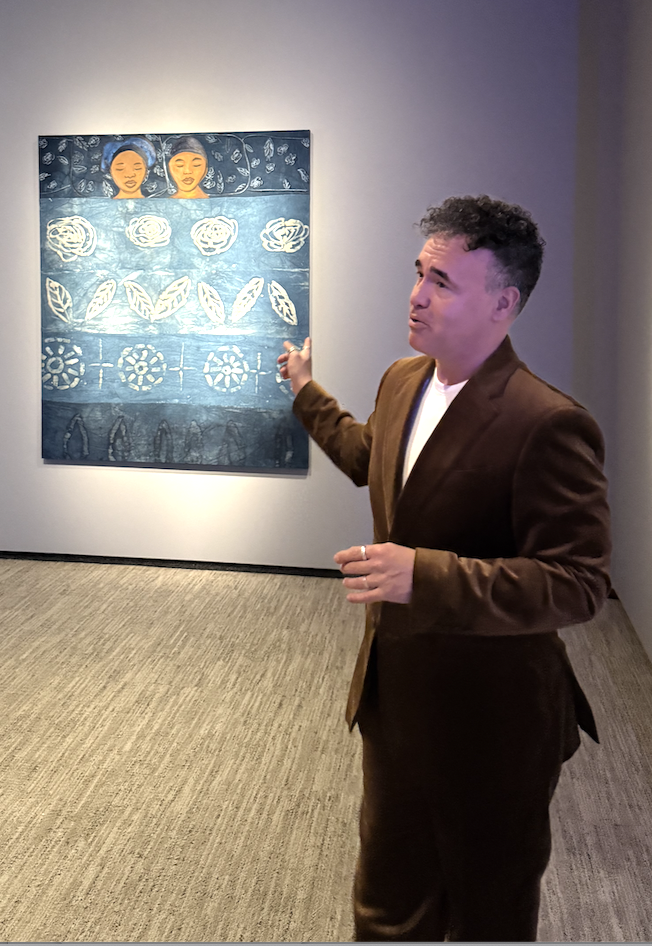 Kevin Dumouchelle, Curator, National Museum of African Art. Curator, Here: Pride and Belonging in African Art. Editor, Here: Pride and Belonging in African Art (Smithsonian Books, 2026, in press.)
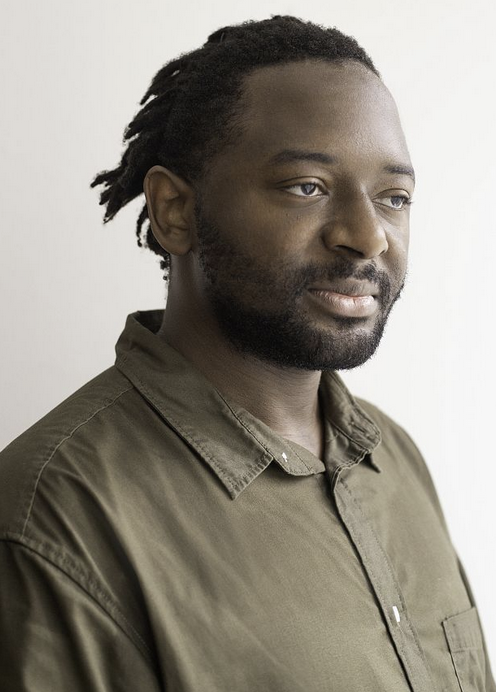 Serubiri Moses, Curator, Here: Pride and Belonging in African Art. https://curatorsintl.org/collaborators/7349-serubiri-moses
Participating Artists
Jim Chuchu. Nairobi-based artist Jim Chuchu works across music, film, photography, and visual arts to explore intersecting worlds. His practice braids together blackness, queerness, and spirituality to create works that challenge conventional narratives and imagine new possibilities for African cultural expression. Featured works: Invocation: The Severance of Ties, 2015, and Invocation: Release, 2015”
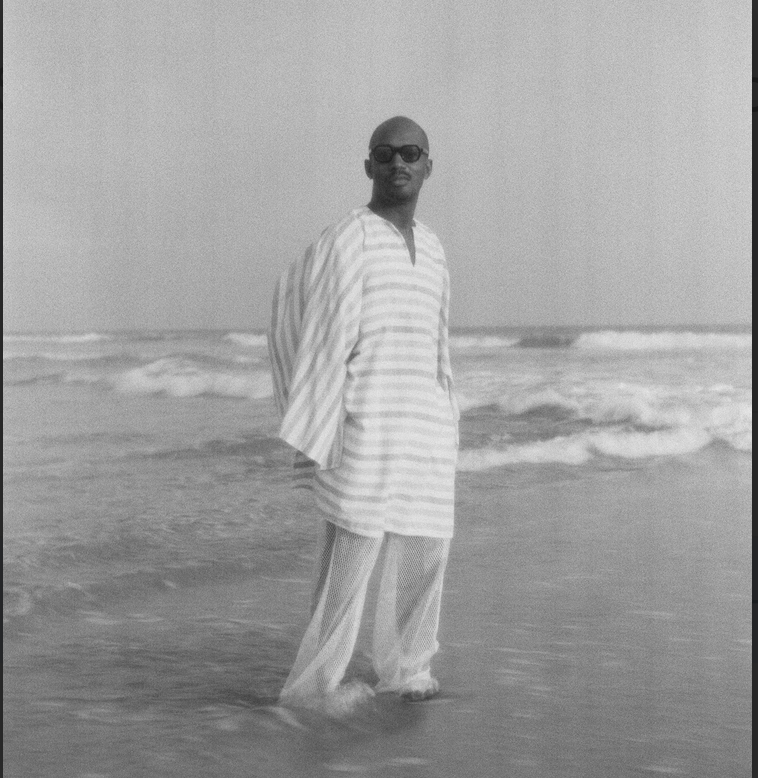 Tobi Onabolu is a London-born artist-filmmaker, writer, and cultural producer, based in Grand Popo, Benin Republic. His interdisciplinary practice spans moving image, installation, performance, sound, and the creation of long-term cultural platforms, approaching art as a living process rather than the production of isolated objects. Director of Dear Black Child . See: https://tobionabolu.com/dearblackchild/ (Photo credit: Elijah Ndoumbe.)
Leilah Babirye, Featured work: Nosamba II, from the Kuchu Ngagi (Antelope) Clan, 2021
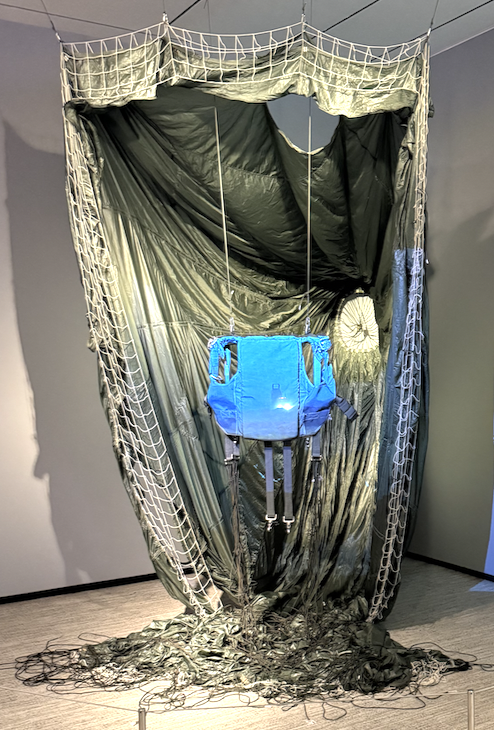 Paul Emmanuel, artist (Johannesburg, South Africa) Featured work: Untethered/Retethered, 2025 (See close looking guide at: https://markauslander.com/2026/02/05/close-looking-guide-to-paul-emmanuels-untethered-retethered-multimedia-video-installation-2025/
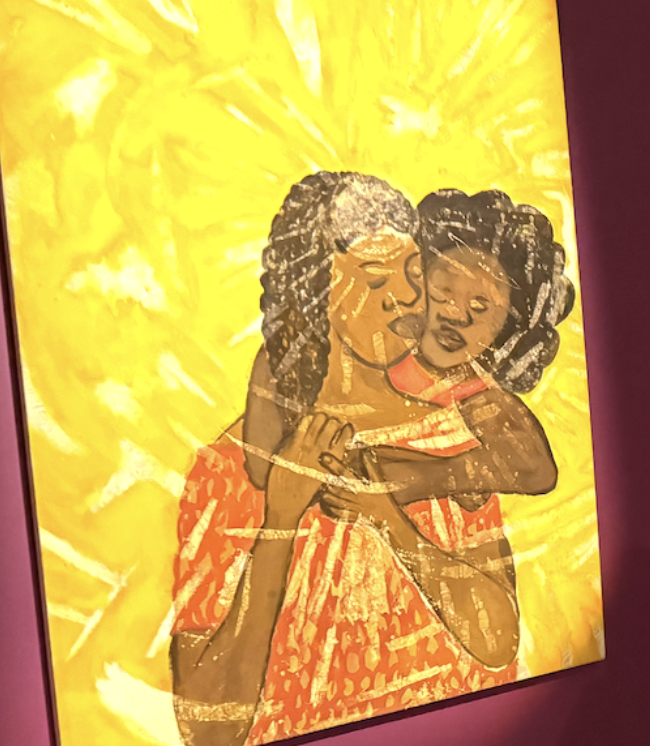 Ṣọlá Olúlòde, artist (Brixton, UK) Featured works: Eternal Light; Stitched to You.
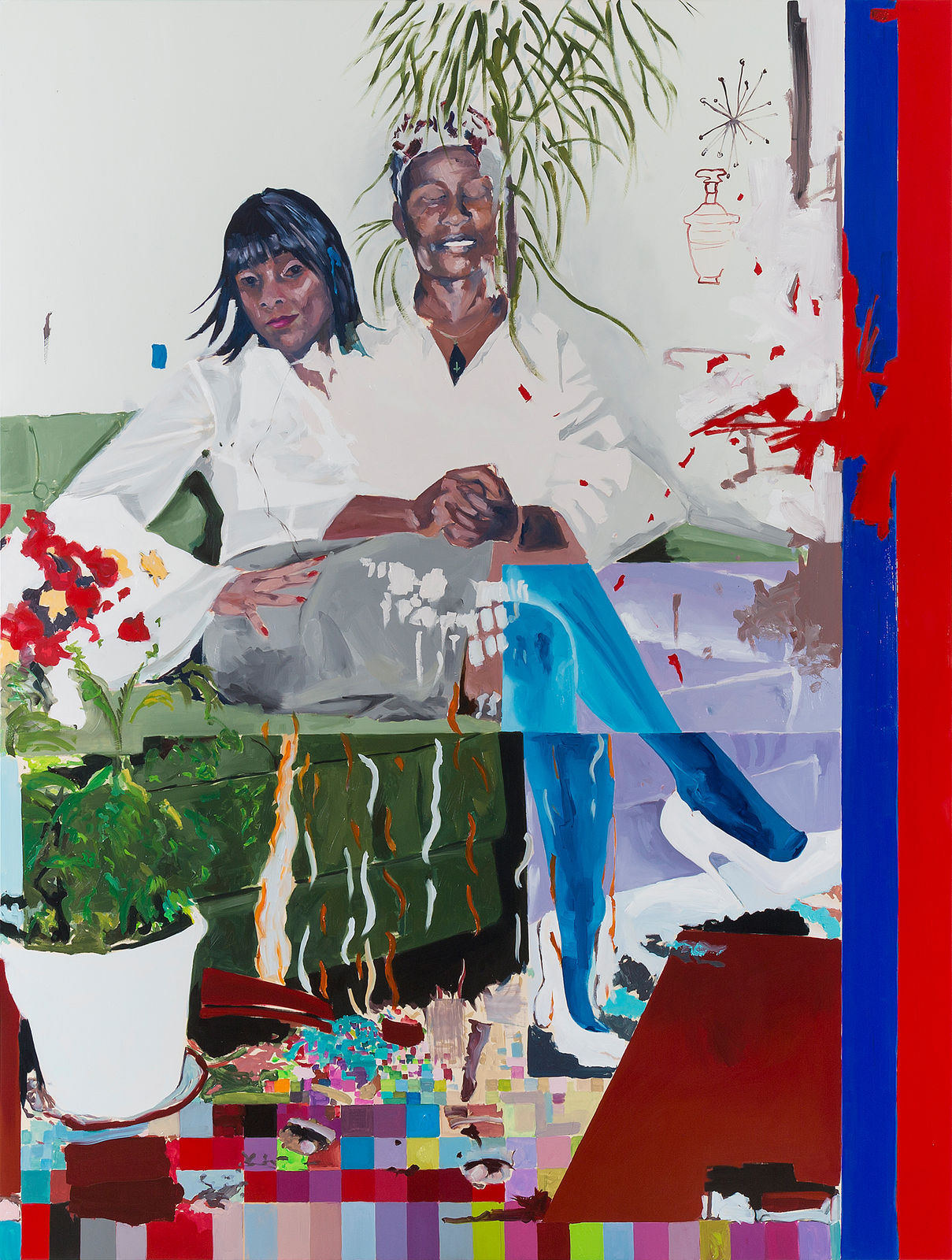 Kudzanai-Violet Hwami. Represented by Victoria Miro (London/Venice) Featured work: Hosanna, hosanna. 2018 Oil and acrylic on canvas
Participating Scholars
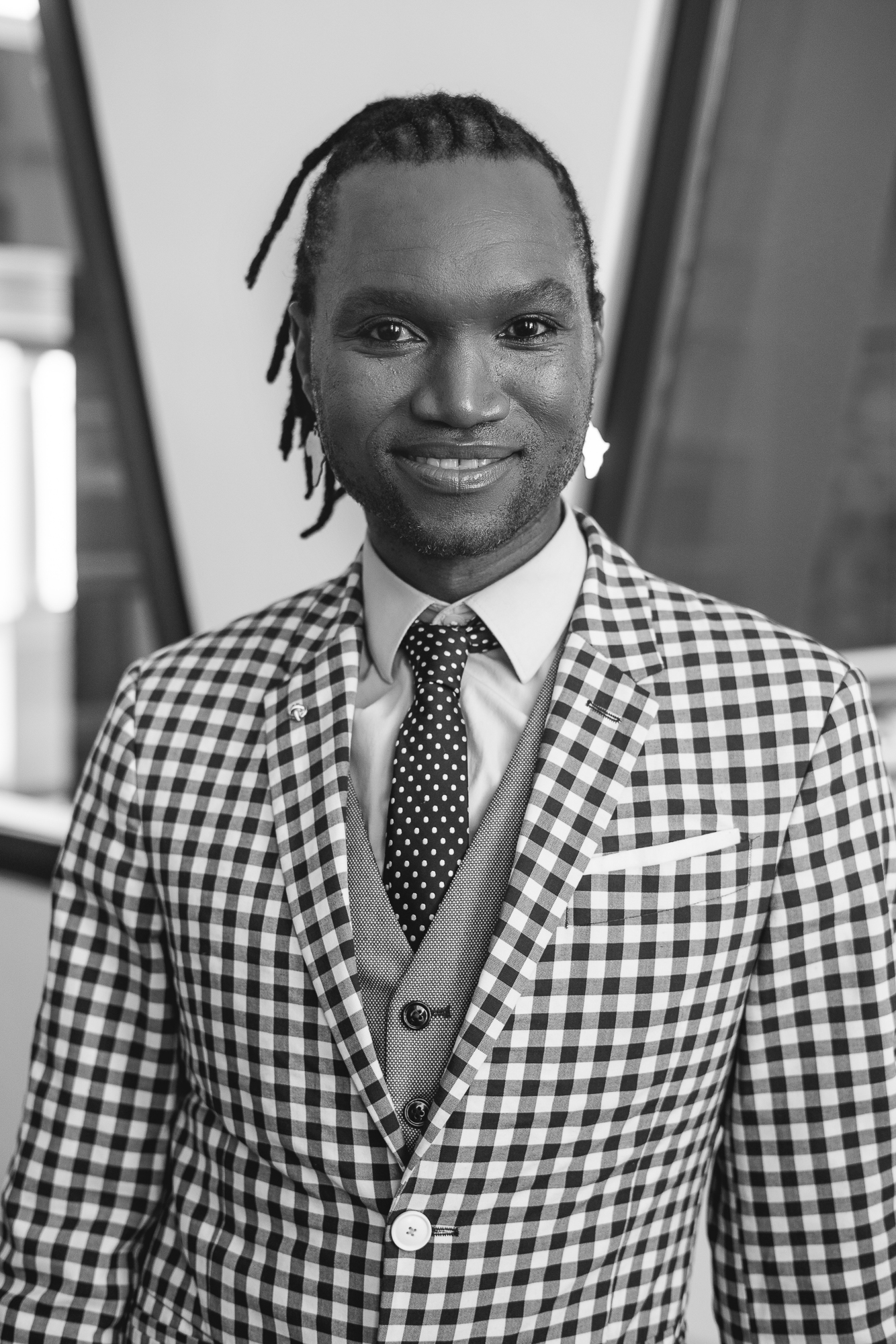 Lwando Scott holds a PhD in Sociology, and is currently a Senior Researcher at the Centre for Humanities Research at the University of the Western Cape. Scott is an interdisciplinary scholar with a focus on gender and sexualities, on how these categories must be linked to ideas of freedom in post-apartheid South Africa. Scott is interested in the nature of post-apartheid freedom, in thinking with and through the South African Constitution, to upend legacies of slavery, colonialism, and racial domination whose effects extend into the contemporary moment. Thus, Scott’s scholarship is engaged in the complex ways gender and sexuality are sometimes omitted in discussions on the legacies of colonialism and apartheid and the impact of this omission on contemporary understanding of these categories.
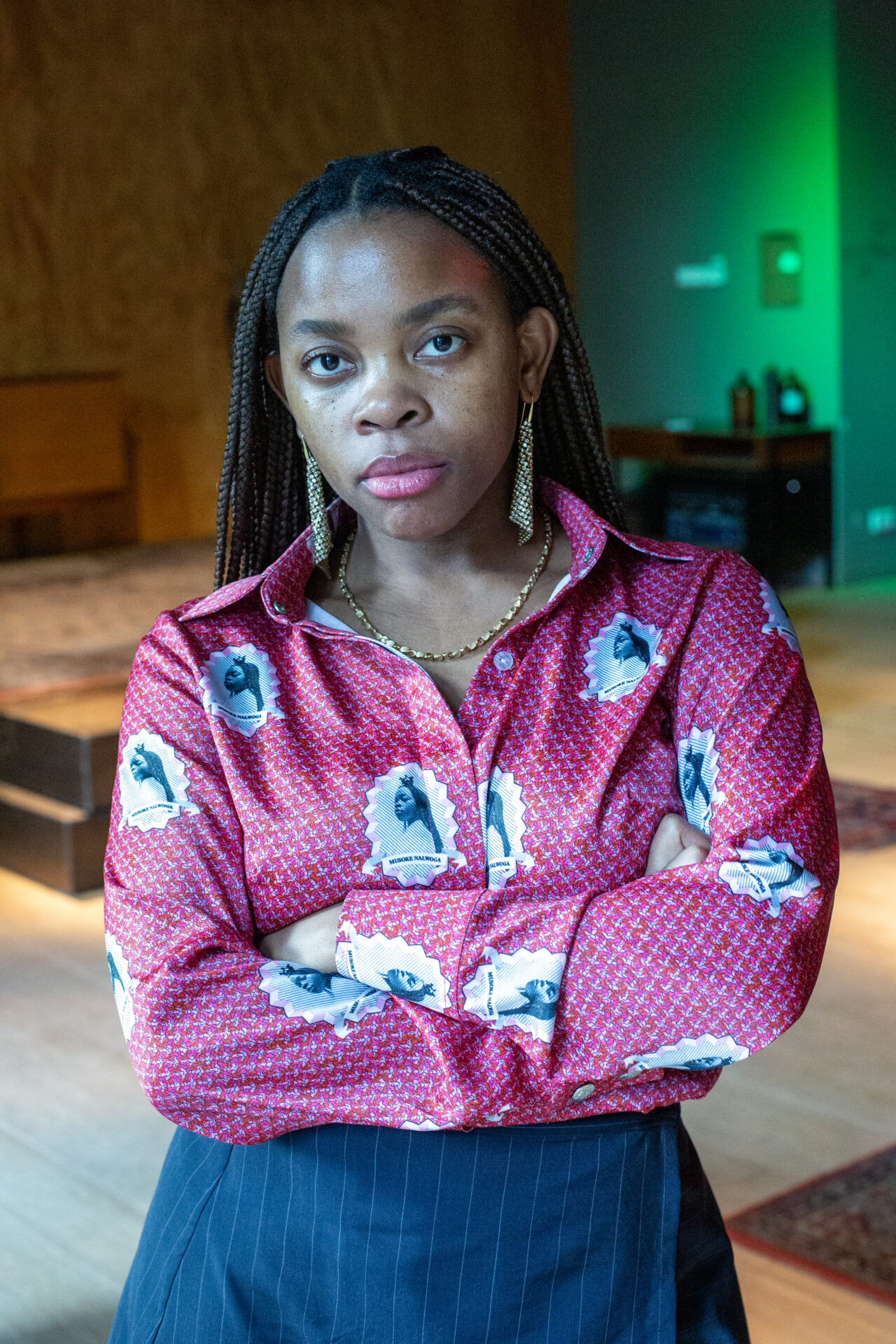 Musoke Nalwoga is an independent curator and researcher with a focus on contemporary art. Born and raised in Uganda, she currently lives and works between Amsterdam, and Antwerp. Nalwoga’s curatorial practice is forging new institutional structures that hack, subvert, and productively add to the systems that exhibit, exchange, and archive the specific art (his)stories of African diaspora. Nalwoga is the founding director of MOTORMOND; a black queer Art Space that is dedicated to circulating critically grounded Pan Diasporic Cultures. Nalwoga has been appointed as co-curator of the Noorderlicht Photography Biennale 2027. Instagram: cyborgtruffle
Álvaro Luís Lima. Assistant Professor of African Art, University of Florida
Opening Remarks by Mark Auslander
Welcome I’m Mark Auslander. Joining with my collaborator Abdi Osman, we’d like to welcome everyone to our webinar, “Inventive Leaps, Unruly Voyages: A Roundtable on “Here: Pride and Belonging in African Art.” As many of you know, “HERE” has several components: First, it is a a dazzling, sophisticated exhibition current on display at the Smithsonian National Museum of African Art in Washington DC, featuring the work of thirty artists originating from Africa, nearly all of whom identify as LGBTQ+. The exhibition is co-curated by Serubiri Moses and Kevin Dumouchelle. Second,”Here” refers to the forthcoming catalogue book from Smithsonian Books, “The Here Project,” edited by Kevin, with significant contributions from Serubiri, which explores the work of about seventy artists from across the continent. Third, “Here “ refers to an ongoing collection and research initiative anchored at the National Museum of African Art, highlighting art that cuts across, interrogates, and transcends gender binaries throughout Africa and the Diaspora.
Our tone today is both celebratory and critical. We are well aware that under current circumstances it seems nothing short of miraculous that this magnificent exhibition is actually on display, on the National Mall no less, and that the catalogue book “The Here Project” is soon to see the light of day. Those of you who have seen the exhibition in person know that it is brilliantly conceived and organized, a testament to the remarkable intellectual depth and range of connections that Serubiri and Kevin have developed throughout their careers. The entire staff at NMAfA has pulled together together to create an exhibition that is gorgeously mounted; here we see a museum team at the absolute top of their game, integrating stunning works of art with hard hitting, thought-provoking yet accessible text. We all look forward with delighted anticipation to the book launch of the catalogue over the next few months. (In the interest of full disclosure, I should mention that I am the author of the one of the catalogue chapters, and am very proud to be included in the publication).
Having said that, we acknowledge that this exhibition, as brightly as its light burns, is surrounded by encroaching and deepening shadows. Homophobic and transphobic violence, physical and structural, is extensive throughout Africa. Ideological and material assaults on queer people are, in tragic respects, being normalized in many sectors around the world, including here in the United States. Transphobia, homophobia and xenophobia all intersect in complex and disturbing ways. Many LGBTQ+ artists have been forced into exile, and artists of conscience everywhere need to summon up special reserves of courage, verve, and imagination to move forward. Here at hom museums themselves are increasingly under siege, as Federal funding dries up and powerful institutions, even those that might be considered anchors of civil society, are are times tempted to engage in self-censorship. Perhaps more than any time since the 1930s, artistic creativity and museum practice proceed within a state of crisis, as the future of democracy, diversity, and a culture of compassion stand in the balance.
We’d like to emphasize that this gathering is an informal one, that is not organized by any institution, and which proceeds without a budget. We are all drawn together by our sense of wonder in the remarkable art showcased in HERE. While we are very grateful to our friends at NMAfA and across the Smithsonian, with whom we are in constant dialogue, this is a fully independent enterprise. We are grateful to the Department of Anthropology and Public Ethnography Lab at American University, which has made it possible for this webinar to be hosted by AU, and to Citizen Historians for the Smithsonian, which has helped get the word out to its supporters. I have special gratitude to my students at American University in Gender and Sexualities class, who, working with Paul Emmanuel and the Tour de Force Foundation, are currently creating close looking guides to the artworks in HERE. I learn something new about the art of HERE every day from my students. Most important, we are grateful to the participating artists, curators, and scholars whom we will hear from today, who have freely given of their time and imagination. This truly is a labor of love.
Close Looking Guides to “Here”
The students and faculty in Dr Auslander’s Anth 215 (Gender, Sexuality, Culture) at American University are developing close looking guides to the art work in the HERE exhibition:
- Va-Ben Elilem Fiatsi’s froZen (Rituals of Becoming) 2016.
- Jim Chuchu, Invocation: The Severance of Ties, 2015, and Invocation: Release, 2015
- Paul Emmanuel. Untetherered/Retethered (2025)
- Rotimi Fani-Kayode. Every Moment Counts (Ecstatic Antibodies), 1989.
- Rotimi Fani-Kayode. Nothing to Lose IX from the Bodies of Experience portfolio (1989).
- Tarek Lakhrissi. “Out of the Blue” (2019)
 Mark Auslander