My students and I are beginning work assisting our collaborator Emily Washines and her relatives in the Yakama Nation (central Washington State) in understanding the life of her cousin Martha Bassett (traditional surname Pochahsquinest). Miss Bassett. who went missing in Chicago in 1967, was searched for by her family for decades. Recent forensic DNA research has established that Miss Bassett is almost certainly the same person as a Jane Doe, whose remains were recovered in Will County, about an hour south of Chicago, on 30 September 1968:
https://storiesoftheunsolved.com/2021/01/25/will-county-jane-doe-1968/
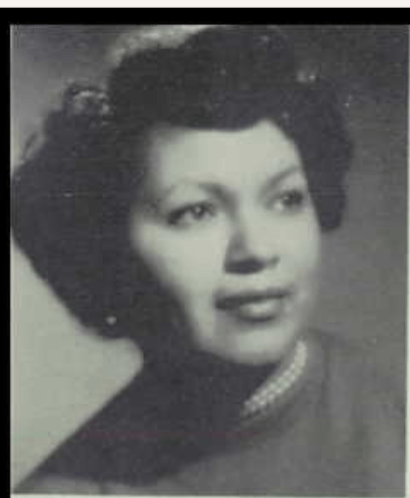
An autopsy at the time indicated that she had died violently two days earlier, so about 28 September 1968.
There are numerous media reports on recent progress in this Cold Case, including: https://dnasolves.com/articles/martha-bassett-will-county-illinois-1968/
Some of these are drawn on for the Find a grave entry on Miss Bassett. These reports assert that Miss Bassett came to Chicago in 1960. However, BIA records indicate she arrived in Chicago through the Federal location program in January 1957, from Yakima County, Washington state, to Chicago, Funds for her relocation were provided under Public Law 959, also known as the Indian Relocation Act of 1956. (Records in NARA Chicago, from the BIA employment files contain some information on her arrival in Chicago and the fruitless search for her from Summer 1968 onwards.)
Where did Martha live in Chicago?
There is a surprising disjuncture between the records of the BIA Chicago Branch (Field employment0 Office, which list Martha residing in residential hotels in the Loop or Uptown neighborhood, including the McCormick YWCA and, for eight years, at the old Sheridan Hotel, 4607 Sheridan, in Uptown (which was already emerging as a Native American neighborhood) and the Chicago Telephone directories, which list a woman of the name Martha Bassett residing on Chicago’s South Side, initially in Woodlawn and later in Bronzeville, from 1958 until 1966. Perhaps they are separate individuals or perhaps Martha in a sense lived a double life, moving back and forth between the residences expected by the BIA for single young woman, and the dynamic emerging Black neighborhoods of the South Side.
Initial Timeline (The Life of Martha Bassett)
January 3, 1936. Possible birth date of Martha Bassett. Parents; John John Bassett (Pochahsquinest), born OCT 1894 Death 12 NOV 1968 • Wapato, Yakima, Washington, USA and Ida Henry Bassett, born ABT 1890 • Rock Creek, Skamania, WA, USA. Death 01 OCT 1939 • Wapato, Yakima, Washington.
Siblings include:
Wanapum ‘Wapt’ Bassett1920–1998 (who made constant efforts to support and trace her)
William Washwell Bassett1926–1934
1940. I do not see Martha Bassett in the US Federal census records for 1940. I do not know if the 1940 Yakama reservation census records are on line
- The “Yakima” (sic) reservation census records may be searched at: https://1950census.archives.gov/search/?page=1&reservation=Yakima I don’t believe these are transcribed yet, so it may be necessary to search them page by page for the Basset or Pochahsquinest families.
nb. 1960 US Federal Census census records will not be released until April 2032 (although family members may be able to request some records)
- Martha is listed in the Wapato WA High School Year book.
- Martha is listed in the Wapato WA High School Year book
- Dec 3, 1956. Martha Bassett applies for funding from BIA for Federal relocation to Chicago
March 10 1957. The Dalles Dam, constructed by the Army Corps of Engineers, floods Ceililo Falls, an important fishing site on the Columbia River near the Washington-Oregon state border This rising waters destroyed one of the oldest continuous indigenous settlements in North America. A financial settlement of $26.8 million had been reached with the tribes associated with the Celilo site ($15,019,640 was allocaed to the Yakama.( Martha Bassett did receive some payments from this arrangement, so presumably came to Chicago with some financial resources, unlike others who were relocated during this era. See photograph of the settlement signing with Yakama representatives at: https://www.oregonhistoryproject.org/articles/historical-records/yakama-nation-corps-discuss-celilo-settlement/
- January 7, 1957, the day of Martha’s official relocation to Chicago , following a several day bus ride from Toppenish on a Greyhound bus. On BIA religious preference card, indicates a preference for the Catholic faith
- Begins training with the Western Union company as a teletype operator,
- In early 1957. Martha first lived at the YMCA. Hotel 826 So Wabash
- She hen resided at the McCormick, YWCA, 1001 South Dearborn
- February 2, 1957. Living at 4349 W Jackson.
- December 7. 1957. Bank application lists Martha’s address as 608 South Dearborn, Apt 511. (now a Parking Lot) She is not listed this year in the Chicago Telephone Directory.
- Feb 15, 1958. BIA telegram indicates that letters of inquiry have been sent seeking the location of Martha Bassett, who evidently hasn’t been in touch with the Branch office.
- The 1958 Chicago directory does list a Martha Bassett residing at 5640 S Indiana Avenue. Chicago IL, with the phone number HY3-2463 (HY was the prefix for Hyde Park) That address, currently a vacant lot, is in the Woodlawn neighborhood in the Chicago South Side, about seven blocks west of Washington Park, between 57th and 56th streets. This would have been a transitional neighborhood in the late 1950s, under conditions of “White Flight,“ and was increasingly African American. Her residence was located across the street from the old “Indiana and 56h Park”, now known as Lorainne Hansbury Park, named for the celebrated African American playwright, author of “A Raisin in the Sun”. Martha would have been able to take walks in the beautiful nearby Washington Park, an perhaps walked through the University of Chicago neighborhood to partake of the Lake Michigan lakefront. I am not sure what bus lines at the time were near this location. Martha may have had to take bus to the old “Little Englewood L” subway station on 63rd street, in order to get into the Loop and other sites of employment in downtown Chicago.
1959=1966. From 1959-1966, a Martha Bassett is listed each year in the telephone directory at 4030 S Michigan Avenue,, As of 1959, she had a new phone number, AT5-0134, which she retained until 1966. I am not sure if she was residing both at this location and at the Sheridan residence hotel in Uptown. The Michigan Ave location location was two miles due north and one block west of her old residence on South Indiana, and put her in the heart of Bronzeville, a growing, dynamic Black neighborhood. This address, which may also be a vacant lot currently, is adjacent to Catholic Church property, including St Elizabeth’s Church and the Totlon Heritage Center, https://ourladyofafricachicago.org/tolton-heritage-center which honors, Father Augustus Totlon, one of the first Black priests ordained in the United Services, who served with distinction on the Chicago South Side, presiding over St Mary’s Parish. It is possible that the lot Martha resided on 1959-1966 was Catholic Church property and that she was connected with the church in some way (recall that she initially listed in 1957 her religious preference as Catholic). 4030 is adjacent to the ChiTurf company.
January 21, 1960. BIA notes that they had consulted with Western Union, who reports that Martha is hard working and efficient (she clearly hasn’t been in touch with the BIA Branch Employment office or her family in Washington state).
June 4, 1960. Martha’s brother Wapt Bassett contacts the Branch BIA office, concerned that he hasn’t heard from Martha and that his letter to her old address had been returned.
November 2, 1960. BIA telegraphs Martha at 4825 North Sheridan Apt 2 (I believe the old Sheridan hotel) informing her someone is arriving in Chicago and hopes she will greet him
January 10, 1962. BIA believes Martha’s address is 938 West Wilson Ave, in the heart of Uptown.
BIA records make it clear that Martha worked at Western Union as a teletype operator, although it is not clear which location she worked at. In the 1960s there were according to the telephone directories about 40 branch offices in Chicago for Western Union. The Chicago headquarters appears to have been at 427 LaSalle in the center of the Chicago Loop. The Western Union local 1 was adjacent, at 327 LaSalle, (Union records might be worth consulting).
March 5, 1965, Western Union reports Martha’s attendance at work has become erratic; she has had seizures, possibly epileptic.
The Summer of 1968
During the summer of 1968, the BIA became increasingly concerned over Martha, who had ceased all contact with them and her family.
July 25, 1968. The Western Union Credit Union reaches out to the BIA Branch office expressing concern for Martha’s welfare (and for her unpaid debt). Mentions that she has been ill for some time.
August 1, 1968. BIA learns that the family had heard Martha had been hospitalized; they have not heard from her for at least two months.
August 2, 1969. BIA officer visits the Sheridan Hotel, 4607 Sheridan Road, where Martha had lived for 8 years; she had become arrears in rent, and on June 25, the hotel had “plugged” (sealed?) her room. They recalled she had served at some point in the past a 17 day sentence at “Bridewell” (The Chicago City Jail) for assault and battery, threatening a CTA conductor who had tried to get her off a train at Howard Street, at the end of the line. (Year of sentence is unclear)
August 5, 1968. BIA officer calls many local hospitals and Chicago Police Department but no luck tracing Martha.
August 6, 1968. Family reports Martha’s father in a nursing home with a fractured skull and family is eager to be in touch with her.
August 7, 1968. BIA Branch decides to file missing person report for Martha with Chicago Police Department, although the CPD is dubious a case can be pursued, given that Martha is a 32 year old adult.
August 28, 1968, Marjorie Lee of the BIA field assistance office writes to the Indian Agency in Toppenish, WA, explaining all efforts to trace Martha have been fruitless
September 28, 1968. Estimated death date of the Jane Doe/Will County.
September 30, 1968. The Jane Doe found near Blodgett Rd & I-55 in Will County. IL (in 2025 identified as Martha Bassett through forensic DNA analysis).
November 20 1968. A bill collector reports to BIA he has been in touch with Martha’s brother, who reported that last July she had wired him requesting $200, which he sent her, At that point he thought she was in Wells(?), or Indian Wells Minnesota. No contact since then; their father tragically had just died in a house fire. (nb this is a second hand report through the bill collector, so perhaps not all that reliable). Speculatively, perhaps the telegram sent to Wapt was fraudulent, and Martha was by this point incapacitated in some way.
June 19, 1968. BIA learns that the Sheridan hotel had been sold last December and there are no records on what may have happened to Martha’s possessions.
June 19, 1969, BIA Branch reports to the Yakima Agency in Toppenish they still have no leads on Martha
June 9, 1970. Western Union Employees Credit Union still trying to contact Martha.
December 26, 1972, BIA reports contacts with Native people in Uptown, but none have seen Martha for several years
White Bear Lake?
As noted above,a BIA contact sheet (NARA-Chicago files) of November 20, 1968, contains a report via a bill collector that Martha’s brother Wapt had heard that she may have been living in “Indian Wells” in Minnesota. Perhaps this was Indian Wells Trail, a short street in the town of White Bear Lake, in Ramsie County, north of the twin cities. We are not sure if Wapt was correctly informed, but we note that many Dakota and Ojibwe people from Minnesota did come to Chicago under the Federal Relocation Program, so perhaps Martha met one of these individuals who invited her back to White Bear Lake.
A possible connection to the Twin Cites area is certainly of great interest to us, given that in July 1968, the American Indian Movement was founded in Minneapolis. Is there any possibility that Martha was involved with AIM or the Red Power activist movement during her final year of life?
Reconstructing Martha’s Final Days
As noted above, the BIA Branch office and the Western Union Employee’s Credit Union appear to have lost touch with Martha around June 1968, about four months before the date when we now know she was murdered. There is a mention in the BIA file that according to a bill collector her brother told him he had heard from Marsha in July 1968 requesting $200 when she was still living on Sheridan Road. Lake. He next understood her to be living somewhere in Minnesota, perhaps in “Wells” or(Indian Wells, Minnesota, which we suspect may have been Indian Wells Trail in White Bear Lake, Ramsie County, MN. Or she may have been living in Wells, MN, on the southern border of the state. Or Wapt may have simply heard a false rumor.
On September 30, 1968 the Jane Doe’s remains (now through forensic DNA identified as Martha Bassett) were recovered just off West Blodgett Road, in unincorporated Will County, IL, which runs alongside I-55, south of the interstate’s crossing of the Des Plains River and north of the crossing of the Kankakee River The site of recovery was evidently about 100 feet northwest of the point where I-55 crosses the BNSF (formerly Burlington Northern Santa Fe) railroad line. tracks, which may be significant, and immediately south of Grant Creek. The reports indicate that the area of recovery was forested or brush covered in 1968, so perhaps this was in the area that is now the Des Plaines State Fish and Wildlife Area, which is a 56 mile drive along I-55 from the Bronzeville neighborhood where Ms Bassett is last reported residing.
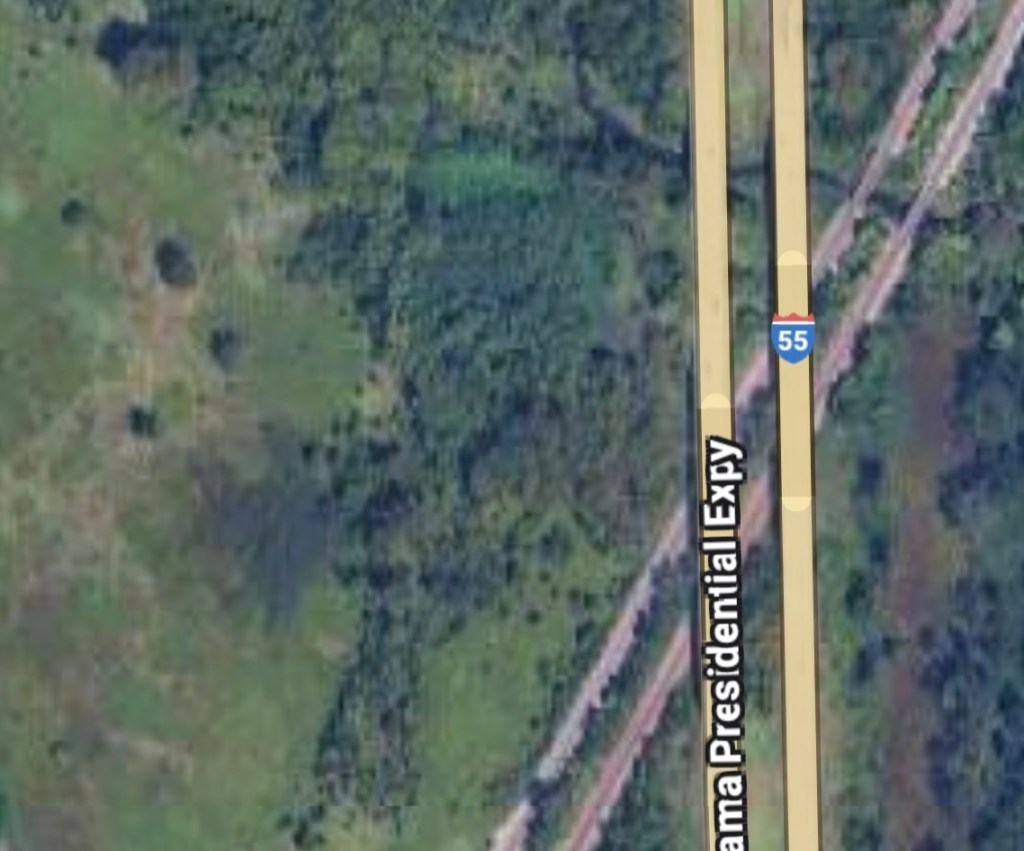
What can be inferred from the fact, which is now clear from the forensic DNA evidence, that Miss Bassett’s mortal remains were found off of the I-55 interstate in Will County, near West Blodgett Road and the crossing of the BNSF railroad tracks, about an hour south of Chicago? I-55, which partly runs along the old route of Route 66, was constructed in the 1950s as part of the Eisenhower Interstate Highway System, to connect Chicago to New Orleans. The highway, now known as the Stephenson Expressway in its Cook County segment, runs initially, (in an an east to west direction, about two miles north of the 4040 S Michigan location, and then curves south-east out of Cook County towards the Will County border. So if Miss Bassett was abducted and a perpetrator sought to dispose of her remains, it is possible that they could have easily gotten on I-55 and then driven south until they encountered the forest cover of Will County, and decided to dispose of the body there. The recovery spot was about a quarter miles southeast of the curve of W Blodgett, so perhaps the body was dragged from W Blodgett, or (perhaps more likely) the body may hae been dragged from a car parked on the side of the interstate, about 100 feet away.
We do not know if proximity to Grant Creek is of any significance.: There is a bridge over Grant Creek maintained by the State Highway Department. Further upstream a section of Grant Creek has a popular hiking trail.
Or perhaps proximity to the BNSF railroad line, which originates in the major rail hub of Chicago, may be telling: could the victim or her remains been transported by rail, and not by car?
It is possible that the murder took place in Will County, or in Cook County, or some other location. There do not appear to be records of Martha being seen in Chicago after spring 1968, so the final months of her life remain unaccounted for.
The Fisher Mound Site
By a strange coincidence, the location where Ms. Bassett’s body was abandoned and then recovered, near the confluence of the Kankakee and the Des Plaines rivers, forming the Illinois River, is close by a prominent Native American archaeological site associated with upper Mississippian culture and Upper Woodland inhabitation, known as the Fisher Mound Site, which consisted of a dozen burial mounds that were subjected to multiple excavations in the first half of the 20th century. (see: Kjersti E. Emerson and Thomas E. Emerson, A Reassessment of Upper Mississippian Habitations and Chronology at the Fisher Mounds and Village Site in Northeastern Illinois MIDCONTINENTAL JOURNAL OF ARCHAEOLOGY 2024, VOL. 49, NO. 1) I am fairly certain that by the time of the murder and secreting of the body in September 1968, the mounds had been essentially destroyed through quarrying. The better preserved Briscoe mound group is still visible across the river, to the northwest of the site. My students may bein preparing a summary of research on these sites, for the reference of the family and community members.
Scientific and Forensic Research
We are also interested in reconstructing the sequence of scientific and forensic research that led to the identification of the Will County IL Jane Doe with Martha Bassett. Various press reports refer to the Will County coroner consulting with the :Smithsonian Institute Paleontology section” Isic) which was assume twasthe Smithsonian Institution’s Museum Conservation Institute of the Museum Support Center, Suitland, Maryland. Reports also reference, the “University of Illinois Forensic Anthropology Department” which we assume references the University of Illinois’ forensic program within the Department of Anthropology. DNA sampling also evidently too place at the University of North Texas, and subsequent forensic DNA genealogical analysis was conducted at Othram Labs in Texas.
Update: Emily Washines in consultation with other family members has recently authored a moving obituary of her cousin Martha, at: https://www.reevesfuneralhomes.com/obituaries/martha-bassett
Records to research
Western Union personnel records (perhaps in Denver Colorado, the Western Union headquarters) and perhaps the Western Union Employee Credit Union records, if those stil exist.
Telephone Directories
ancestry.com’s list of searchable online telephone directories does not include Chicago in the 1950s or 1940s. The Library of Congress has digitized many Chicago telephone directories. available via https://www.loc.gov/collections/united-states-telephone-directory-collection/?fa=location:illinois
Or google “Library of Congress Telephone Directories Chicago [year of search]’.
BIA Urban Relocation
Possible records at the main National Archives building, Archives 1 in downtown Washington DC, include:
“Financial Assistance Reports Relating to Relocatees, 1951–1956” (National Archives Identifier: 2194625)
“Relocatee Cards, ca. 1958–1959” (National Archives Identifier: 2194622)
Relevant records in Chicago at the branch National Archives include; “Reports on Employment Assistance, December 1951–June 1958” (National Archives Identifier: 3514914) These have been obtained and are a rich source of material on Martha’s early years in Chicago and the fruitless search for her from Summer 1968 onwards.
Census Records
Tribal Census records for Yakama and Yakima Reservation in 1940 and 1950.
Chicago History Museum: https://www.chicagohistory.org/collections/
—The History Museum has some Chicago Police Department records: https://explore.chicagocollections.org/marcxml/chicagohistory/30/jd4qs4q/
The Newberry Library in Chicago (extensive resources on Native American history); https://www.newberry.org/
Circuit Court Records, Cook County, IL (may have records related to Ms Bassett’s apparent arrest record: https://www.cookcountyclerkofcourt.org/archives
 Mark Auslander