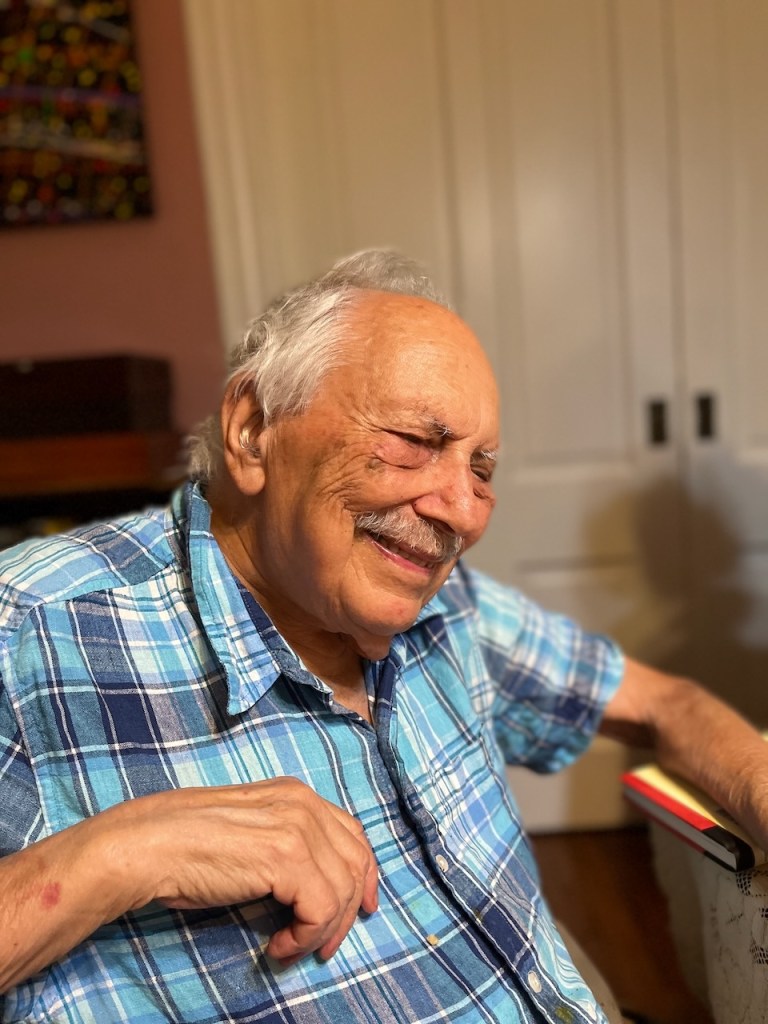
Joseph (“Joe”) Auslander died peacefully at his home in Washington, D.C., on April 7, 2025, halfway through his 95th year. Moments before, he had fallen asleep sitting at his computer while working on a mathematical problem.
Joe was born September 10, 1930, in New York City, to Dr. Jacob “Bi” Auslander and Rebekah Zeltzer Auslander. He attended P.S. 9 and the High School of Music and Art on the Upper West Side, then Queens College and MIT, before getting his PhD in Mathematics from the University of Pennsylvania. He joined the mathematics department at the University of Maryland-College Park in 1963 and remained an active participant in the intellectual life of the department into his retirement, attending a departmental conference two days before his death.
Joe was a committed advocate for younger mathematicians, especially those from historically under-represented backgrounds. A true citizen of the world, Joe had deep friendships and collaborations with mathematicians around the globe. In addition to his long research career in the field of topological dynamics, he was fascinated by the history and philosophy of science and mathematics, publishing on the enduring problem of “what makes a proof a proof?”
Joe’s coming of age was shaped by the passionate anti-fascism of his friends and extended family, including a large circle of cousins. He shared their love of classical music, art, literature, storytelling, and Jewish-inflected humor. He himself was a masterful teller of jokes. He remained active in progressive politics throughout his life, with particular attention to the pursuit of a just and compassionate peace in the Middle East. He was a life-long consumer of the New York Times and of its crossword puzzles. He loved to cook and presided, with his wife Barbara, over many dinner parties with friends old and new. An amateur clarinetist, he particularly loved Mozart and Haydn, and above all Beethoven.
For the last 37 years Joe was married to his beloved wife Barbara Meeker, emerita professor of sociology at the University of Maryland. His earlier marriages to Ruth Epstein Auslander and Harriet Little ended in divorce. He is survived by Barbara, sister Irene “Judy” Auslander Saks, children Mark and Bonnie Auslander, daughter-in-law Ellen Schattschneider, grandchildren Nina and Milo, brother-in-law Alan Saks, niece Eva Saks, numerous cousins, the mathematical community, and a host of friends.
Donations in Joe’s name are welcome to the Project NExT fund for emerging mathematicians of the Mathematical Association of America: maa.org/support-maa/donate/
Family Eulogies
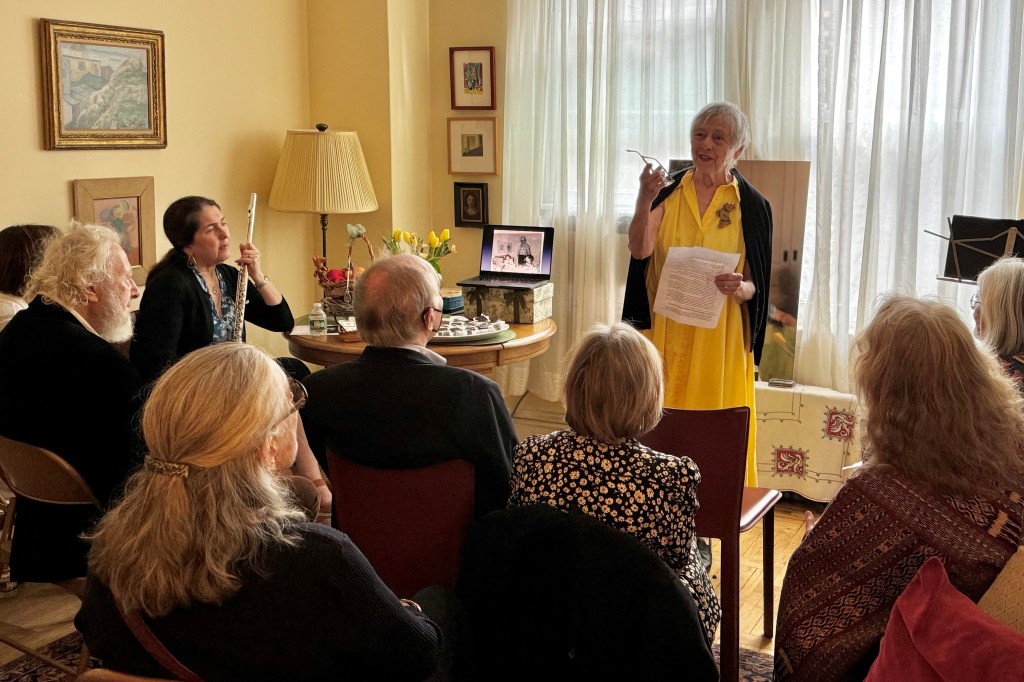
A family memorial gathering, in remembrance of Joe, was held at the home of Joe’s beloved cousin Vicky Margulies, on Saturday, May 17, 2025, on the Upper West Side, the neighborhood where Joe and his sister Judy grew up (An earlier memorial service, primarily for colleagues and friends, was held at the Mathematical Association of America in Washington DC on May 9). We heard from Joe’s sister Judy Auslander Saks and Joe’s cousin, Paul Resika. Lois Smith (surviving partner of Joe’s late cousin David Margulies) read one of Joe’s favorite poems, W H Auden’s, “Musee des Beaux Art, alluded to in Mark’s eulogy. Cousin Sarah Swersey played the Sarabande from J.S. Bach’s partita for flute in A Minor, BMV 1013.
We gathered in front of Joe’s portrait, thoughtfully placed by Vicki above a linen of great family sentimental significance; this was one of a group of linens featuring gryphons (dynastic symbol of the Hapsburgs) purchased by Joe’s father “Bi” (Dr Jacob Auslander) in 1936 in Vienna, during his failed attempt to retrieve his parents from Radautz, Bukovina on the eve of the Holocaust. (Mark has written on these linens in an on line essay). Bi gave one set of linens each to his wife Rebekah and her sisters in New York City Celia Shapiro, Sonya Resika, and Runya Margulies. At the service, cousin Lucy Kerman explained, that she also has inherited part of this set, which means Bi must have also given a linen set to her grandmother ( Rebekah’s eldest sister) Frieda Zeltzer Zukerman in late August 1936, as he returned home through London, where the Zukermans were living at the time.
The service concluded with eulogies by Joe’s son, Mark Auslander, and Joe’s daughter Bonnie Auslander.
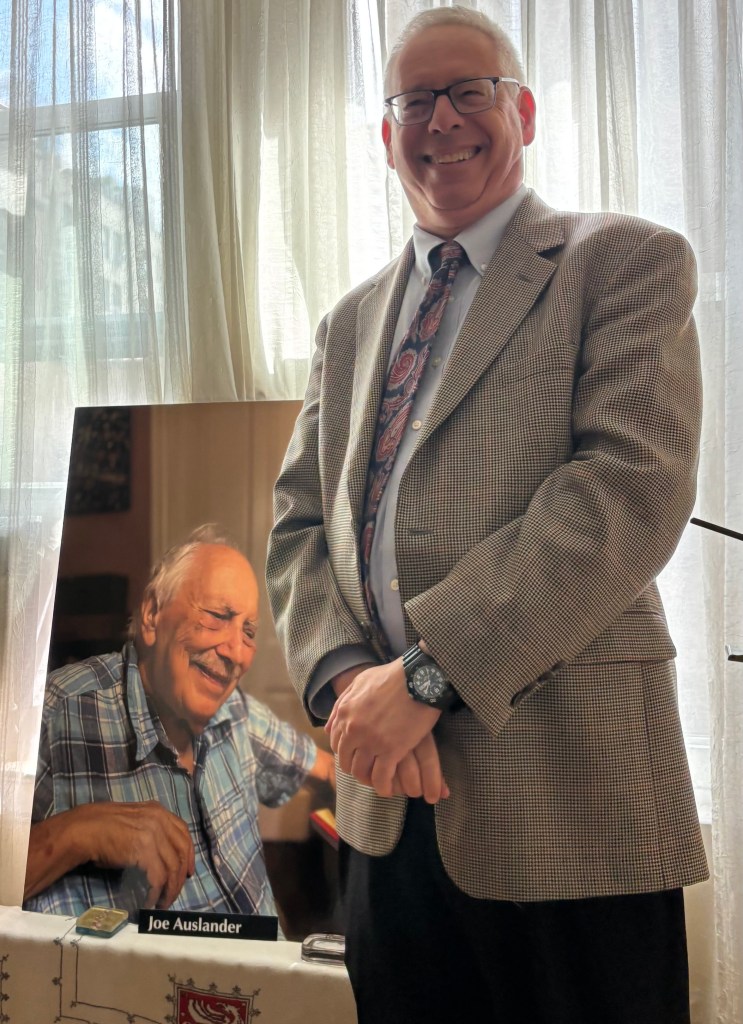
Chimes at Midnight: My Father in Motion
Mark Auslander
(New York City, May 17, 2025)
My most powerful memories of my father Joe are of him in motion, physically and mentally. This includes, as we shall see, his love of mathematics— although I hasten to reassure those less mathematically inclined that I will also address many of Dad’s other motion-related loves, which were, in alphabetical order: Baseball, Beethoven, Contrariness, Friendship, “It Happened One Night,” the New York Subway System, Radicalism, Running, and Shakespeare!
Let’s start with contrariness. One of Dad’s earliest memories was of the family gathered at 520 110th Street, listening on the radio to the 1936 abdication speech of Edward VII. When it came to the King’s famous line, “You must believe me”, Dad said loudly and defiantly, “I don’t believe you,” and walked out of the room, even though he was frightened, because it was, after all, the King!
Joe more or less grew up on the New York Subway system, and told us that his early mathematical thinking often took place on the subway, within Manhattan or going out to Queens College, which he attended before transferring (reluctantly) to MIT. Appropriately for one who fell in love with mathematics while riding the subway, Dad devoted his career to the mathematical subtleties of motion, although this was motion, he often told me and Bonnie, abstracted away from the physical forms of movement which we encounter in everyday life.
In his youth he was entranced by Galois Theory, at the heart of which are different ways a “field” of numbers can be transformed into itself, replacing one number by another while maintaining its underlying algebraic nature. (I like to think that the physical motion of the subway train, hurtling from underground to elevated tracks and underground again, in Dad’s mind evoked this exhilarating motion across the hidden structural levels of the mathematical universe.)
To explain Dad’s mathemical work more deeply, I (of course) turn to Shakespeare. Joe’s favorite line in literature was Sir John Falstaff’s response to his old friend Justice Shallow in Henry IV, Part 2 (p 129): “We have heard the chimes at midnight”. Dad noted this line has divergent meanings. At the surface level, it recalls the two men’s joyous escapades as schoolboy scamps, staying up so late carousing that they could hear the midnight bells ringing. Yet, coming late in the play, the line equally foreshadows Falstaff’s tragic end. When the former Prince Hal assumes the dignified mantle of the Crown, and abandons his inconvenient friend, Falstaff will die in despair. The midnight chimes proclaim that our day has nearly run its course.
The double meanings of the line, “We have heard the chimes at midnight” appealed to something fundamental in my father’s makeup, a simultaneous appreciation of the joyous and the ephemeral, of optimism interwoven with pessimism (which we have just heard in Auden’s Musee des Beaux Arts). His friend and Party comrade Naomi Stern recalled that at age 19, as they rode the subway together each morning out to Queen’s College, Joe’s face would radiate exultation as he expounded on the mysteries of Galois Theory, which Galois, amazingly, developed before his tragic death at the age of twenty-one in 1832.
Yet, at the same time, Dad would often share with Naomi his apprehension that as he approached Galois’ final year of age, twenty-one, he was yet to make a world-shaking mathematical discovery. Was it, he worried, too late for him? Were the midnight bells already tolling?
In a curious way, “chimes at midnight” also resonated with Dad’s love of the mathematical field known as “dynamical systems.” A dynamical system involves motion with some degree of regularity or periodicity, undergoing patterned movement, trajectories, or orbits that return to more or less their initial configuration. The classic example is the swinging movement of a pendulum clock, which regulated the London chimes that tolled for Falstaff. Similarly, we might think of the vast rotating cycles of solar systems or galaxies. The so-called “minimal” dynamical systems that Joe and his collaborators studied have the property that all their potential trajectories in time come as close as possible to describing all possible states that the system can attain. Much of Dad’s work aimed, in effect, to strip things down to the most simple possible set of hypotheses about a dynamical system, in order to generate a staggering array of possibilities as to how that system might unfold over the vast reach of time. This pursuit was for him extraordinarily beautiful, providing the observer with exquisite visions of how, from the simplest of conceptual seeds, unimaginable complexity can unfold.
Hence, his sense of wonder over Falstaff’s line. “We have heard the chimes at midnight.” The same minimal periodicity, the regular stroke of twelve chimes, governed by the same pendulum, could generate multiple outcomes—taking us back in time to our lost, mischievous youth or propelled forward to the future mysteries of the infinite.
Around the time he officially retired from teaching, Joe developed a second career, as a philosopher of mathematics, engaged with a different kind of motion. He wrestled with the thorny question of how mathematical proofs are discovered and made into widely accepted “truths.” Dad rejected the Platonic idea that proofs already exist “in the mind of God”; rather, as a humanist he understood mathematical proof as a profoundly human endeavor, that reflected the deepest human yearnings for beauty and elegance, aspirations which were most profoundly expressed in the collective action of mathematicians. He wrote often on a philosophical paradox: mathematical knowledge is largely objective but only comes into existence through the concentrated energies of the subjective human mind, most especially when in dialogue and in debate with other minds. Thus, the constant motion of ideas was for him foundational to the entire enterprise of mathematics and science itself.
For Joe, a mathematician and philosopher of motion, physical movement invariably triggered journeys of imagination. From 1972, when we lived for year near the Kermans in Berkeley, Dad was an avid runner, and kept up his commitment to jogging for the next 53 years, right up until the final week of his life. Jogging occasioned journeys through the memory palace of his capacious mind. For decades, he loved to do five miles runs around quarter mile university tracks. As he ran each lap, often accompanied by his loyal dachshund Dorabella or Dory, he would narrate aloud everything you would see if you were running five miles south down the Hudson, from the George Washington Bridge at 178th street, to the Auslander apartment at West 84th and Riverside Drive, block by block.
Baseball for Dad involved both physical and philosophical motion, given that no other game quite so perfectly encapsulates the dialectic between the “minimal” and the infinite. Only in baseball, after all, does the field of play extend out into the furthest reaches of the cosmos, the distance to which a home run could theoretically fly, only to bring the runner, racing cyclically around the diamond, precisely back to where he started.
Joe’s experiences of classical music also involved constant motion. He would often bring along the sheet music of a Mozart, Haydn, Beethoven or Schubert chamber work to live performances. so we could all follow the score together. This was especially dramatic when listening to Beethoven string quartets. Beethoven, he would often say, created us as members of the modern world. In this he was heavily influenced by lifelong conversations with his beloved cousins, Joseph Kerman and David Margulies. Beethoven, he explained, constantly sets up virtually impossible problems, and then proceeds one by one to solve them. Dad seemed to act this dynamic out with his hands in motion across the pages of the score, clenched at first and then by the final movement of a quartet, flying lightly across the page, his hand open, the problem finally resolved in triumph.
Dad’s life long romance with progressive and radical politics was also tied up the theme of motion, as well as more than a dash of contrariness. He thought one of the greatest moments in radical history was Galileo’s response when. faced with the torture devices of the Inquisition, he waas asked to recant that the earth revolved around the sun in orbit. Galileo defiantly whispered: Eppur si muove” (“And yet it moves”).
Dad eventually abandoned the rigid Party-dictated dogma of his youth, but retained most of all a love of the people he met along the way, in Monthly Review study groups or in marches. He would often bring protestors, far from home, at anti-war and civil rights marches, back home to to be fed and to spend the night, before taking them back to the bus station.
Speaking of busses, Joe had a life-long romance with intercity bus travel, wrapped up in his and his sister Judy’s shared love of the 1934 film “It Happened One Night” —a title that emphatically, he often noted, was not about an erotic coupling between Clark Gable and Claudette Colbert, but rather about the joys of two minds meeting late at night on a cross-country bus trip, suspended somewhere magically between departure and arrival.
For me and Bonnie growing up, international travel with Dad was a particular challenge, given his love of charter flights, which involved intricate rendezvous in dark parking lots and quasi-clandestine bus trips through sketchy neighborhoods. Joe of course loved all the eccentricities and complex arrangements, which heightened the likelihood of a fascinating chance encounter with a stranger with whom he might converse and strike up a new friendship.
Indeed, for decades Dad said, when asked what his life’s goal was, that on his final day of life he wanted to make a new friend. That’s all I want, to make a new friend on the day that I die. (A statement that surely encapsulated his signature mixture of joy and tragedy!) Making friends was certainly something he excelled at, meeting people in checkout lines at Safeway or concert queues or even in the hospital ICU. I wondered if things would really work out that way, especially as he got out less and less. But then on his last Saturday, my sister Bonnie and her boyfriend attended the “Hands Off” protest march on the National Mall, and on the way home met an elderly woman activist, Valentine, who was lost and clearly hadn’t eaten. Bonnie of course invited her to come home for dinner, especially appropriate on Shabbat. Dad sat next to her and they had a delightful time. He learned about her early career as a fashion model, then as a lawyer, then at advanced age a Peace Corps volunteer in Senegal. And then on his very final day, on Monday morning, he was in the alley behind the house, and made friends with Nelson from the Philippines, who is a chef at the next door restaurant. More new friends, to the last.
When Dad fell asleep at his desk, there were two sheets of paper before him next to his computer, on which he had scribbled some mathematical thoughts, perhaps related to one of his collaborative papers in process. These were related to lifting a map of “S”, what is known as a “semi-group” in his special field of topological dynamics. Lifts are essentially transformations from one topological space to another, in a way that preserves the underlying conditions of the original map or constellation of elements, with distant echoes perhaps of his early mathematical love for Galois Theory. Yet again, a very simple set of propositions about a system in motion can, rather miraculously, generate unimaginably complex unfolding states.
So I like to think that in his final moments, Joe’s imagination was once again in motion, lifting up a map from one plane of existence to another. The expensive delicate ship…had somewhere to get to, and sailed calmly on. As he left us, in his final slumber, about to begin his ultimate transformation, perhaps he could sense the vibrating intimations of the great music of the spheres. That distant music that surrounds us and awaits us all, playing intricately and ubiquitously, if only we could learn to listen for it. We have heard the chimes at midnight.
Shabbat shalom, father.

_______________________________________________________
“A Perfect Eulogy”
Bonnie Auslander (delivered in Washington DC, May 9, 2025)
Ever since my father died what appears to be the perfect death on April 7th, I’ve been searching for the perfect eulogy.
My first thought: a lineup of Jewish jokes. The villager complains of his crowded house to the rabbi, who advises him to bring in a cow, a sheep, and a goat, and then gradually remove them. Now the villager realizes how much room he has. The Yeshiva football team facing Notre Dame—not only bigger and brawnier, but somehow fluent enough in Yiddish to decode the plays. The dying rabbi whose students take turns praising his wisdom, ethics, generosity, and deep knowledge of Torah —only to have him crack open one eye to ask, “And of my great modesty you say nothing?”
We’d each tell a joke, laugh, and move on to the next person. Joe’s favorite Jewish jokes as his memorial.
My next idea for the perfect eulogy: a list of Joe’s funny sayings. When talking about our dachshund Dory with her long, inquisitive snout, Joe said she wasn’t training to be a seeing eye dog but rather a “smelling nose dog.” He never visited the National Gallery—only the “National Calorie.” And as a lifelong lover of cities he created the concept of the “Parking Space Museum,” meant to preserve those legendary spots that had achieved near-fabled status.
The perfect eulogy for my father would be just a collection of envelopes, napkins and scraps of paper covered in his math equations—that distinctive bird-scratch handwriting of his. (See the program.)
The perfect eulogy for my father would be a live performance of the Schubert string quintet in C major, composed in Schubert’s final months. Some of us would cry a bit during the wrenching Adagio movement. We’d dab our eyes, pocket our crumpled tissues, and walk out.
The perfect eulogy for my father would be a protest march—on the Mall, at the White House, around the Washington Monument. Vietnam, Reagan, Bush, peace in the Middle East —Mark and I joined him for many of them. Joe loved to say that he’d been as a radical in his youth and only moved further left as he got older.
The perfect eulogy for my father would consist of Joe bringing together two people who didn’t know each other but who really should. My father was absolutely brilliant at this. To resist his desire to introduce you to someone he thought you should be friends with was as futile as the ocean turning its back on the moon.
And once you surrendered to his wishes, and finally met the new person, you wondered why you’d even bothered to resist, because the new person was in fact just as wonderful and interesting as he’d promised they would be, and after all isn’t a tide a lovely thing to be swept along by?
And naturally, at Joe’s perfect eulogy, we’d all be in shorts and sandals. My father prioritized comfort above formality—whether teaching classes, giving speeches, attending conferences…or weddings, or yes, even funerals. True, it’s cool today, but D.C. mugginess is just around the corner. Why be uncomfortable?
Alas, each of these perfect eulogies falls apart when examined them more closely.
Joe never told jokes just to tell them. I was a kid who collected joke books, so naturally this drove me crazy. “Dad, tell me a joke! Please!” He’d smile, then frown, then flatly refuse. I eventually understood that jokes needed the right context and the right audience—like seedlings requiring perfect conditions to grow. So the joke memorial won’t work, and for the same reason the collection of Joe-isms won’t either.
The scribbled envelopes and scrap paper has potential, but the caterers have already claimed the napkins for the reception.
The Schubert quintet is amazing, of course, but you really need to see him conducting it with a televised baseball game going on in the background. Music on, announcers off.
The protest is tomorrow, not today—I trust I’ll see you all there. I don’t need to tell you that the fight against authoritarianism is more urgent than ever..
The two-people-meeting-each-other-for-the-first-time as a eulogy is sweet, but we really won’t know if you’ve met someone new till the reception is over.
As for the shorts and sandals—it’s too late for you to change now.
So, that’s it, a failed mash-up—Jewish jokes and Joe-isms scrawled on napkins while Schubert plays, everyone protesting techno-fascism and making new friends–while wearing shorts and sandals.
What’s left? Food. Which reminds me of Dad’s favorite joke:
A nervous young man prepares for his first date. He’s worried about what they’ll talk about. His father advises, “Stick to safe subjects: food, family, and philosophy.”
Sitting across from his date, he remembers the first category.
”Do you like lokschen?” he asks. (Those are noodles.)
“No,” she replies firmly.Flustered, he moves to the second topic. “Do you have any brothers?”
“No,” she says again.
Now truly desperate, he recalls the final category—philosophy!
“If you had a brother,” he asks hopefully, “do you think he would like lokschen?”
*
Speaking of food—let’s talk about chocolate. The perfect eulogy to my father would feature mountains of chocolate desserts.
Joe’s chocolate obsession was legendary in our family. In fact, when his aunts Celia and Runya heard the teenaged Joe was dropping by, they wouldn’t turn on the kettle or set out a nosh. No, they would rush to hide the chocolate cake.
I’ve been talking about Joe in the past tense. But, if Joe were here, like Tom Sawyer, sneaking back to watch his own funeral, he would not, in fact, BE here, listening to me, his own daughter! That is because, at this late stage in the proceedings, Joe would already be out in the reception area, trying to get his mitts on the food.
The catering staff would be chastising him, saying, “Please sir, the service isn’t over yet,” and asking him to wait a bit longer, and he’d be ignoring them at first, and then maybe trying to get to know them a bit, asking them about themselves, but also he’d continue eating because why should he, Joe, have to wait, and why does it matter WHEN the food gets eaten if it’s meant for the company, of which he is manifestly the most important member?
So the chocolate eulogy fails like all the others.
Or, maybe not….if we file out in a few minutes and see the chocolate desserts, well, defiled, we’ll know Joe was at work. He was here, and then he wasn’t. Oh, look, here are some crumbs, dark and delicious.
We’ll have to do our best with what he’s left behind.

____________________
Addendum to Mark’s Eulogy
Mark’s eulogy for Joe in Washington DC (May 9) contained the following paragraphs, which were not included in the May 17 New York City service:
- So far as I can recall, the first mathematical concept Dad explained to me and my sister Bonnie, in our early childhood, was Zeno’s Paradox, which dates to the fifth century, BC. Zeno, assuming time to be composed of a series of discrete moments, claims that motion is impossible, since an arrow in flight would have to traverse an infinite range of points, and thus never get anywhere. A variation of the Paradox asserts that if a tortoise is given a slight head start in a race with the hare, the hare will never catch up, since during the time that any forward movement is taken by the hare, the tortoise will advance to some degree, and so on and on, so that hare can never actually surpass the tortoise.
The best part of this story, explained Dad, was how this assertion was refuted, long before the invention of calculus. When faced by Zeno’s argument in debate, the philosopher Diogenes simply stood up and walked away, thereby demonstrating the existence of motion and the absurdity of formalist philosophizing. Dad thought this hilarious, that the very first real proof was just walking away, literally refusing to be trapped in what he characteristically dismissed as a “sillypuss argument” The Zeno-Diogenes story appealed deeply I think to Joe’s natural contrariness, to his tendency, from earliest childhood, to resist accepted dogma or convention.
- Joe’s love of travel, which he pursued happily with his life partner Barbara for decades, was of course intimately bound up with his love of the worldwide community of mathematicians, his second family. Mathematics was for him the most fundamental international language, and he lived for the give and take with mathematical minds on every continent. On nearly every trip he took he found a way to connect with local mathematics departments. That was true when he visited Japan, and sites throughout Europe, and Israel and the Occupied Territories, all the way up to his recent trip with Barbara to Chile and Argentina.
In 1988, Dad came to stay with me in Mtizwa Village, in the Ngoni kingdom in eastern Zambia, during my doctoral fieldwork in anthropology, He spent the long afternoons working on a problem in topological dynamics, sometimes drawing the problem out in the sand, to the delight of local children. On his final day in Zambia, he presented this work as a paper at the University of Zambia in Lusaka, the capital city. I remember how thrilled he was when a young Zambian mathematician pointed out that he had made a mistake in one of his equations on the chalkboard; how wonderful, he remarked on his way to the airport, that someone was paying such close attention that he caught my mistake! That alone was worth, he said, traveling halfway around the world!
3. On Sunday mornings, his favorite routine was to walk his dear wife Barbara up the hill to her church on Columbia Road, and then jog back home, sometimes through Rock Creek Park. It occurs to me that over the course of the 53 years he ran, Joe must have averaged at least 10 miles per week, so that would exceed running around the entire circumference of the Earth at the equator, 25,000 miles. Only appropriate for a true citizen of the world like Dad.
4. [On Joe’s final passing} And yet, wasn’t there also a bit of fundamental mischievousness in his departure— singular and contrary to the end, just walking away, right out of the room?
_____
Family History
See a family history of the Auslander and Zeltzer sides of Joe’s family, written by Mark Auslander on the occasion of Joe’s 90th birthday in 2020: https://joeauslander90.blogspot.com/2020/09/joes-family-history-zeltzers-and.html
Mathematical Notes
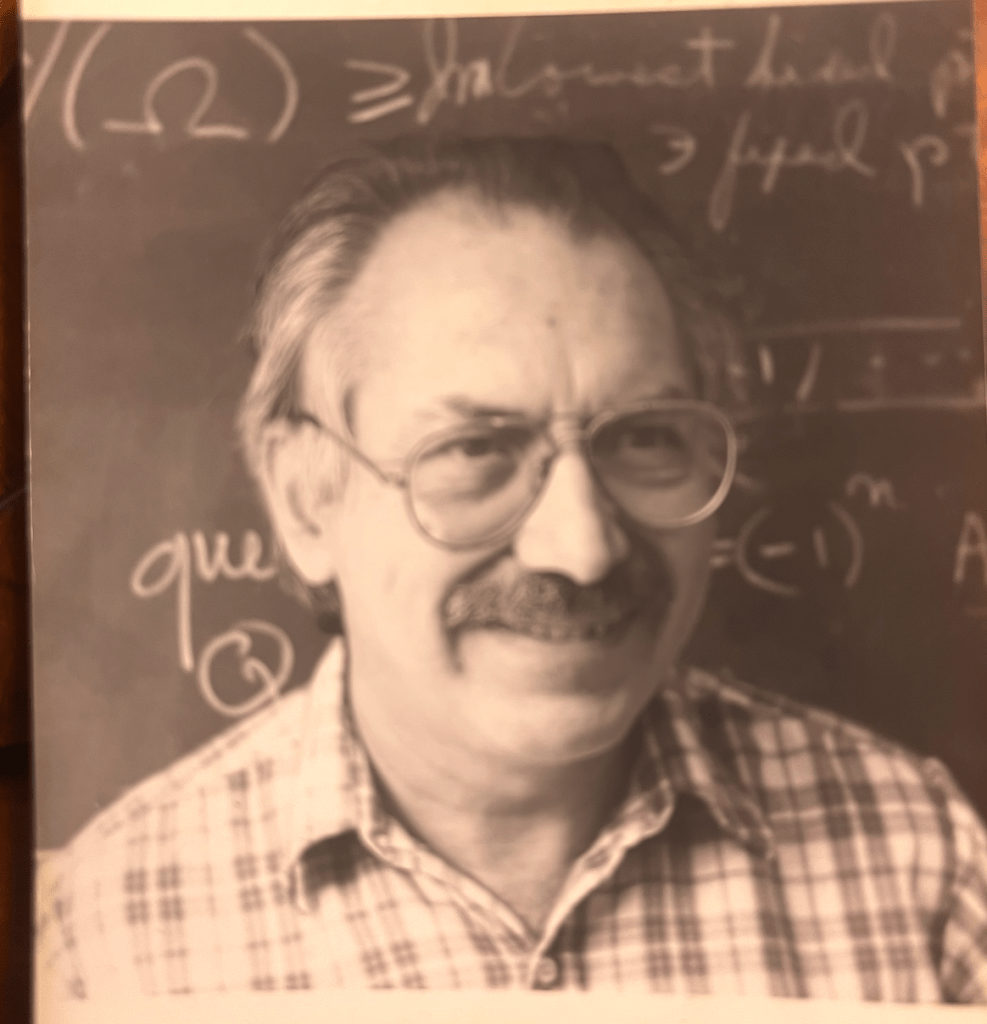
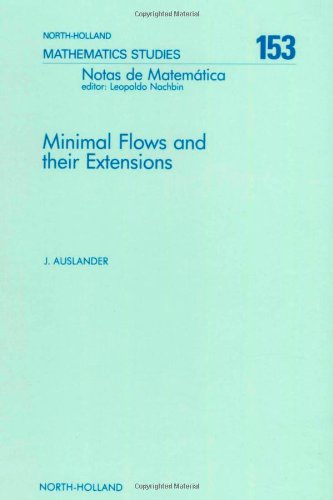
Joe’s doctoral dissertation at the University of Pennsylvania 1957 was on Mean L-stable Systems, advised by Walter Helbig Gottschalk In 1988, Joe published Minimal Flows and Their Extensions (Volume 153) (North-Holland Mathematics Studies, Volume 153)
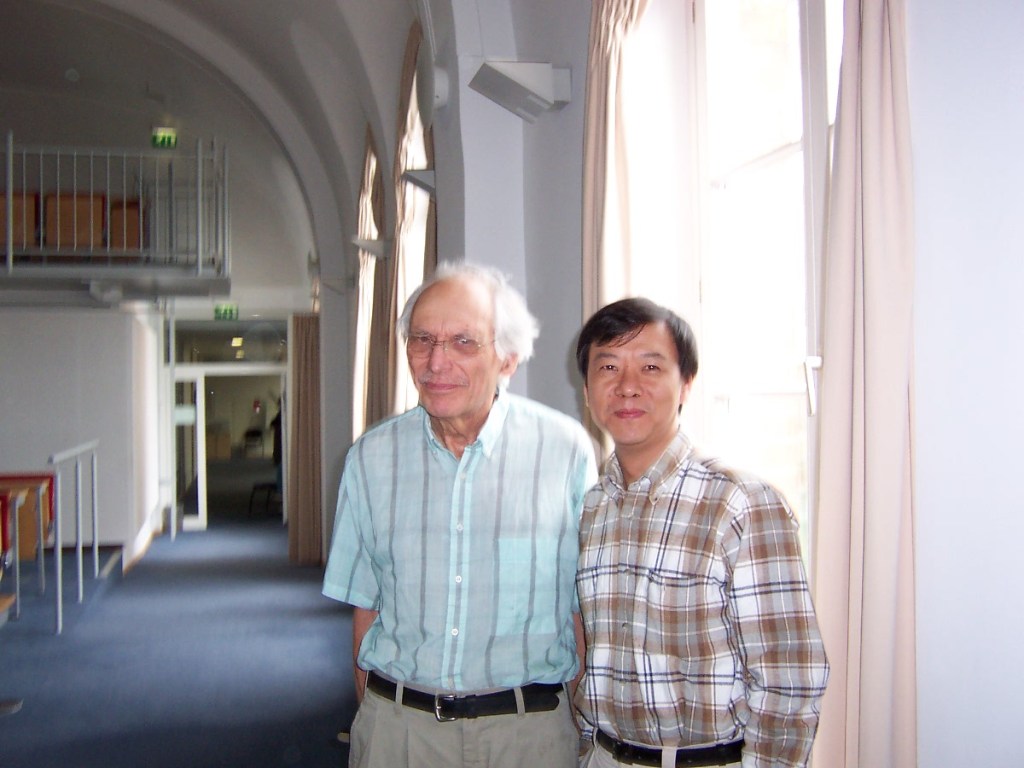
Joe’s Erdos Number was “Two”, due to his collaboration with Yael Dowker, often considered the “Mother of British Ergodic Theory,” who had an Erdos Number of “One”, having co- published with Paul Erdos, the famed Hungarian mathematician. Joe was friends with Erdos and had many fascinating conversations with him, but never co-authored with him.


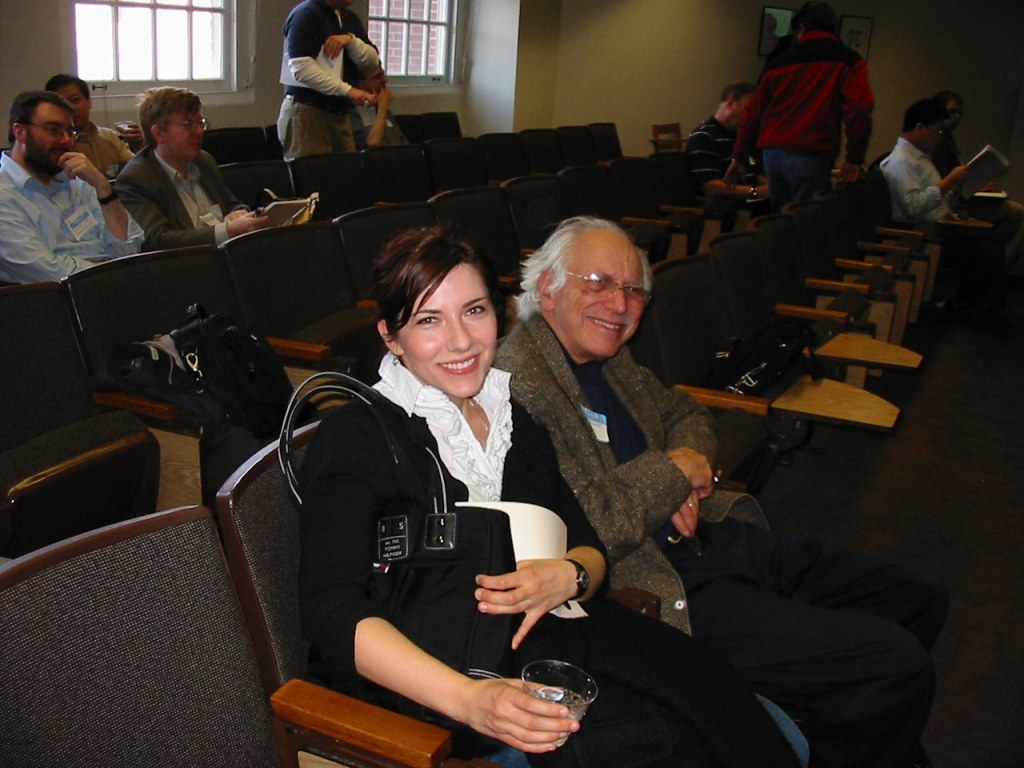
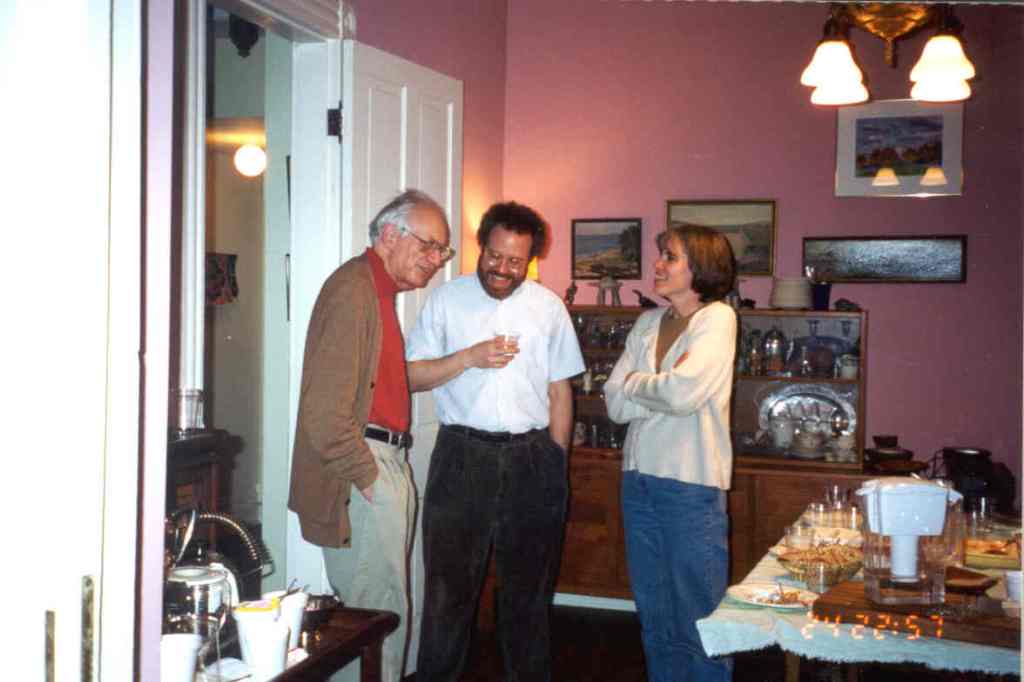
Here, the participants of the 2002 Penn State-U Maryland workshop on dynamical systems and related topics gathered at Joe and Barbara’s house


Tributes from Mathematicians
Doron Levy (Chair, Department of Mathematics, University of Maryland-College Park) shared these remarks at Joe’s memorial gathering on May 9 at the Mathematical Association of America
Joe Auslander – A professor, a colleague, a friend
- For those of you who do not know me, my name is Doron Levy and I am the Chair of
the Department of Mathematics and the Director of the Brin Mathematics Research
Center at the University of Maryland. - The news of Joe’s death came as a shock to all of us. Joe was not a young person,
but somehow, all of us – those that came to the department after Joe (which is
everyone) – and those that left while he was still around – we all though, somehow,
that Joe will be in the department forever. - After we heard from Anima about Joe’s contributions to Mathematics, I am here to
tell you a little about the Joe’s contributions to the Math Department and to the
department’s life. - This is not a simple task. Joe arrived to Maryland in 1963 that is before I was born.
When I moved to Maryland in 2007, Joe has already retired, or so I thought. - In fact, as you all know, Joe never retired. Yes, he may have stopped teaching or
oTicially serving on committees, but his presence in the department was felt in
many ways. You see, there are colleagues that retire and we never see them again,
then there are people that are active members of the department that we still do not
see…. Joe, on the other hand, never left the department. He was, literally in the
department the day before he died, attending the annual dynamics conference as a
participant. - My main interactions with Joe were during the past 6 years, the period I have been
serving as department Chair. Joe always showed interest in the department and the
department business, much more than many other colleagues. He reached to me
many times, asking to contribute in any possible way, including volunteering to
serve on committees, very actively participated in faculty matters, providing
feedback about promotions and about hires, and even recently speaking with me
and raising the idea of organizing a symposium on AI & Math. It will not be an
exaggeration to say that Joe participated pretty much in every aspect of the
department life. - But all of that, one may say, is routine. Joe’s impact on the department was
significantly bigger than that. Before Joe’s generation (actually the decade of his
arrival) there was essentially no research expectation of faculty. Joe was part of a
transition generation wherein the baseline expectation was to publish a PhD thesis
and a few articles and no further activity. Joe was one of the very few faculty from
that generation who continued to be involved and interested in research say after
PhD + a handful of papers. A name that comes to mind as a top researcher is
Seymour Goldberg who studied operator theory (a topic that was once big in the
department). During that time the department was known for Riesz coming to visit
and give lectures. The next generation is Ron Lipsman’s wherein one was expected
to be research active throughout their career. And so on. Joe’s was the tipping point
in the transformation that the department has undergone in becoming a top
research department. - Another piece in the department’s history that we can certainly attribute to Joe is the
central role he played in the creation of the dynamics group. We heard a lot about
the strength of the dynamics group, their program, and some of the prominent
visitors they had over the years in the words of Anima, and Joe certainly played a key
role in attracting these people to Maryland and elevating our dynamics group to
where it is now. - Our former department chair, Scott Wolpert, told me that “Joe always had
something he was thinking about.” And this is absolutely true. You would never see
Joe in the corridor without him telling you something that was on his mind. - Hillel Furstenberg from the Hebrew University who knew Joe well, wrote: “the
aesthetics of mathematics was just an instance of his broad humanistic outlook.”
Precisely what that means, probably means diTerent things to diTerent people, but
for me, having been around Joe and considering him as one of the main pillars of the
department, created an intriguing sense of harmony, a feeling that we are all small
parts of something much bigger. - Earlier in the semester I discussed with Joe plans to hold a one day conference next
year to honor is upcoming 95th birthday. Joe looked at me and asked – and what will
you do if I die before the conference? I said – we will have to hold then a memorial
conference instead. He laughed and we both agreed that we will do it one way or
another. So this is something we plan to put together. Stay tuned. - On behalf of the members of the Math Department and the University of Maryland, I
would like to thank Joe for all he has done to promote our department, for all he has
done to bring us together, and for all he has done to provide the leadership, vision,
and hard work that brought the department to where it is in now. We miss you Joe.
Other Tributes from Mathematicians
Idris Assani (University of North Carolina): My sincere condolences to you and your family for your loss. Joe was a good friend of mine who has thoroughly supported my career for many years. He was a really good person with high moral qualities. I always made a point to visit him when I had a chance to come to Maryland. He will be sorely missed.
Bill Goldman (University of Maryland-College Park): I have known Joe personally since I first came to the University of Maryland in the 1980’s. However, I first heard of his research as a graduate student a few years earlier. Although we work in different fields, we share common interests. At one point he even suggested we coauthor a paper together.
I knew many graduate students working in his field of dynamical systems.
I was impressed by his generosity and friendliness in supporting their research and their futures as mathematicians.
Joe loved faculty meetings, even after he retired. The academic community meant a lot to him. He strongly valued the freedom to express diverse opinions and discuss alternate viewpoints.
My office is a few doors down from the lounge and the auditorium, and Joe would often stop by, since I usually leave my door open. We conversed about a wide range of topics. When I hosted visitors, he would often strike up a discussion and determine whether they had any common friends. We had several wonderful dinners at Joe and Barbara’s house and enjoyed their great hospitality and food.
I will miss him.
Bill Goldman
Family and Friends
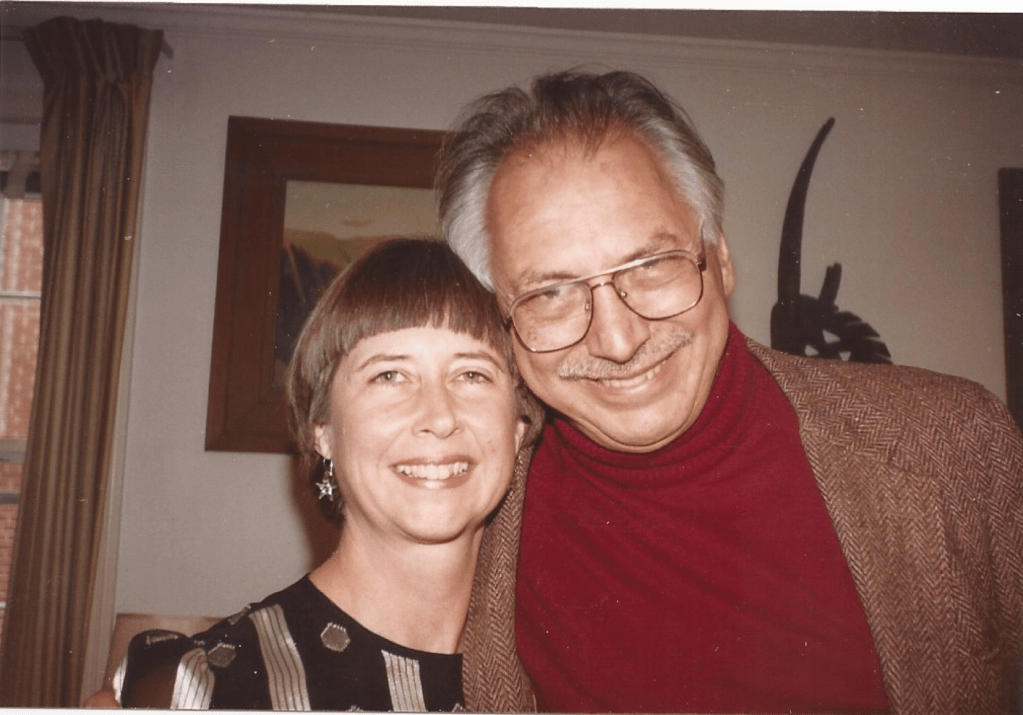

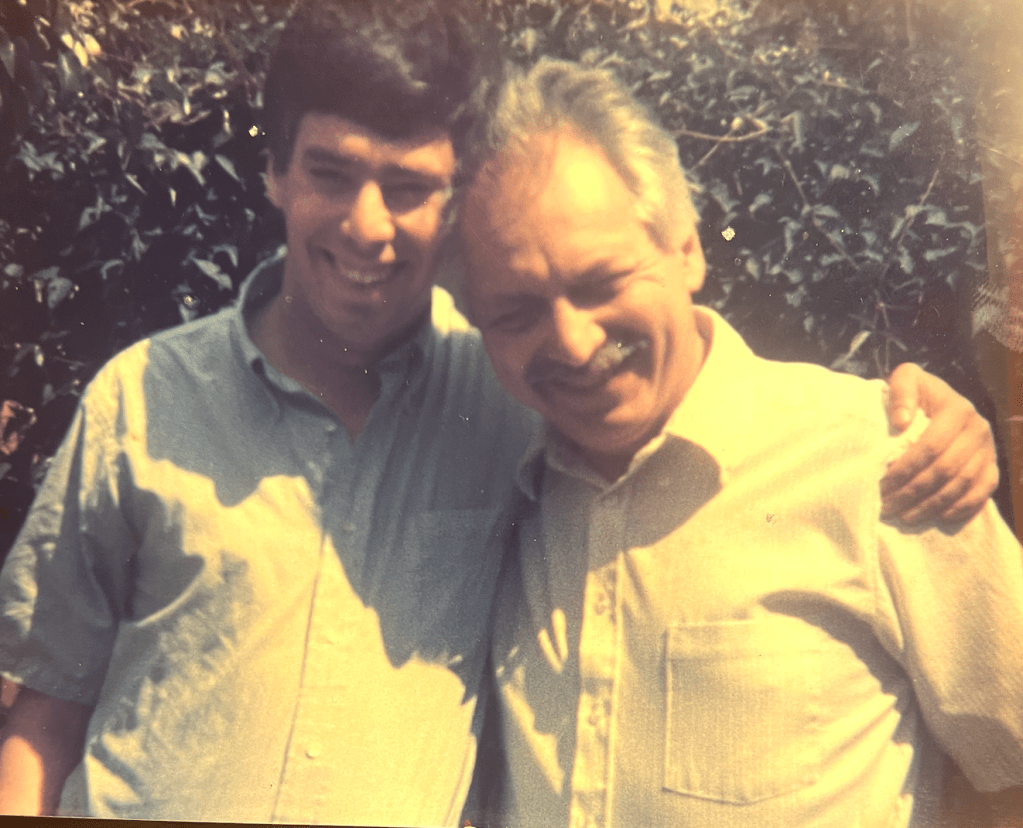


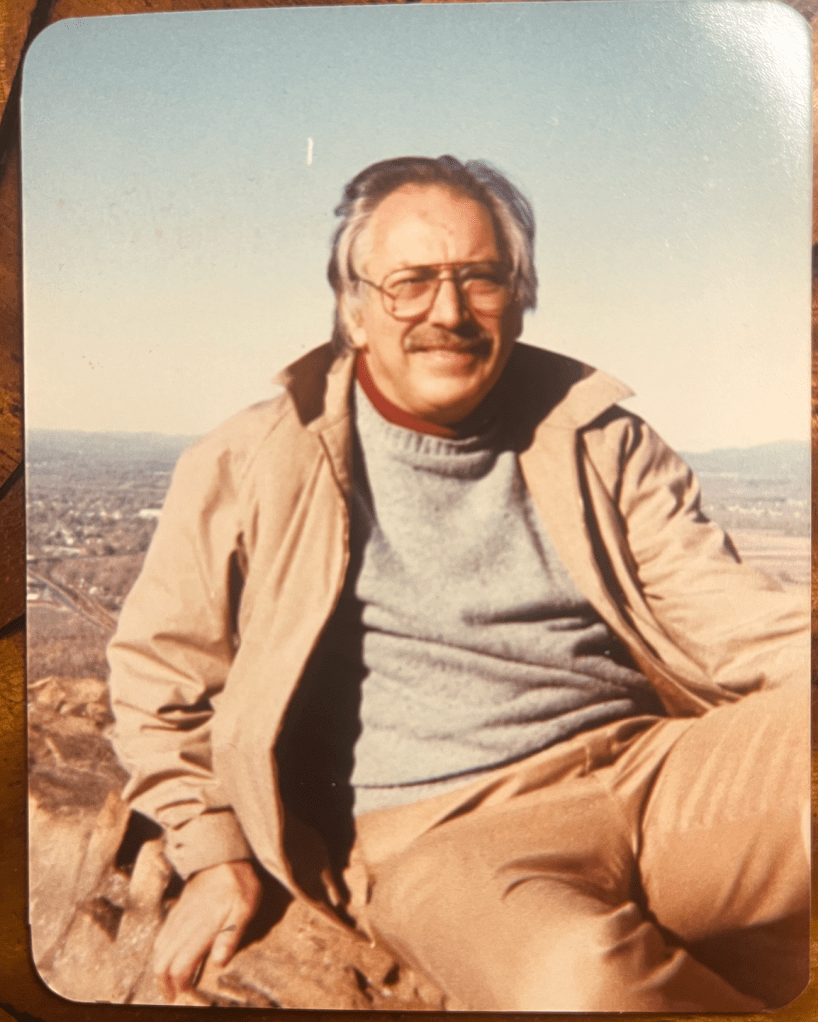
Joe’s father Dr. Jacob “Bi” Auslander resided in Vienna, Austria from c. 1910 until he emigrated to the United States in 1923. Bi’s sister Cilli Auslander attained her doctorate in Chemistry from the University of Vienna in 1920 and then returned there after the War.

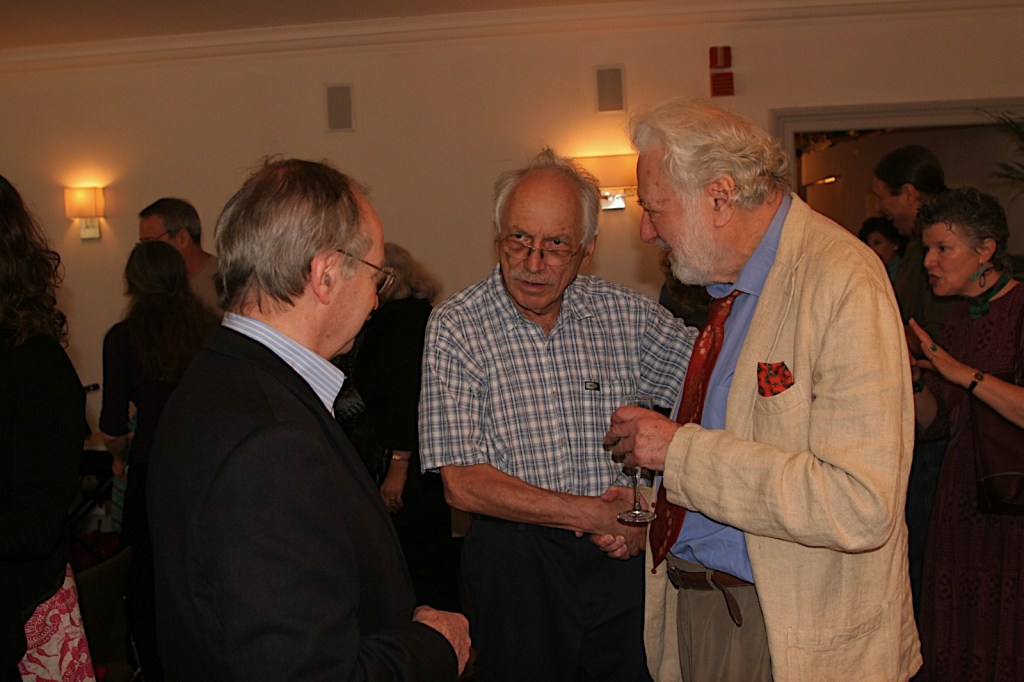
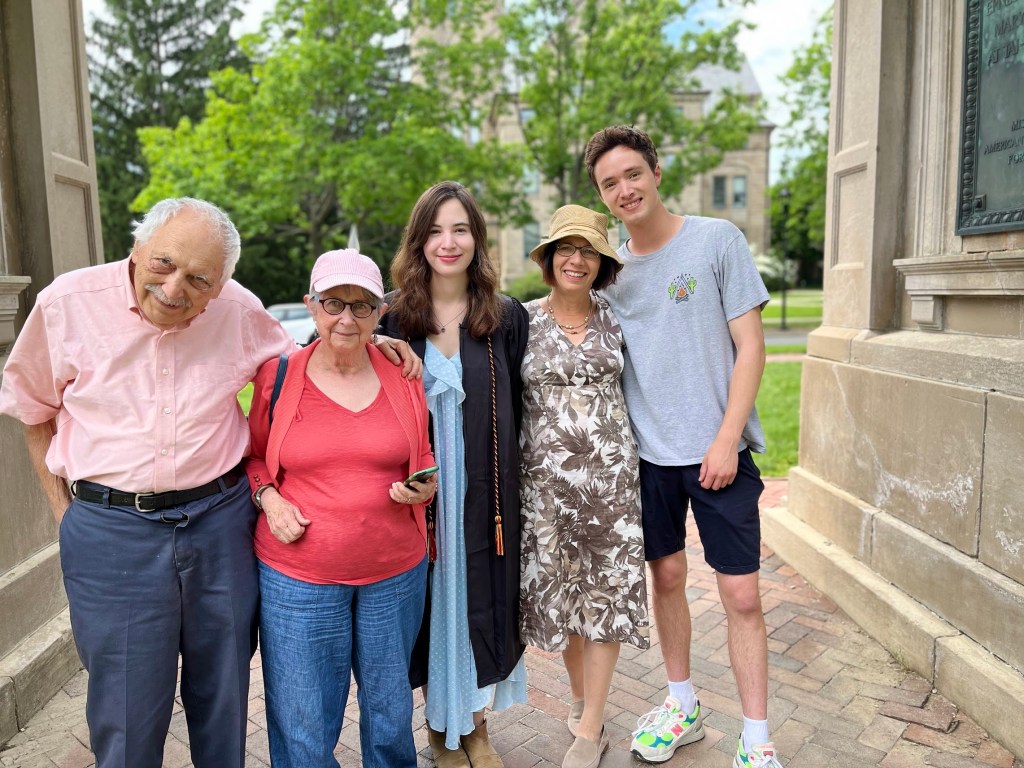
Joe was very close to his “Zeltzer” family cousins, on his mother Rebekah’s side of the family, many of whom are seen here at a gathering in the Swersey’s Shadowbrook Farm in Steventown, NY, summer 2009.



Joe kept in touch with his Russian cousins, descended from his mother’s sister Pauline Zeltzer Klein and her husband Sol Klein, who moved from New York to Moscow in the Soviet Union in the early 1930s. Joe and his first wife Ruth attended the International Mathematical Conference in Moscow in 1965 and got to see many of the Russian cousins. ‘
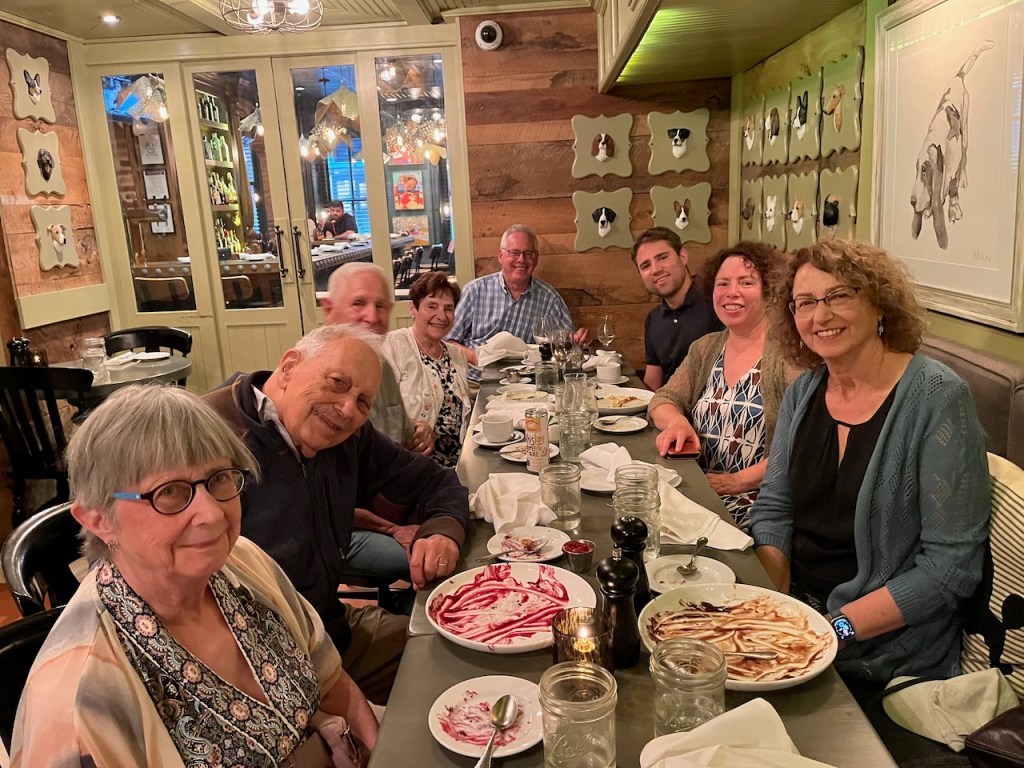
Another Russian cousin is Igor Tregub, descended from Riva Zeltzer, sister of Joe’s maternal grandfather Josef Zeltzer of Novye Derogi, Belarus.

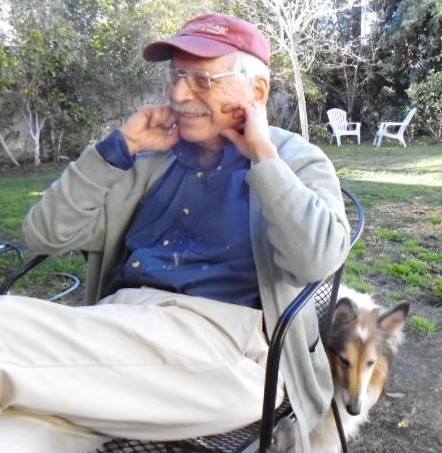
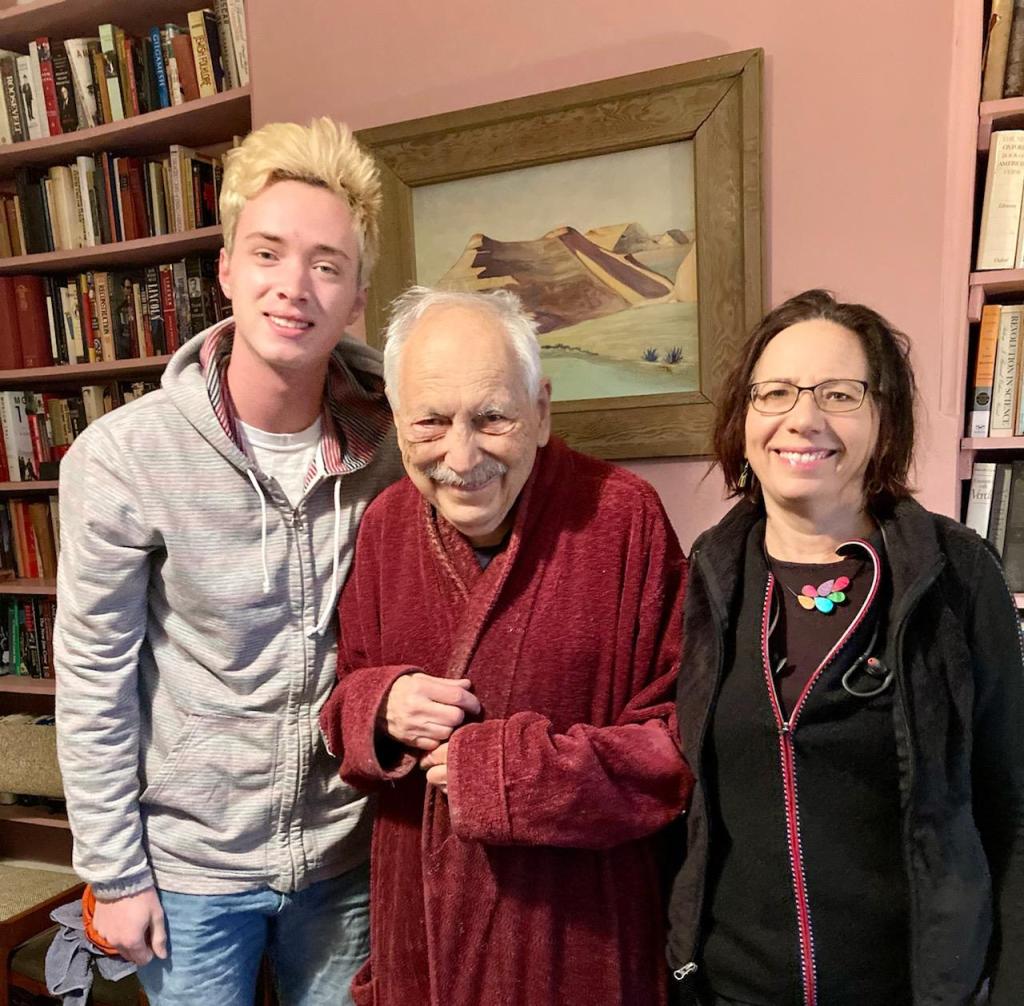
From the time he lived in Berkeley in 1972, Joe regularly wore shorts, sometimes to the discomfiture of his first wife Ruth and restaurant hosts. Here he is the study of the R street house.


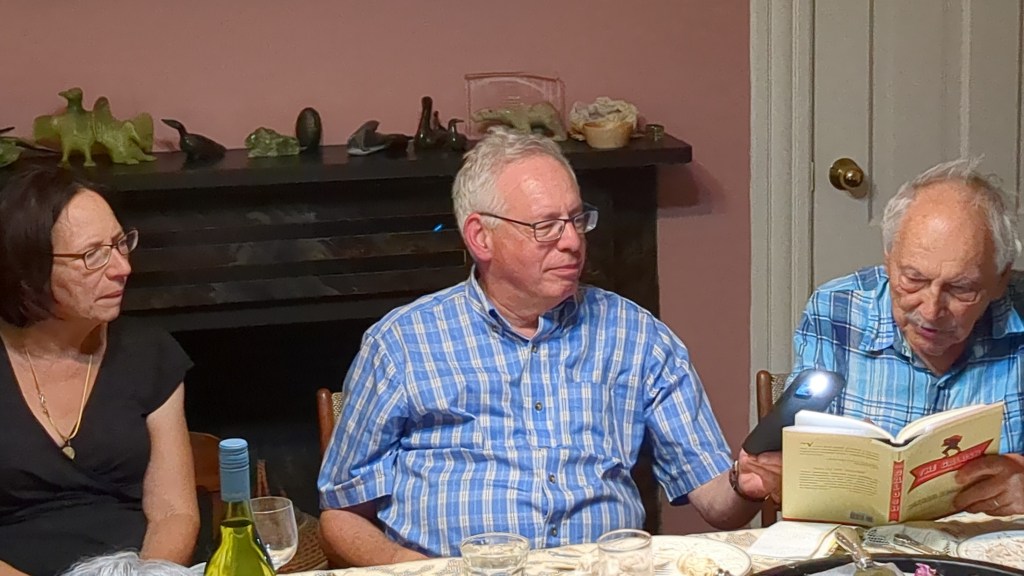
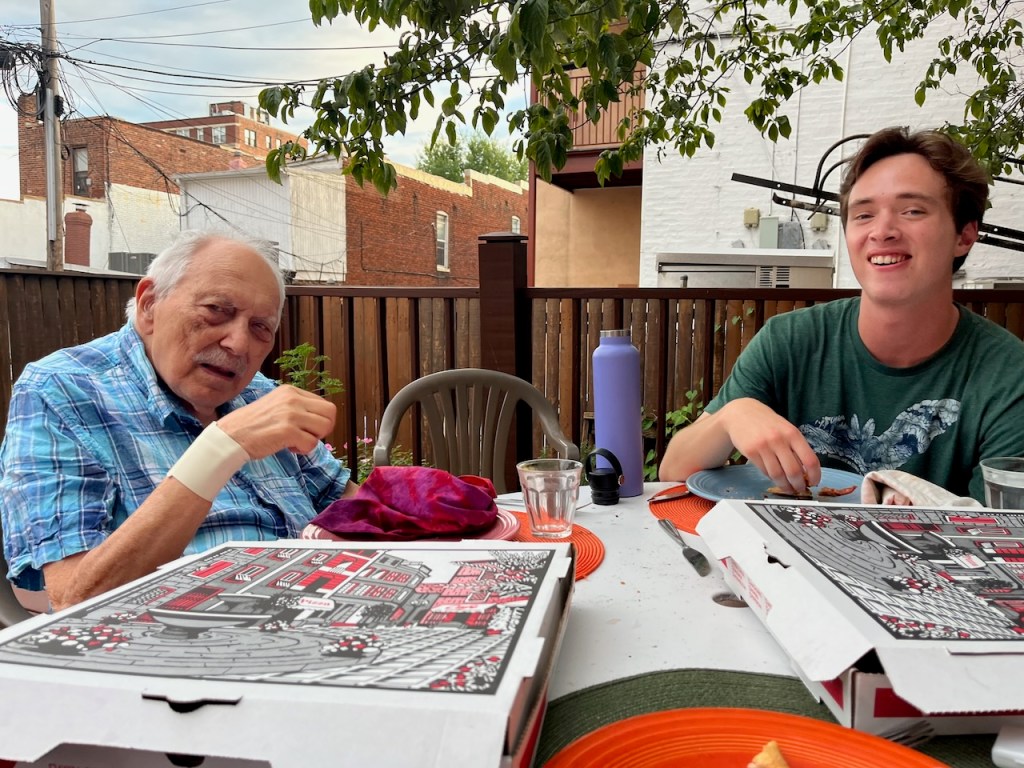
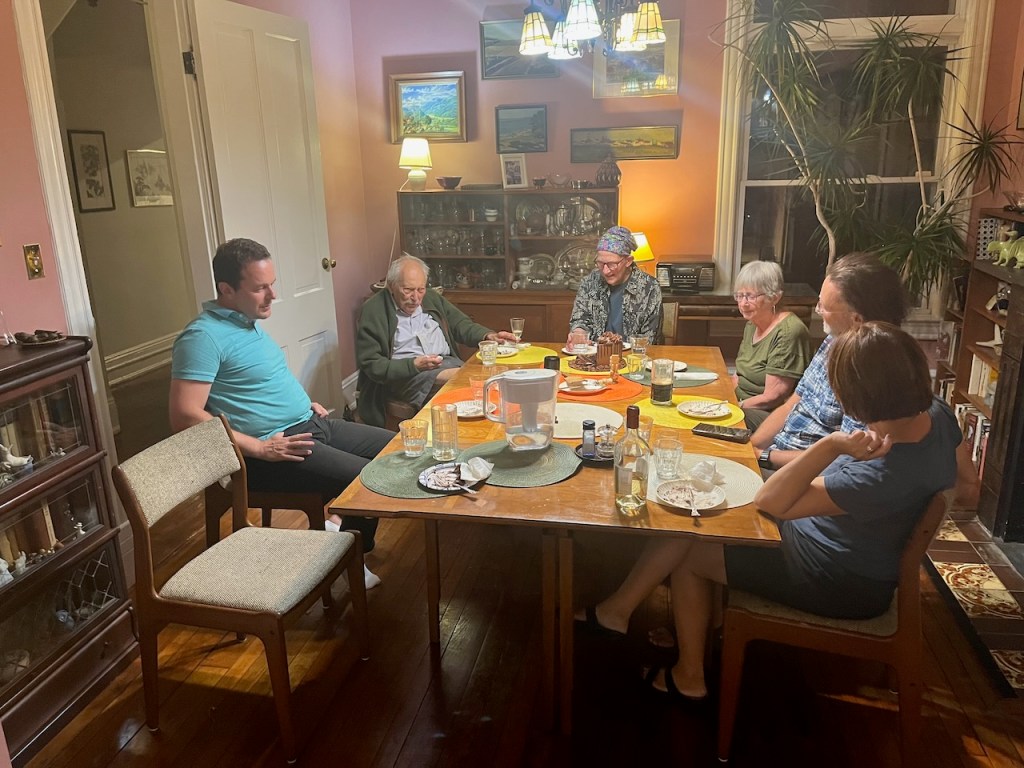
Joe loved to preside over dinner parties in the R street dining room.
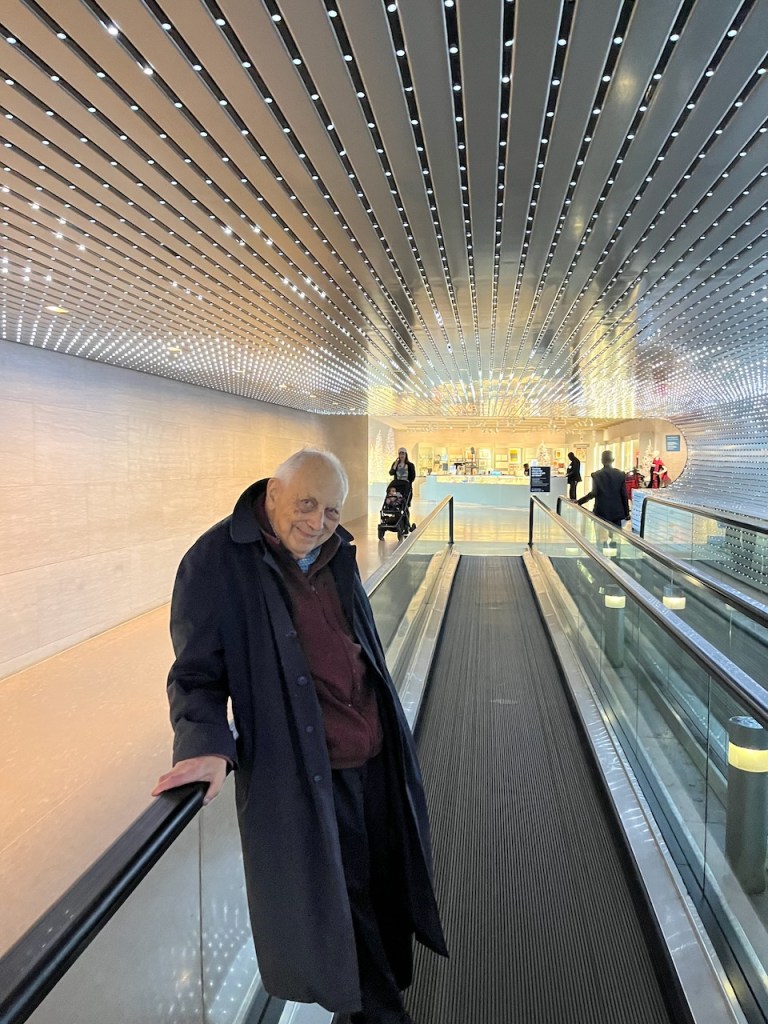

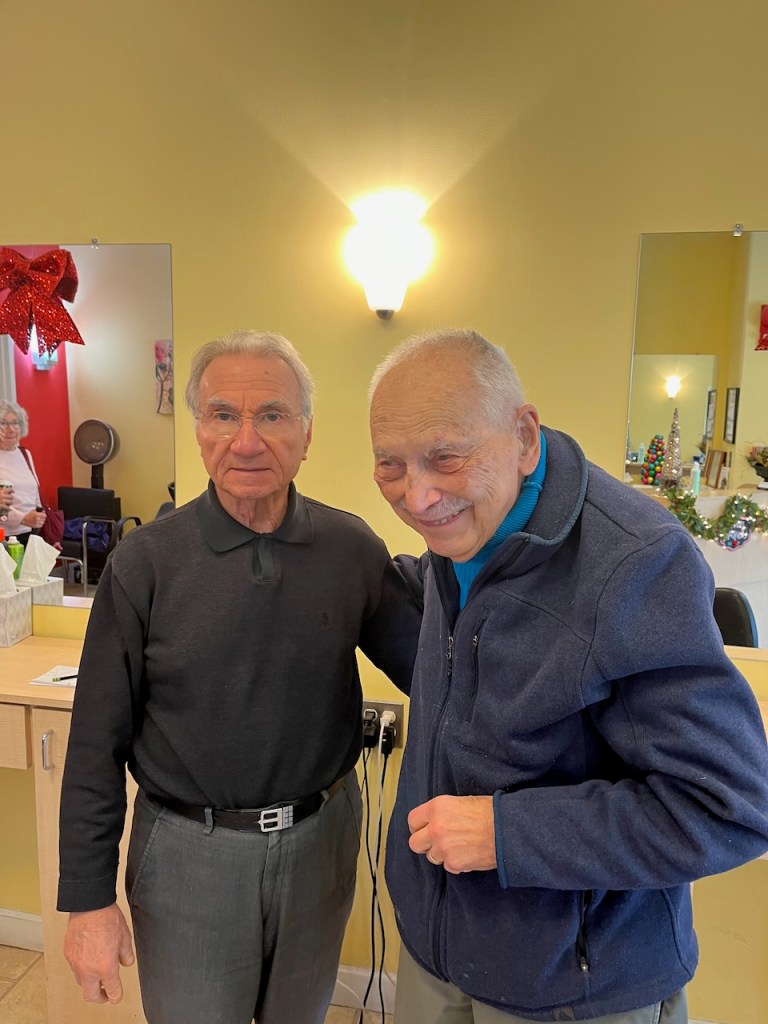
Late in life Joe developed a tradition of getting his hair cut by barber Ernesto in the Van Ness shopping center. He would go for haircuts at the change of each season and in preparation for the new year. (Ernesto had regularly cut the hair of Joe’s son Mark since 1970)
While living in Berkeley, CA in 1972, Joe became an avid runner and continued to jog regularly for the next five decades.


Joe loved the street life around their row house on the 1600 block of “R” street in Northwest Washington DC. Here we see Joe, Barbara, Mark and Ellen walking on “R” street towards 17th street.

Joe avidly read daughter’s Bonnie poetry and took great delight in her many accomplishments. Here, father and daughter are on the platform of his local Dupont Circle Metro stop.

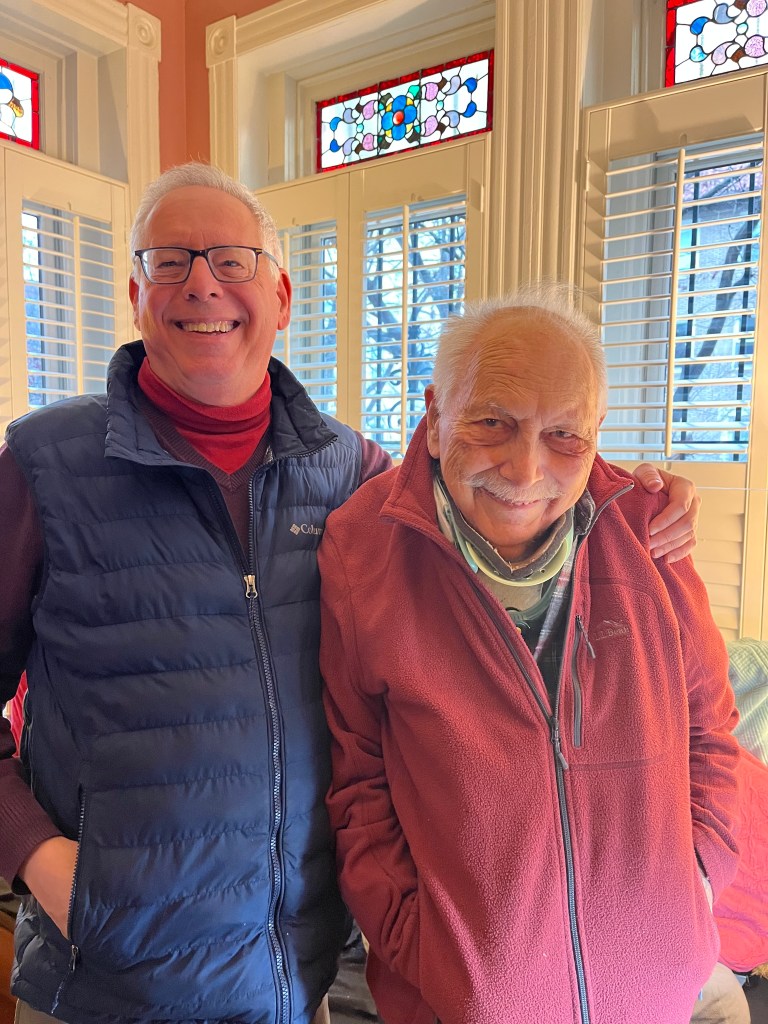


 Mark Auslander